

If you’ve been wondering how to get your website mentioned in ai search, the short answer is this: publish content that answers real questions clearly, build trust signals across your site, and make it easy for AI systems to understand what your business is about. The websites that show up in AI answers usually do three things well, they are useful, they are specific, and they are easy to quote.
That matters because AI search tools do not just reward keywords anymore. They look for clarity, authority, structure, and consistency. If you want your site to be surfaced more often, you need content that helps both people and machines confidently identify your expertise.
What AI Search Actually Looks For
AI search is changing how people discover brands, products, and advice. Instead of returning only a list of blue links, AI tools try to summarize the best available answers from multiple sources. That means your website has a better chance of being mentioned when it is easy to interpret, easy to trust, and clearly relevant.
Clear topical focus
Your site should make one thing obvious fast, what you do and who you help. If your homepage, service pages, and blog posts all point in the same direction, AI systems have an easier time connecting your brand to a subject area.
Strong informational content
AI tools often favor pages that explain concepts well, answer common questions, and provide direct, helpful language. Long rambling content usually loses to concise, well-organized content that gets to the point.
Trust and consistency
Mentions from reputable websites, consistent branding, and regular publishing all help reinforce that your site is worth citing. The more your content appears across a coherent topic cluster, the more likely it is to be recognized as a reliable source.
How to Get Your Website Mentioned in AI Search
There is no magic trick, but there is a repeatable system. If you want your site to be mentioned more often in AI-generated answers, focus on content structure, authority, and discoverability.
1. Publish answer-first content
Start each page by answering the question directly. Then expand with examples, supporting details, and related subtopics. This format makes it easier for AI systems to extract a useful summary from your page.
For example, if someone asks how to get your website mentioned in ai search, the opening should immediately define the process in plain language. Don’t bury the answer under a story or a long brand intro.
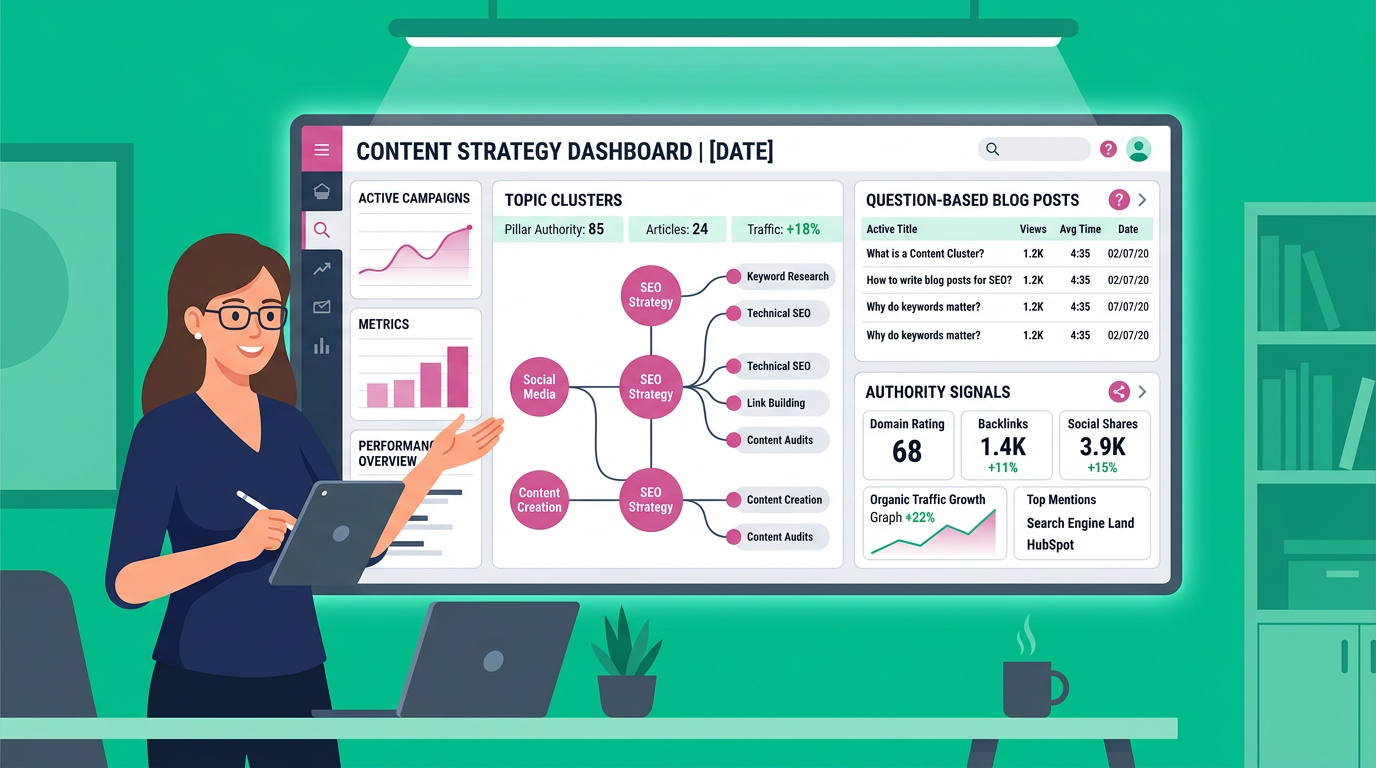
2. Build topic clusters, not random posts
One-off blog posts rarely create strong signals. Instead, create a cluster around a core topic, then support it with related articles.
For example:
- Main guide on AI search visibility
- Post on writing FAQ content
- Post on content that earns mentions
- Post on SEO structure for AI tools
- Post on thought leadership content
This approach gives your site depth. It helps AI systems understand that you are not just touching on the topic, you actually own it.
3. Use question-based headings
AI tools love pages that are easy to scan. Question-based headings help because they match the way users actually ask things.
Good examples include:
- What is AI search looking for?
- Why do some websites get mentioned more often?
- How do I write content AI tools can quote?
- What makes a page easy to summarize?
This also helps with featured snippets and voice-style responses, which often overlap with AI search visibility.
4. Make your content easy to quote
Short definitions, clean bullet points, and direct explanations improve your odds of being referenced. If a sentence can stand alone as a useful answer, you’re on the right track.
A useful rule is to write one clear takeaway per paragraph. That gives AI systems a better chance of lifting the right idea without confusion.
5. Strengthen your authority signals
AI search systems look for patterns that suggest credibility. That can include expert bios, author pages, case studies, customer proof, links from other relevant sites, and a consistent publishing history.
If your website looks abandoned or vague, it is harder to trust. If it looks active, specific, and grounded in real experience, it becomes easier to recommend.
Content Formats That Help You Show Up More
Some types of content are simply better suited for AI search than others. If your goal is to get mentioned, focus on formats that answer intent quickly.
FAQ pages
FAQ content is one of the easiest formats for AI systems to parse. It mirrors natural search behavior and gives you a structured way to answer common questions.
Comparison pages
People often ask AI tools for comparisons, alternatives, and recommendations. If you publish clear comparison content, you increase the chance of being included in those responses.
How-to guides
Step-by-step content performs well because it creates a logical path from problem to solution. AI systems can break that down more easily than vague marketing copy.
Definitions and explainers
If your audience searches for “what is” or “how does” type queries, explainer posts are incredibly valuable. These pages often become entry points for AI discovery.
SEO Basics Still Matter, A Lot
Even though the landscape is changing, classic SEO still matters. AI search does not exist in a vacuum. It still depends on crawlable pages, clear metadata, internal linking, and solid site structure.
Optimize page titles and descriptions
Your title tag should tell search engines exactly what the page covers. The meta description should reinforce the topic and set expectations for the reader.
Use internal linking strategically
Link related articles together so both users and search engines can move through your content easily. This helps establish topic authority and distributes relevance across your site.
Improve page readability
Short paragraphs, descriptive headings, and straightforward language make content easier to process. That helps readers, and it helps systems that summarize content.
Keep your site technically healthy
Slow pages, broken links, and messy navigation can hurt visibility. If the page is hard for humans to use, it is often hard for AI systems to trust.
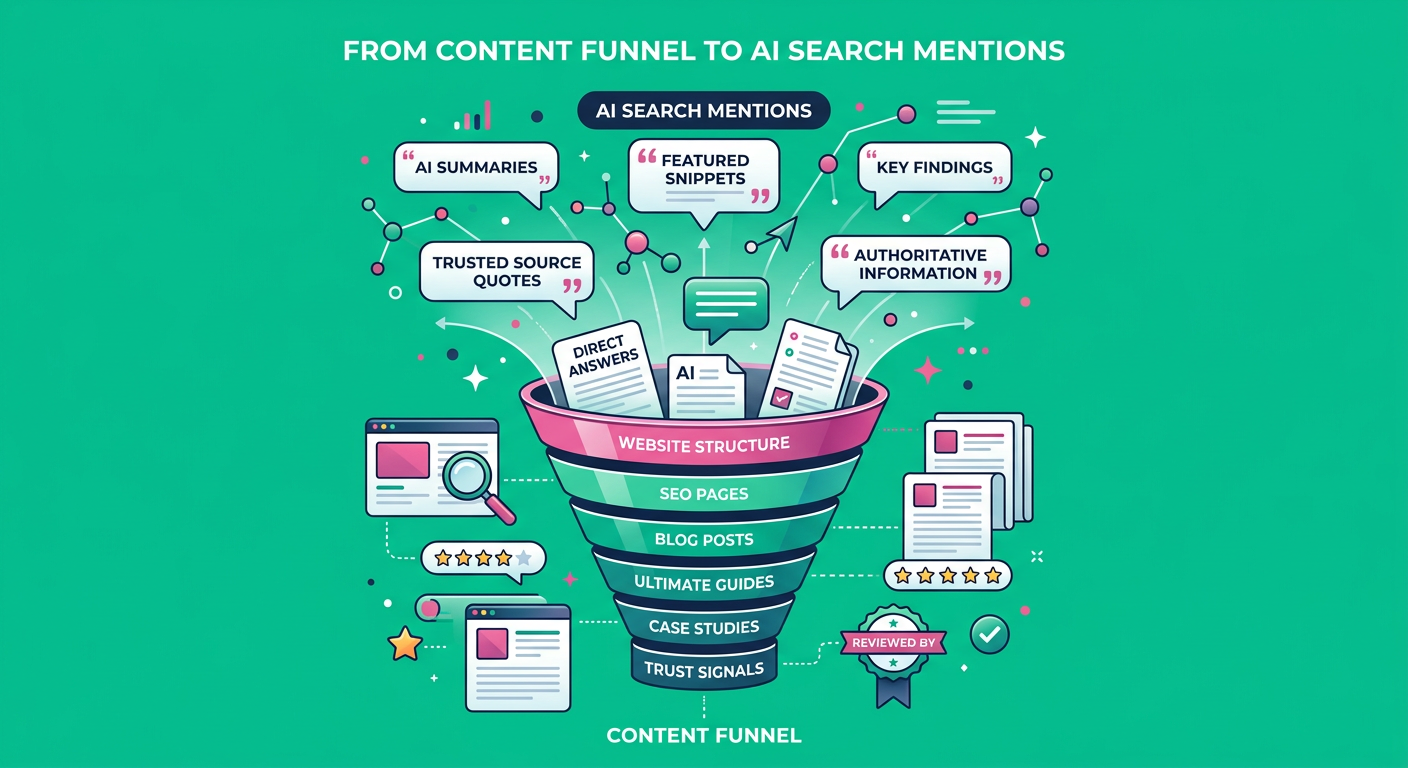
A Practical Progressive Content Strategy
If you want quick marketing wins, start simple and build momentum. The goal is not to publish everything at once. The goal is to create a repeatable system that compounds.
Phase 1: Build your core pages
Make sure your homepage, service pages, and about page clearly explain who you are, what you do, and why you matter. These pages are often the starting point for both users and AI systems.
Phase 2: Publish intent-matched articles
Write content around the questions your audience already asks. Focus on commercial intent, informational intent, and comparison intent.
For example, a SaaS founder might publish:
- How to choose the right workflow automation tool
- Best ways to reduce manual content work
- What AI search means for B2B visibility
Phase 3: Add proof and depth
Case studies, testimonials, examples, and original insights help separate your content from generic AI-generated fluff. Real-world detail signals authenticity.
Phase 4: Keep publishing consistently
One strong article is good. A steady publishing cadence is better. Consistency tells the market, and the machines, that your site is active and relevant.
Common Mistakes That Keep You Out of AI Search
Many websites fail for the same reasons. The good news is that these are fixable.
Being too broad
If your content tries to cover every topic under the sun, your authority gets diluted. Focus on a narrower lane and own it.
Writing for keywords only
Stuffing pages with keywords does not help if the content is thin. AI tools want clarity and usefulness, not repetition.
Hiding the answer
If readers have to dig for the point, your content is too slow. Put the answer near the top.
Skipping trust signals
No author bio, no proof, no examples, no updates, and no consistency can all reduce your chances of being mentioned.
Publishing without a system
Random blogging creates random results. A structured content plan creates compound visibility.
Why This Matters for Small Teams and Busy Owners
If you run a small business, SaaS company, e-commerce store, or agency, you probably do not have unlimited time for content. That’s exactly why this strategy works best when it is systematic.
You do not need to write giant keyword-heavy articles every week. You need a repeatable content engine that helps you publish helpful pages, stay visible, and build authority over time.
That is where a blogging and SEO system can make a huge difference. When your content is structured well and published consistently, you give your website more chances to be discovered, cited, and recommended in AI search.
FAQ
How long does it take to get mentioned in AI search?
It depends on your niche, site authority, and publishing consistency. Some sites begin showing stronger visibility in a few weeks, while others take months of steady content and trust-building.
Do I need a high domain authority to appear in AI answers?
Not necessarily, but authority helps. Smaller sites can still get mentioned if they publish highly relevant, well-structured, and trustworthy content.
Is traditional SEO still important?
Yes. AI search still relies on crawlable, well-optimized web content. Good SEO is still the foundation.
What kind of content gets cited most often?
Clear explainers, FAQs, comparisons, how-to guides, and pages with strong proof usually perform well. Content that answers a question directly tends to be easiest to summarize.
Should I write for people or AI?
Write for people first. If the content is genuinely useful, clear, and structured, AI systems are more likely to understand and surface it.
Can automation help with this?
Yes, especially if it helps you publish consistently and maintain quality. Automation can support research, drafting, and content planning so your team can focus on strategy and expertise.
Start Building AI Visibility Today
If you want your website to be mentioned more often in AI search, start with one simple move, publish content that answers real questions better than anyone else. Then build topic depth, strengthen trust, and keep showing up consistently.
If you need help creating content that ranks on Google and gets noticed in AI tools, visit Content Beast. We help teams build a smarter content engine with blogging, SEO, and automation that keeps traffic growing without adding more manual work.
Conclusion
Learning how to get your website mentioned in ai search is really about becoming the clearest, most useful answer in your niche. When your site is structured well, updated consistently, and built around real questions, you make it easier for AI systems to trust and surface your brand.
The websites that win will not be the loudest. They’ll be the ones that are specific, helpful, and easy to understand. Start there, and you’ll be in a much better position for the future of search.