

You can publish a great blog post and still watch it underperform. That’s frustrating, but it’s also common. The missing piece is often internal linking for seo impact, because search engines and readers both need a clear path through your content.
Here’s the thing, internal links do more than move people from one page to another. They help distribute authority, clarify topic relationships, and make your best pages easier to find. If you want quick wins without creating a whole new content calendar, this is one of the smartest places to start.
Why Internal Links Matter
Internal links are the connective tissue of your site. They tell search engines which pages are important, how your topics relate, and where a visitor should go next.
They also improve user experience. When a reader lands on a post and sees a relevant next step, they stay longer, explore more, and are more likely to convert.
The SEO Value in Plain English
A strong internal linking structure can help:
- Spread link equity to important pages
- Improve crawlability and indexation
- Strengthen topical authority around a subject
- Reduce orphan pages that never get discovered
- Increase pageviews and engagement metrics
A Simple Internal Linking Strategy That Works
Start with your highest-value pages, then build links outward from supporting articles.
Think in hubs and spokes:
- One core page targets the main topic
- Several supporting posts cover related subtopics
- Each supporting post links back to the core page
- Supporting posts also link to each other where it makes sense
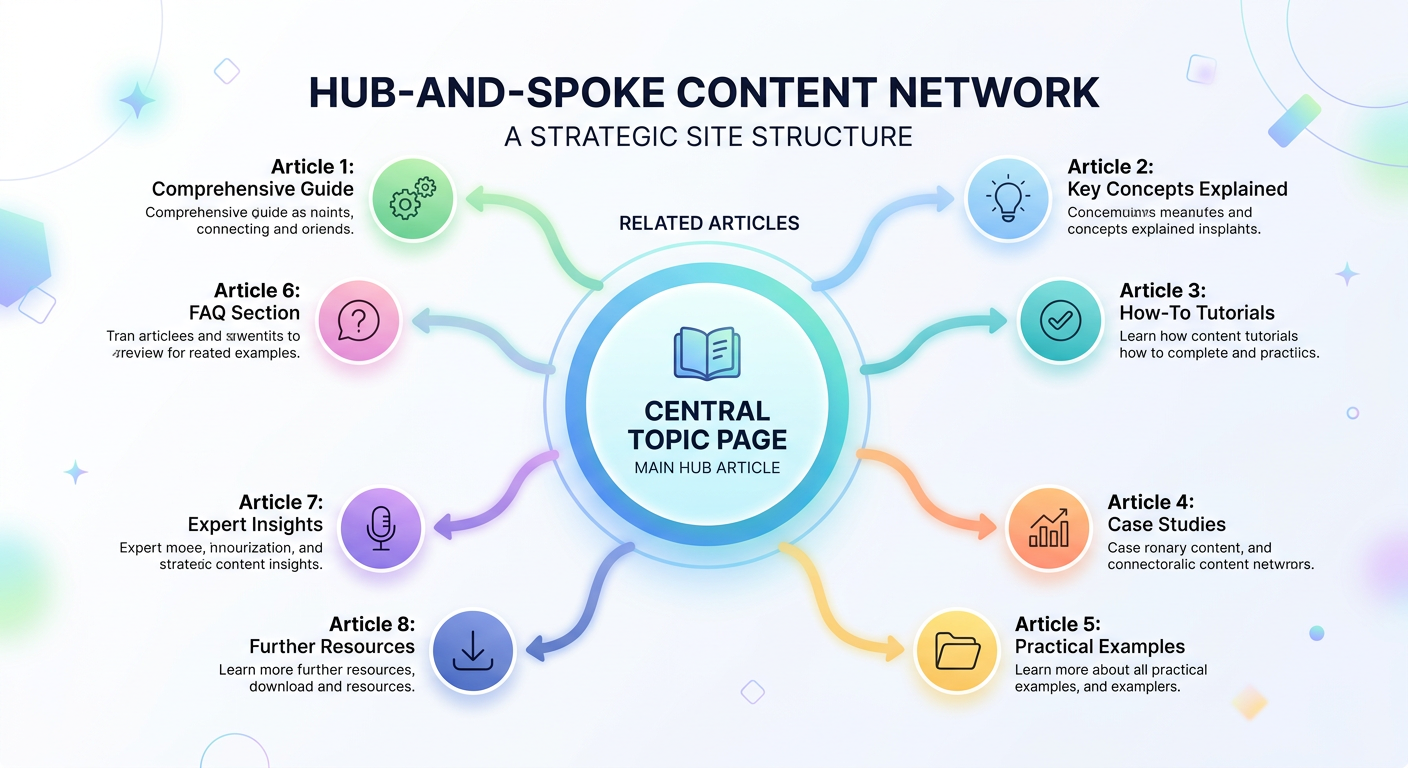
Example of Good Internal Linking
If your main page is about “email marketing software,” then related articles might include:
- Best subject lines for newsletters
- How to improve open rates
- Email automation workflows
- Newsletter signup form tips
Each of those articles should point back to the main software page using descriptive anchor text. That helps both users and search engines understand the page relationship.
Best Practices for Internal Linking for SEO Impact
Use Descriptive Anchor Text
Skip vague phrases like “click here” or “read more.” Instead, use words that describe the destination page.
Good examples:
- SEO content refresh checklist
- product page optimization tips
- internal linking best practices
- blog traffic growth strategies
Link From Relevant Context
A link works best when it fits naturally into the paragraph. Don’t force it into every section just to hit a number.
The most useful links appear where a reader is already thinking, “I want more detail on that.”
Prioritize Important Pages
Not every page deserves the same attention. Focus on pages that drive leads, sales, signups, or strategic visibility.
That might include:
- Service pages
- Money pages
- Pillar content
- High-performing blog posts
- Underperforming pages with strong potential
Update Old Posts First
One of the fastest wins is refreshing older articles with new internal links. You already have content live, so this is usually faster than publishing something new.
If you want a broader refresh plan, pair this with a content audit and add links where they strengthen the overall structure.
Common Internal Linking Mistakes
Overlinking Every Sentence
Too many links dilute value and make the page feel spammy. Keep it intentional.
Linking to Irrelevant Pages
A weak or unrelated link confuses readers and sends mixed signals to search engines. Relevance matters more than volume.
Ignoring Orphan Pages
If a page has no internal links pointing to it, it becomes much harder to discover and rank. Make sure every valuable page has a path in and out.
Using the Same Anchor Text Everywhere
Variety helps. Repeating the exact same phrase on every page can look unnatural. Use close variations that still describe the destination clearly.
A Quick Workflow You Can Use This Week
Step 1: Pick One Money Page
Choose the page you most want to rank or convert.
Step 2: Find 5 to 10 Supporting Posts
Look for articles that discuss related questions, problems, or comparisons.
Step 3: Add Links Naturally
Place links where they genuinely help the reader move forward.
Step 4: Check the Destination Page
Make sure the destination page has a clear title, strong copy, and a relevant call to action.
Step 5: Repeat for Your Top Priorities
This works best as a system, not a one-time fix.
FAQ
How many internal links should a page have?
There’s no universal number. A practical approach is to add links where they are useful, then make sure your most important pages are linked from multiple relevant pages.
Do internal links help new content rank faster?
Yes, they can. New pages are easier to discover when they’re linked from already indexed pages, especially if those pages have traffic or authority.
Should every blog post link to a service page?
Not always, but many should if the service page is relevant. The key is to keep the link useful and contextually appropriate.
Is internal linking more important than backlinks?
They do different jobs. Backlinks often help with external authority, while internal links help you organize and distribute that authority across your site.
What’s the best anchor text for internal links?
Use descriptive text that tells the reader what they’ll get. The best anchor text usually mirrors the destination page topic without sounding repetitive.
How often should I audit internal links?
A quarterly check is a good starting point. If you publish often, you may want to review links whenever you update major pages or refresh older content.
Turn Internal Links Into a Growth Habit
If you want fast SEO gains without writing a hundred new posts, internal linking is one of the best places to start. It’s low-cost, easy to improve, and powerful when applied consistently.
For more practical ways to grow traffic without adding complexity, visit ContentBeast and explore simple content systems built for busy teams. The right structure can turn the content you already have into a much stronger growth engine.
Conclusion
Internal links are one of the most overlooked SEO levers on a website. They help readers find what they need and help search engines understand which pages matter most.
If you focus on relevance, clear anchor text, and consistent updates, you can create meaningful internal linking for seo impact without a major overhaul. Start small, stay consistent, and build from your highest-value pages first.