

AI automation for content marketing is no longer a futuristic idea, it is the shortcut many lean teams are using to publish faster, improve consistency, and get more value from every article they create. If you are running a blog, a startup, an e-commerce store, or an agency, the real advantage is not doing everything with AI, it is using it to remove repetitive work so your team can focus on strategy and quality.
The smartest wins are usually the simplest. You do not need a complex stack or months of setup to see results. A few targeted automations can help you spot low-competition keywords, refresh old posts, reuse content across channels, and find internal linking opportunities that can lift rankings sooner than a brand-new content program.
Why AI Automation Matters Right Now
Content teams are under pressure to produce more while budgets stay tight. That is exactly where automation helps. It can reduce manual tasks like outlining, repurposing, tagging, and distribution, while giving you more room to plan topics that actually move traffic and leads.
For early-stage businesses especially, speed matters. You want fast traffic upside, not a giant content machine that takes six months to pay off. That is why AI automation for content marketing works best when it is tied to specific business goals, like getting more organic clicks, increasing mentions, or improving the performance of posts you already have.
Quick-Win Automations You Can Set Up Fast
1. Content Refresh Alerts
Instead of waiting for traffic to fall off a cliff, set up a simple process to flag pages with declining impressions, clicks, or rankings. Then use AI to suggest title updates, new sections, FAQ additions, and clearer internal links.
This is one of the fastest ways to lift performance without publishing more. In many cases, a refresh beats a new post because the page already has some authority and history.
2. Low-Competition Keyword Discovery
AI can help you cluster keyword ideas by intent, search difficulty, and likely business value. That means you can quickly find topics with realistic timelines instead of chasing broad terms that are too competitive for a small team.
For blog owners and SaaS founders, this is a practical way to build momentum. You are not trying to win everything at once, you are stacking small wins that compound over time.
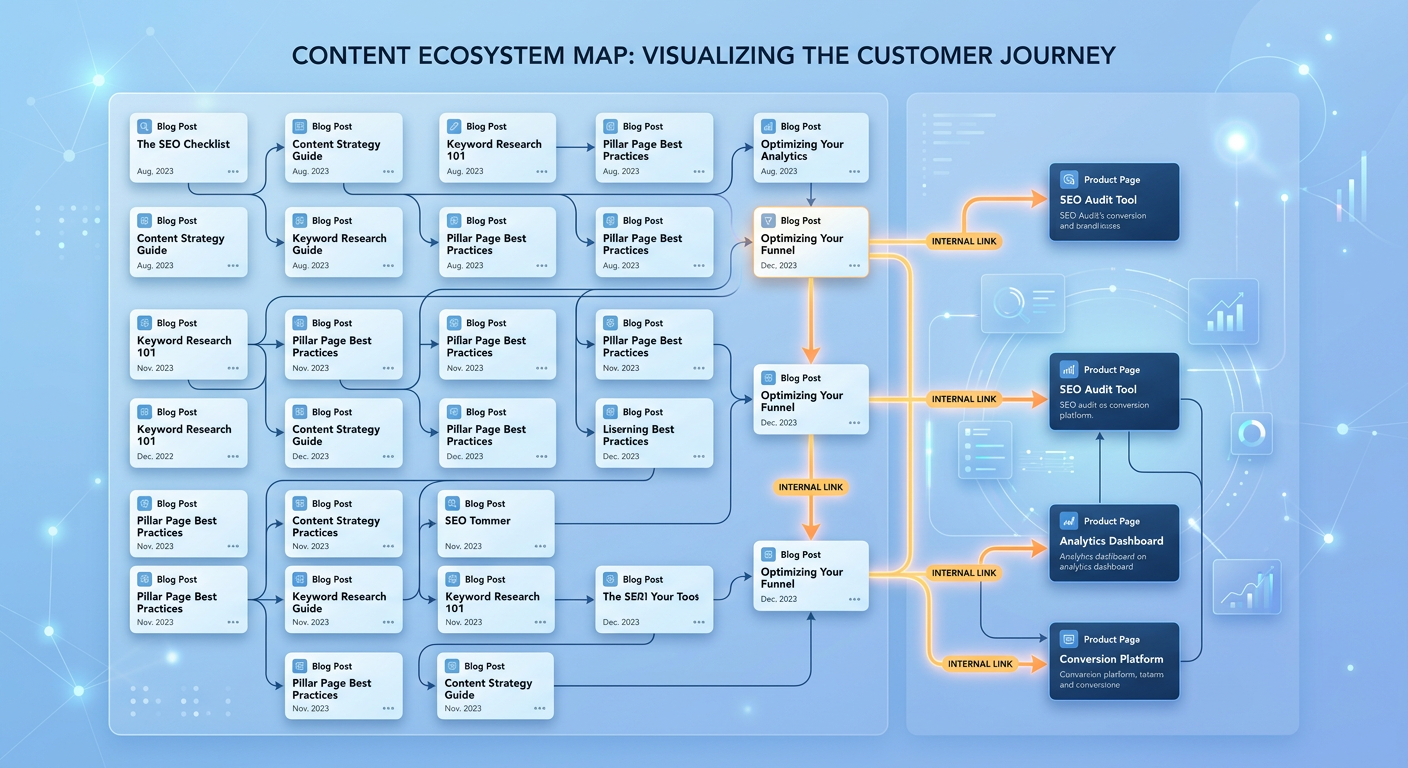
3. Internal Linking Suggestions
A simple AI workflow can scan your existing articles and recommend links between related posts, product pages, and landing pages. This helps search engines understand your site structure and makes it easier for readers to move deeper into your content.
If you want to see immediate impact with minimal setup, this is one of the best places to start. It is low effort, highly repeatable, and often ignored.
4. Repurposing Workflows
One strong article can become a LinkedIn post, an email snippet, a short video script, a social thread, and a sales enablement summary. AI makes that repurposing workflow much faster by turning one source piece into multiple channel-ready drafts.
This is especially useful for teams with limited writers. You create once, then distribute widely without starting from scratch every time.
5. Distribution Automation
Publishing is only half the job. AI can help you automate parts of your distribution, such as turning new posts into social copy, email blurbs, or community updates.
That gives smaller teams a more consistent presence without adding headcount. Consistency matters because many content programs fail not from bad ideas, but from weak follow-through.
A Simple AI Content System for Small Teams
Here is a practical flow you can use without overcomplicating things:
- Find a topic with clear search intent.
- Check whether you already have related content.
- Use AI to build an outline and identify gaps.
- Draft the article with human review and brand editing.
- Add internal links and a refresh plan.
- Repurpose the article into multiple assets.
- Schedule distribution across your main channels.
This approach keeps quality high while reducing busywork. It is also much easier to maintain than a bloated content operation.
Where AI Helps Most, and Where It Should Stay Out
AI is great for speed, structure, and pattern recognition. It is not great at understanding your brand voice, customer nuance, or real business priorities without direction.
That means you should let AI handle the heavy lifting on repetitive tasks, then have a human make the final call on messaging, examples, and credibility. The best results usually come from combining automation with editorial judgment, not replacing it.
Best Use Cases by Business Type
For SaaS Founders
Use AI to find pain-point keywords, compare competing content angles, and create quick product-led blog posts. Focus on topics that can support demos, trials, and signups.
For E-commerce Teams
Use automation to refresh category pages, generate comparison content, and repurpose product education into blog posts and FAQs. That can improve discovery and support conversions.
For Agencies
Use AI to scale briefs, content audits, and reporting. That lets your team spend more time on strategy and client communication.
For Small Businesses
Use it to keep a consistent publishing cadence, update old pages, and create lightweight distribution assets. You do not need a huge system to win small, steady gains.
Common Mistakes to Avoid
- Automating too much before you have a strategy.
- Publishing AI drafts without human editing.
- Chasing broad keywords with weak intent.
- Ignoring internal linking and refresh opportunities.
- Treating distribution as an afterthought.
The goal is not to produce more content for the sake of it. The goal is to produce content that earns attention, traffic, and leads with less manual effort.
FAQ
What is AI automation for content marketing?
It is the use of AI tools and workflows to speed up tasks like topic research, outlining, drafting, repurposing, internal linking, and distribution.
Do I need a big budget to get started?
No. Many of the highest-impact workflows are lightweight and low-cost, especially content refreshes, repurposing, and internal linking optimization.
Will AI content hurt SEO?
Not if you use it responsibly. Search engines care about helpful, original, well-edited content that serves user intent. Human review still matters.
What should I automate first?
Start with the highest-friction tasks, usually content refresh tracking, keyword clustering, and repurposing workflows.
How do I measure success?
Track organic clicks, impressions, rankings, time saved, publish frequency, and conversions from content-driven pages.
Is AI useful for newer websites?
Yes, especially for quick-win topics, internal linking, refreshes, and narrow keyword targets that can build early traction.
Grow Faster With Smarter Content Systems
If you want better output without burning out your team, start small and focus on practical wins. AI automation for content marketing works best when it saves time, improves consistency, and helps you get more from what you already have.
The simplest systems often deliver the fastest results. Begin with one workflow, prove the value, then expand from there.
Visit ContentBeast to explore more practical strategies for faster content growth, smarter blogging, and leaner SEO execution.