
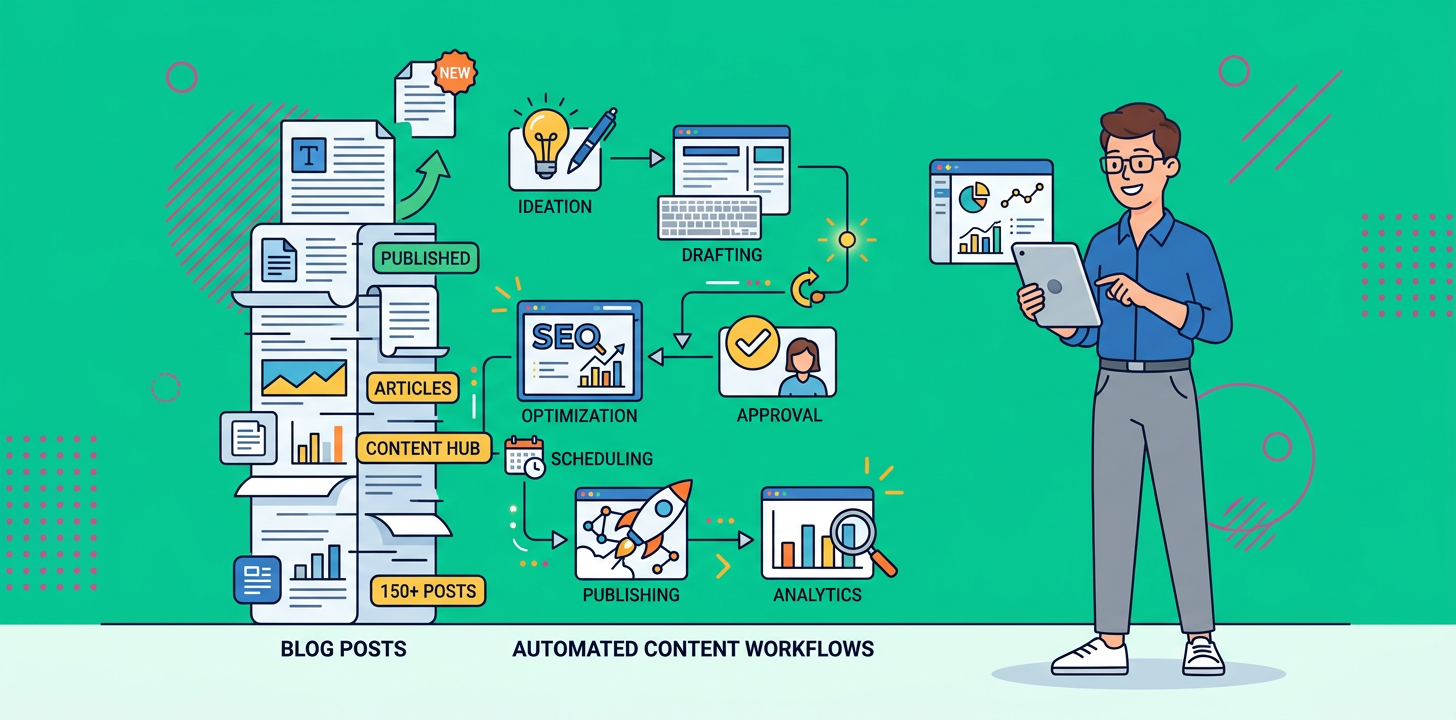
The cheapest way to scale content marketing is not to publish more content manually, it is to build a repeatable system that turns one good idea into many assets. If you are trying to grow traffic without blowing your budget, the winning move is usually a mix of SEO, content reuse, and automation.
Here’s the good news. You do not need a giant team or a huge ad budget to get more reach. You need a smarter process that helps you create useful content consistently, rank in search, and keep production costs low.
What Makes Content Scaling Expensive?
Most content marketing gets expensive for one simple reason, too much is done by hand. Writing every article from scratch, reinventing briefs, and constantly guessing what to publish can drain time and money fast.
Common cost drivers include:
- Slow manual research
- Inconsistent publishing
- Paying for too many one-off deliverables
- Rewriting the same ideas in different formats without a workflow
- Weak SEO strategy that fails to bring organic traffic
When those problems stack up, content becomes a cost center instead of a growth engine.
The Cheapest Way to Scale Content Marketing
The cheapest way to scale content marketing is to combine three things, keyword-driven planning, content repurposing, and automation. That combination reduces waste while increasing output.
Instead of asking, “What should we write today?” ask, “What is the smallest system that can create the most value from one idea?”
1. Start With Search Demand, Not Guesswork
SEO is one of the most cost-effective channels because it keeps working after the content is published. Research from Ahrefs and HubSpot consistently shows how valuable organic traffic can be over time compared with paid-only tactics.
Focus on topics that already have demand, such as:
- What is content marketing automation?
- How to scale blog content on a budget
- Cheapest ways to get more website traffic
- How to reuse one article across multiple channels
- Best content marketing strategy for small teams
This helps you spend less on content that has a real chance to rank and convert.
2. Build Around Content Clusters
A single post is rarely enough. A cluster gives you a core article and several supporting pieces around the same topic, which is much cheaper than chasing random ideas.
For example, one pillar topic might be “cheapest way to scale content marketing.” Supporting posts could cover:
- Content calendar templates for small teams
- How to automate blog production
- SEO content for SaaS founders
- Repurposing blog posts into social content
This structure improves topical authority and makes future writing easier because you are not starting from zero every time.
3. Repurpose One Asset Into Many
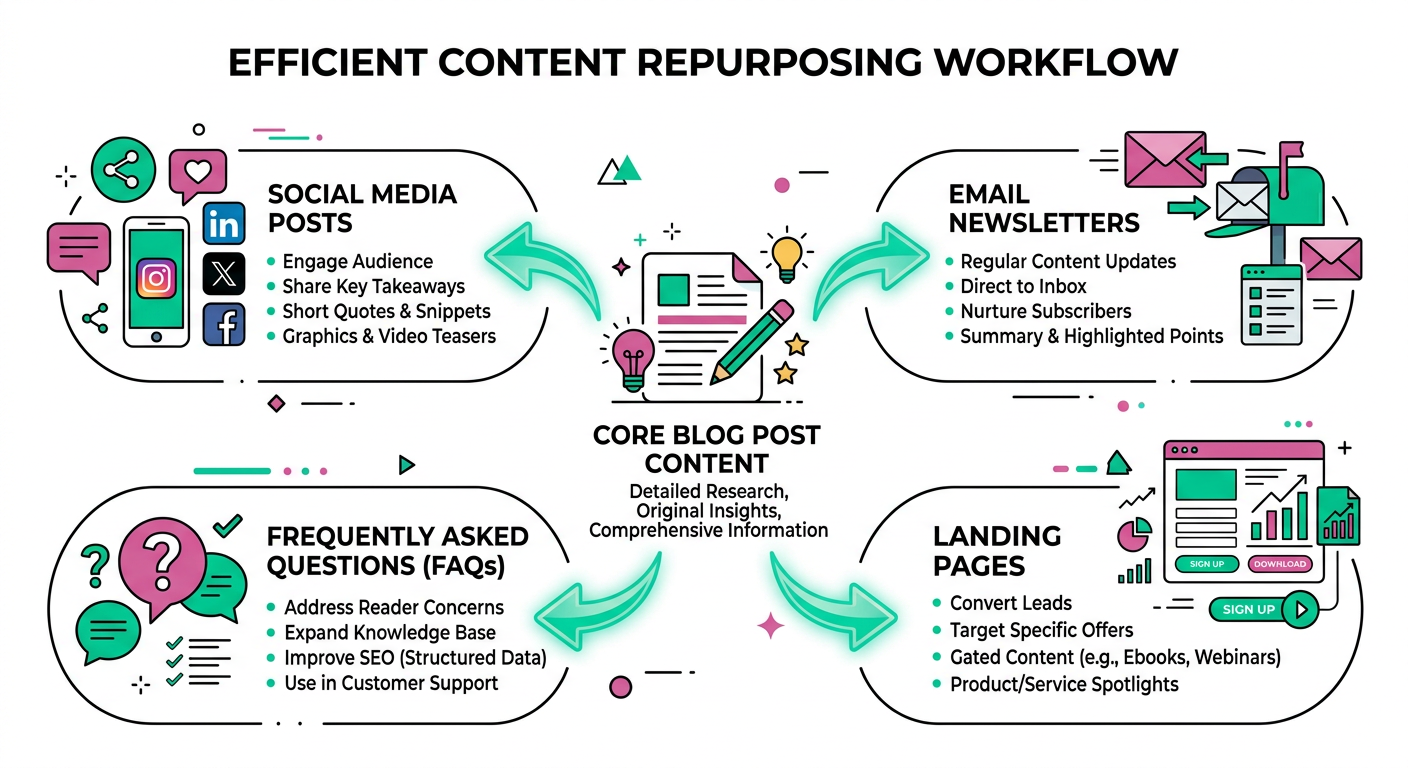
If you want lower costs, squeeze more value out of every piece you create. One strong blog post can become social posts, email snippets, video scripts, landing page copy, FAQs, and even sales enablement content.
A simple repurposing workflow might look like this:
- Write one detailed pillar article
- Pull out five to ten supporting angles
- Turn those into short posts or newsletter sections
- Reuse the best points in a later guide or product page
This is where many teams save serious money, because they create once and distribute many times.
4. Use Automation for the Repetitive Work
Automation is often the simplest way to keep costs down as you scale. It can handle briefs, outlines, content updating, internal linking suggestions, formatting, and publishing tasks that otherwise eat up hours.
That means your team can spend more time on strategy, editing, and conversion, and less time on repetitive production work. For small teams, that difference is huge.
If you are trying to grow with a limited budget, automation helps you avoid hiring too early while still maintaining consistency.
5. Update Existing Content Before Creating New Content
Refreshing existing content is usually cheaper than producing entirely new articles. In many cases, a page already has some authority, backlinks, or indexed history, which makes it a better investment than starting fresh.
Look for:
- Posts stuck on page two or three
- Articles with outdated data
- Pages with low click-through rates
- Content that can be expanded with FAQs or examples
A content refresh can often outperform a brand-new article at a fraction of the cost.
A Low-Cost Content Marketing System That Works
If you want a practical system, use this workflow every month:
Step 1: Pick One Core Topic
Choose a topic tied to revenue or traffic, not a random trend.
Step 2: Create One High-Value Article
Make it comprehensive, useful, and optimized for search intent.
Step 3: Repurpose It Into Smaller Assets
Turn it into social content, an email, a short guide, or a checklist.
Step 4: Automate Distribution and Internal Linking
Use tools and workflows to reduce manual publishing work.
Step 5: Refresh and Expand
Update the content based on performance, search changes, or new customer questions.
This system keeps the cost per asset low while improving total output.
Why Cheap Content Marketing Should Still Be Good Content
Cheap does not have to mean low quality. In fact, the cheapest way to scale content marketing is usually the approach that produces the most useful content with the least waste.
That means:
- Writing for real search intent
- Solving one specific problem well
- Using clear structure and examples
- Avoiding generic filler content
- Publishing consistently instead of perfectly
Your audience wants answers, not fluff. Search engines and AI tools reward content that is structured, relevant, and helpful.
How Small Teams Can Scale Without Hiring a Huge Staff
If you are a small or mid-size business, you probably do not need a big in-house team to grow. You need a lean system.
That could mean:
- One strategist
- One editor
- One automation workflow
- A reusable content framework
For SaaS founders, e-commerce teams, and agencies, this model is often the fastest way to increase output without increasing headcount at the same pace.
Where ContentBeast Fits In
If your team wants more traffic without all the manual work, ContentBeast can help you build a system that scales. The goal is simple, create content that ranks on Google, gets mentioned in AI tools, and keeps working long after it is published.
That is why automation matters so much. It is not just about saving time, it is about making content marketing easier to sustain.
FAQ
What is the cheapest way to scale content marketing?
The cheapest way is to combine SEO, content repurposing, and automation so one idea can produce multiple assets with less manual effort.
Is SEO still worth it for small businesses?
Yes. SEO is often one of the lowest-cost ways to create long-term traffic, especially when you focus on topics with real search demand.
Should I hire writers or automate content first?
If budget is tight, start by automating the repetitive parts of the workflow, then hire only where human judgment adds the most value.
How many blog posts do I need to scale?
There is no magic number. A better approach is publishing consistently around clusters of related topics and improving existing pages over time.
Can repurposing content really save money?
Absolutely. Repurposing lets you turn one strong piece into several smaller assets, which lowers the cost per channel.
What kind of content should I scale first?
Start with content that can rank, answer common customer questions, or support a product or service page.
Grow Smarter, Not More Expensively
The cheapest way to scale content marketing is to stop treating every asset like a one-time project. Build a system, reuse your best ideas, and automate the work that does not need to be done manually.
If you want to grow faster with less effort, visit ContentBeast and start building a content engine that works harder for your business.