
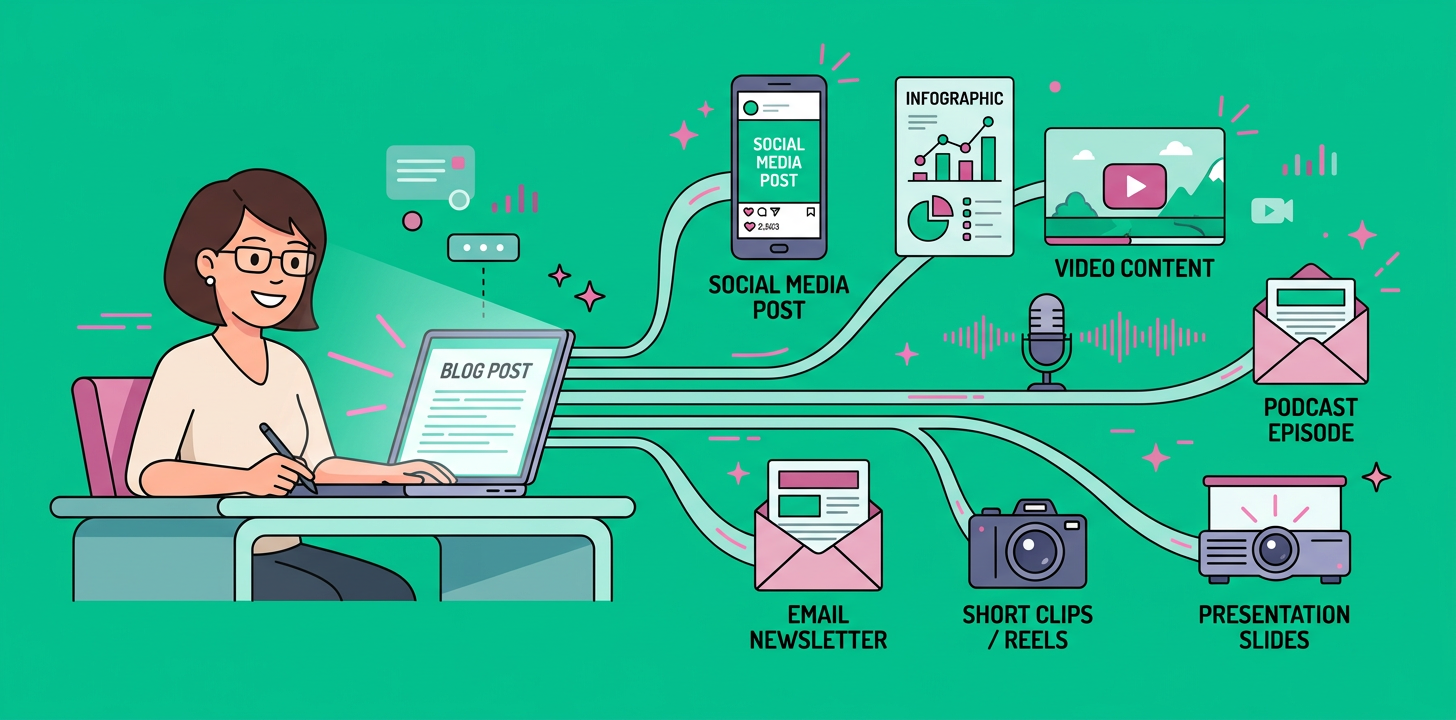
Have you ever published a great piece of content, then watched it quietly fade into the archive? That’s the problem a strong content repurposing workflow solves. Instead of starting from scratch every time, you turn one useful idea into multiple assets that keep working for you across search, social, email, and AI-driven discovery.
For website owners, SaaS teams, agencies, and small businesses, this is one of the simplest ways to grow output without multiplying workload. It helps you publish more consistently, protect your budget, and make every article, webinar, or video do more than one job.
What Is a Content Repurposing Workflow?
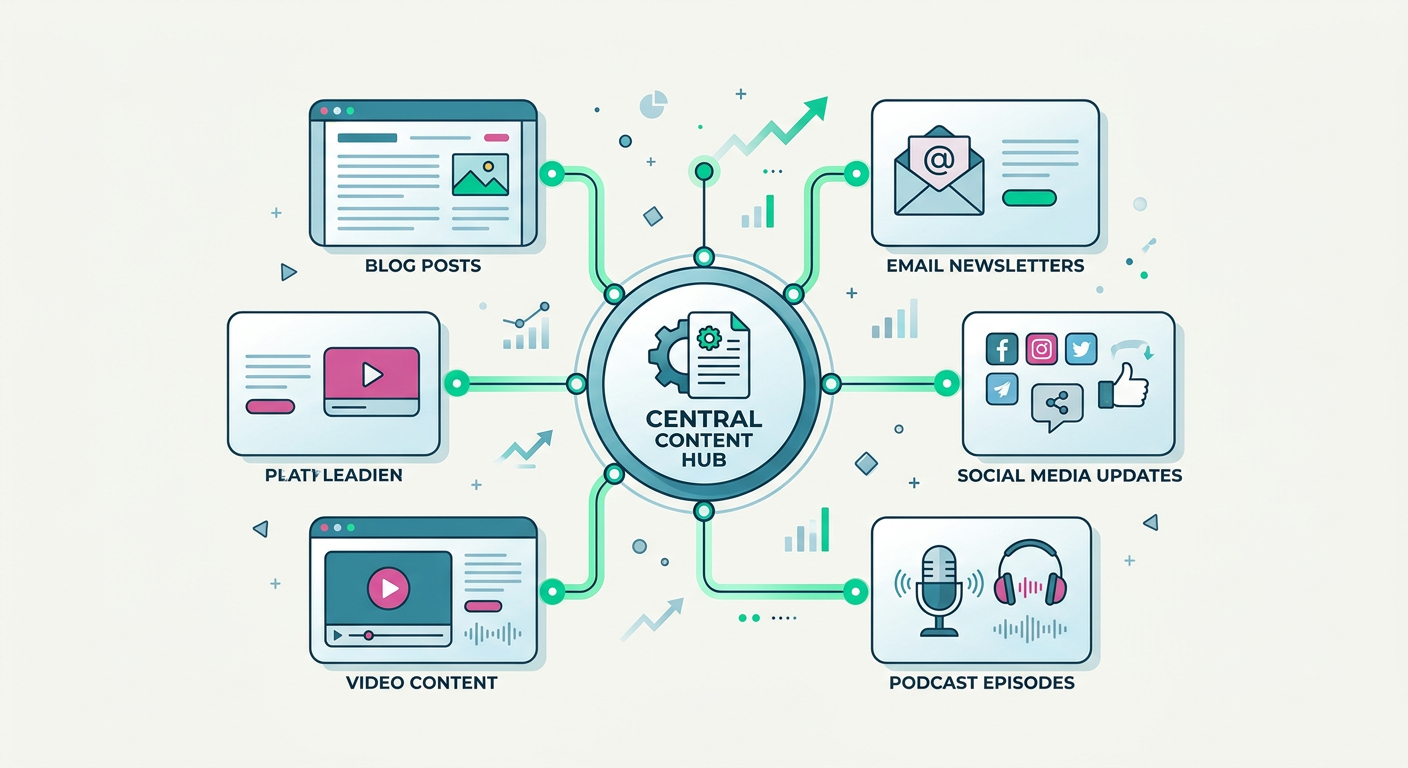
A content repurposing workflow is the repeatable process of taking one core piece of content and adapting it into other formats, audiences, or channels. For example, a blog post can become an email newsletter, LinkedIn post, short video script, FAQ section, carousel, or AI-friendly summary.
The workflow matters because random repurposing is messy. A real system gives you a clear process, so your team knows what to create, how to adapt it, where to publish it, and how to measure results.
Why this matters for modern marketing
People rarely discover your brand in just one place. They may find you through Google, then see your insight on social media, then revisit you in an email, then ask an AI tool about you later. A structured workflow helps you stay visible in all those moments without doubling your effort.
Why a Content Repurposing Workflow Works So Well
The biggest advantage is efficiency. You already spent time thinking through the topic, gathering examples, and shaping the core message, so repurposing lets you reuse that strategic work instead of recreating it.
It also helps you build consistency. Many teams struggle with inconsistent blogging because they run out of ideas, time, or bandwidth. Repurposing gives you a practical way to keep publishing even when resources are tight.
Better reach, without more chaos
Different formats attract different audiences. Some people prefer long-form articles, others want quick tips, and some only engage with video or social snippets. Repurposing lets you meet people where they already are, while keeping your message aligned.
The Best Content Repurposing Workflow Step by Step
1. Start with one strong core asset
Your workflow should begin with a piece of content that has real substance. A high-performing blog post, a webinar, a customer story, a podcast episode, or a pillar page usually works best because it contains multiple angles you can extract later.
If the original content is vague or thin, repurposing it will just create more weak content. Start with something useful, specific, and evergreen when possible.
2. Identify the best repurposing angles
Ask yourself what parts of the original asset can stand on their own. You might find a process, a framework, a list of mistakes, a quote, a stat, a checklist, or a takeaway that deserves its own spin-off.
This is where the workflow becomes strategic. You are not copying content into different places, you are tailoring the message for each channel and audience.
3. Match each format to the right channel
A blog post may become a LinkedIn post, but it may also become a short email, a FAQ page, or a script for a 45-second video. The format should fit the channel, not force it.
Here is a simple rule, use long-form for depth, short-form for attention, and visual or audio formats for reach and recall.
4. Create your repurposing calendar
A workflow works best when it is scheduled. Decide how often you will repurpose content, which content gets priority, and who owns each step.
For example, every new article could generate one email, three social posts, one FAQ update, and one short video script. That kind of system keeps your pipeline moving without constant reinvention.
5. Add SEO and AI visibility layers
Repurposing is not just about more content. It is also about making your ideas easier to find and easier for search engines and AI tools to understand.
That means clear headings, concise summaries, keyword variations, internal linking, and well-structured answers to common questions. If you want to go deeper, this approach pairs nicely with a blog content strategy built for recurring traffic.
What to Repurpose First
Not every asset deserves the same effort. If you want fast wins, start with content that already has traction or content that solves a high-intent problem for your audience.
High-value content types to reuse
- Evergreen blog posts that answer a common question
- Case studies with strong proof points
- Webinars packed with insights
- How-to guides with clear steps
- Product education content
- Sales enablement articles
- Customer FAQ documents
If your team wants to improve efficiency even more, a content automation system can help organize and scale these repurposing steps consistently.
Common Formats in a Content Repurposing Workflow
Blog post to social media
Pull out one insight, one stat, or one myth-busting takeaway and turn it into a post. This is one of the fastest ways to stretch a long article into multiple touchpoints.
Blog post to email newsletter
Email is perfect for a compact summary with one clear takeaway and one CTA. Keep it concise, useful, and easy to scan.
Webinar to blog series
A single webinar can become several posts, each focused on one section or theme. This is especially useful for SaaS teams and agencies that need more content without constantly creating new material.
FAQ content to SEO pages
Questions from customers are repurposing gold. Turn them into FAQ entries, support content, and search-friendly pages that can capture long-tail traffic.
Video to article or script snippets
A video can become a transcript-based blog post, a short summary, or several short clips. This extends the life of the original recording and makes it easier to distribute across channels.
Tools and Roles That Make the Workflow Easier
A good workflow does not require a huge team. It does require clarity.
Useful roles
- Strategist, who chooses the right core topics
- Writer, who adapts the message for each format
- Editor, who keeps everything on-brand and readable
- SEO lead, who ensures search value and internal linking
- Automation support, who helps move content through the workflow faster
Helpful tools
Project management tools, content calendars, AI drafting support, scheduling tools, and simple workflow automation can all reduce friction. The goal is not to add complexity, it is to remove repeated manual work.
Mistakes to Avoid
The most common mistake is repurposing too early. If the original piece is not strong, every derivative asset will feel weak too.
Another mistake is changing the format but not the angle. A blog post and a social caption should not sound identical. They should feel native to the channel while staying connected to the same core message.
Finally, do not forget distribution. Repurposed content only works if people actually see it.
A Simple 7-Day Repurposing Example
Day 1
Publish the core blog post.
Day 2
Turn the main takeaway into a short LinkedIn post.
Day 3
Create an email summary with one CTA.
Day 4
Pull out three supporting tips for social posts.
Day 5
Add a FAQ section to your website.
Day 6
Record a short video or voice note on the same topic.
Day 7
Review performance and update the workflow based on what got traction.
That is the beauty of a repeatable system, it keeps momentum going without needing a new idea every day.
FAQ About Content Repurposing Workflow
What is the main goal of a content repurposing workflow?
The goal is to get more value from every piece of content you already create. It helps you increase reach, consistency, and efficiency without starting from zero each time.
How often should you repurpose content?
That depends on your publishing pace, but many teams repurpose every strong core asset once it is published. The important part is building a repeatable rhythm instead of doing it randomly.
What content is best for repurposing?
Evergreen, high-performing, and high-value educational content usually works best. If it solves a common customer problem, it is probably a great candidate.
Can small businesses use a repurposing workflow?
Yes, and they often benefit the most. It helps small teams publish more content with fewer resources, which is useful when budgets and time are limited.
Does repurposing hurt SEO?
Not when it is done well. In fact, repurposing can support SEO if each version is adapted properly, internally linked, and created with a clear purpose.
How does this help AI visibility?
Structured, useful, and repeated content themes make it easier for AI tools to understand your expertise. Clear summaries, headings, and topical consistency can improve how your brand is represented in AI search experiences.
Build a Workflow That Actually Scales
If you want content that keeps working after publish day, a content repurposing workflow is one of the smartest systems you can build. It helps you stay visible, save time, and turn one idea into a stream of marketing assets that support growth.
The best part is that you do not need a huge team to start. You need one strong piece of content, a clear process, and a repeatable plan you can run every week.
Ready to Make Content Easier?
If you want a smarter system for blogging, SEO, and automation, this is where we can help. Visit https://contentbeast.com to turn your content into a repeatable growth engine without all the manual grind.
Start with one core article, build the workflow around it, and let every new piece do more for your business.