
How do you get mentioned in AI search results? The short answer is: by creating clear, trustworthy, highly useful content that AI systems can confidently pull from, summarize, and recommend. You need strong topical coverage, obvious expertise, and a site structure that makes your best answers easy to find.
The good news is that you do not need a massive brand or a giant content team to do it. If you publish the right pages consistently, optimize for intent instead of just keywords, and build content that answers real questions better than your competitors, you can increase your chances of showing up in AI-generated answers, overviews, and assistant responses.
What It Means To Be Mentioned In AI Search Results
AI search results are the answers generated by tools and search experiences that summarize information from multiple sources. That can include search engines with AI overviews, chat-style assistants, and answer engines that synthesize content instead of listing only blue links.
Getting mentioned means your brand, page, or insight is referenced, summarized, or used as a source in those answers. It is not just about ranking first anymore, it is about becoming one of the most understandable and trustworthy options in the topic area.
Why this matters for your business
If your content gets surfaced in AI results, you can earn visibility earlier in the buyer journey. That can lead to more brand awareness, more qualified traffic, and more trust before someone ever visits your website.
For website owners, SaaS founders, agencies, ecommerce brands, and small businesses, this is a huge opportunity. The people who win here are usually the ones who publish helpful content consistently, not the ones who publish the loudest content.
How AI Search Chooses What To Mention
AI systems try to answer the user’s question as accurately and efficiently as possible. That means they look for content that is relevant, structured, authoritative, and easy to interpret.
You should think of AI visibility as a mix of traditional SEO and answer quality. If your page is weak on clarity, thin on detail, or hard to trust, it is much less likely to be used.
The signals that usually help
- Clear answers near the top of the page
- Topical depth across related questions
- Simple page structure with descriptive headings
- Original insights, examples, or data
- Consistent brand mentions across the web
- Strong internal linking between related pages
- Evidence of expertise and trust
What hurts your chances
- Thin or generic content
- Pages that hide the answer below long intros
- Poor organization or confusing headings
- Duplicate content with no original value
- Outdated information
- Weak brand presence and few external references
Build Content That AI Can Easily Quote Or Summarize
If you want to know how to get mentioned in AI search results, start by making your pages easy to understand. AI systems love content that is specific, well organized, and written for humans first.
Your first paragraph should answer the question directly. Then expand with context, examples, and practical steps. That structure helps both readers and AI systems identify the main point fast.
Write answer-first introductions
Do not bury the lead. If someone searches a question, give the answer right away, then support it with detail.
That does two things. It improves user satisfaction, and it gives AI systems a clean summary to work with.
Use descriptive subheadings
Subheadings should tell the story of the page. Instead of vague headings like “tips” or “details,” use specific ones like “How AI Search Chooses Sources” or “Content Structure That Improves Visibility.”
That makes your page scannable and much easier for machines to parse.
Add examples and proof
AI systems are more likely to trust content that feels grounded in reality. Use examples, process steps, and specific scenarios to show you are not just repeating generic advice.
If appropriate, include original stats, short case studies, or unique frameworks your brand uses. That is the kind of material that can help you stand out.
Strengthen Your Topic Authority
One of the biggest factors in AI visibility is topical authority. In simple terms, that means your site should clearly demonstrate deep knowledge around a subject, not just one-off posts.
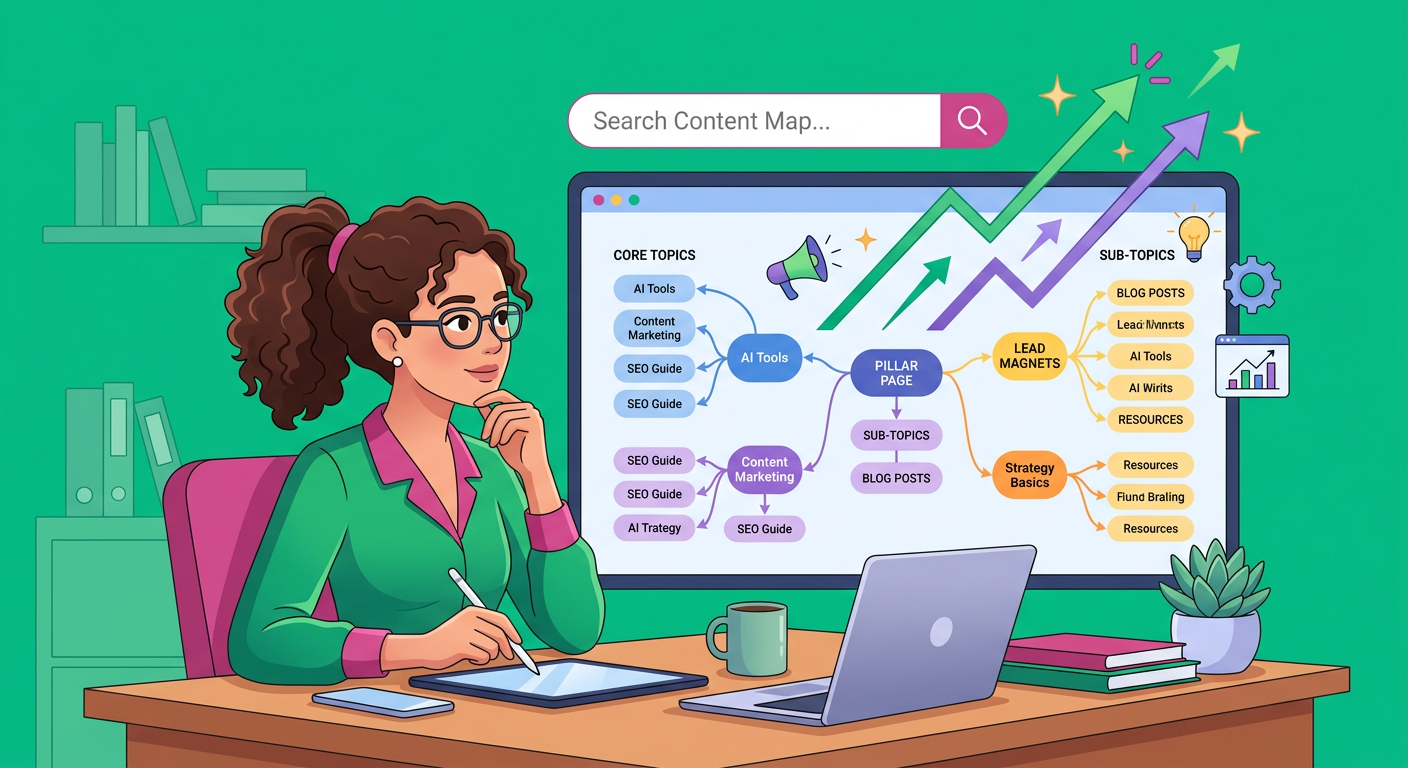
If you want to be mentioned for a topic, build a cluster of related articles that support the same theme. For example, a site focused on SEO visibility might publish pages about keyword research, internal linking, content briefs, blog automation, and AI search optimization.
Create content clusters
Pick one core topic and cover it from multiple angles. Each page should link to the others naturally, so the whole site feels connected and purposeful.
This is especially useful for businesses that want lower content costs and better returns from every article they publish.
Cover the questions people actually ask
Think about the long-tail queries your audience uses. Questions like what is AI search visibility, how to rank in AI answers, and how to optimize for search assistants are often easier to win than broad competitive terms.
That is where recurring content becomes powerful. Consistent publishing around real questions builds momentum.
Make Your Brand Easier To Trust
AI systems are not just reading pages, they are trying to estimate credibility. So your brand footprint matters.
The more signals you create that show your business is real, active, and knowledgeable, the more likely your content is to be surfaced.
Improve trust signals on your site
- Add clear author bios
- Show company details and contact information
- Include updated dates where relevant
- Cite reliable sources when using external facts
- Keep content current and accurate
Build recognition beyond your website
Mentions on reputable sites, industry directories, podcasts, and social platforms can all help reinforce your authority. AI search systems often benefit from a broader web presence, not just your own pages.
If your brand keeps appearing around a topic, that creates a stronger signal that you belong in the conversation.
Use Structured Content And SEO Basics Well
Traditional SEO still matters. AI systems often rely on pages that already have strong signals of relevance and quality.
That means you still need keyword alignment, internal linking, clean metadata, and pages that load well on mobile devices. The difference is that now your content must also be easy for AI to summarize.
Focus on semantic relevance
Instead of repeating one phrase over and over, use related terms and supporting concepts. That helps search engines understand the full topic coverage of your page.
For example, if your page is about how to get mentioned in ai search results, related language might include AI answers, search overviews, answer engines, topical authority, and brand visibility.
Keep your pages easy to scan
Short paragraphs, clear lists, and direct language all help. If a human can find the answer quickly, AI tools usually can too.
This is one reason many teams use recurring content systems, because they help publish structured posts at scale without sacrificing quality.
Create Pages Worth Referencing
Here is the real secret. AI systems tend to mention content that is genuinely useful. Not just optimized. Useful.
That means your page should solve a problem better than the alternatives. It should feel like a resource, not a sales pitch.
What makes a page reference-worthy
- It answers the exact question clearly
- It includes practical steps or examples
- It offers a viewpoint the reader can use immediately
- It is accurate, current, and specific
- It is written in a way people would want to share
Make every page do one job well
A focused page is easier to trust than a bloated page trying to cover everything. If you want mentions, do not dilute the core message.
Keep the main promise obvious, then support it with sections that add depth.
A Simple Content Plan To Increase AI Mentions
If you are starting from scratch, do not overcomplicate it. Build a system.
Here is a practical path that works for small teams, busy founders, and marketing teams with limited time.
Step 1, pick one core topic
Choose a topic that matters to your business and your audience. Examples include SEO for SaaS, ecommerce blog traffic, AI content strategy, or local service marketing.
Step 2, build a cluster of questions
Create a list of 10 to 20 real questions people ask around that topic. Turn those into articles, landing pages, or supporting resources.
Step 3, publish consistently
Consistency matters more than random bursts. One useful article every week usually beats five rushed posts once a quarter.
Step 4, interlink everything
Make it easy for people and crawlers to move between related pages. Internal linking helps define your site structure and strengthens authority.
Step 5, refresh your best content
Update the pages that already perform well. Add new examples, tighten the answer, and improve clarity over time.
How ContentBeast Fits Into This Strategy
For teams that want traffic growth without the usual content chaos, a system matters more than heroics. That is where recurring blogging, SEO planning, and automation can make the process much easier.
If you are trying to stay consistent, lower costs, and publish content that has a real shot at being mentioned in AI search results, an automated content workflow can remove a lot of the friction. It helps you keep producing the kind of pages AI systems can actually understand and use.
FAQ
How long does it take to get mentioned in AI search results?
It depends on your niche, competition, and site authority. Some pages can be surfaced quickly if they answer a focused question well, but stronger visibility usually comes from consistent publishing and trust building over time.
Do I need backlinks to appear in AI answers?
Backlinks still help, but they are not the only factor. Clear answers, strong topical authority, and a trustworthy site structure can also improve your chances.
Is AI search different from regular SEO?
Yes, but not completely. Traditional SEO still matters, yet AI search places extra weight on clarity, structure, and content that can be summarized confidently.
What kind of content gets mentioned most often?
Content that is direct, specific, and useful tends to perform best. Guides, definitions, comparisons, how-to posts, and answer pages are especially effective.
Should I write for AI or for humans?
Always write for humans first. The best AI-visible content is usually the content that is easiest for people to understand and act on.
Can small businesses compete with bigger brands?
Absolutely. Smaller businesses often win by being more specific, more helpful, and faster to publish on niche questions their audience actually cares about.
What is the fastest way to improve my AI visibility?
Start by improving your best pages. Make the opening clearer, expand the answer, add structure, and build related supporting articles around the same topic.
Ready To Build More Visibility?
If you want to get mentioned in AI search results, stop treating content like a checkbox and start treating it like an asset. Focus on clarity, depth, trust, and consistency, and you will give your brand a much better shot at being surfaced.
If you want help building that system without the manual grind, visit https://contentbeast.com and explore a simpler way to publish content that can rank on Google and get noticed by AI tools.
Conclusion
The brands getting mentioned in AI search results are not always the biggest ones. They are usually the clearest, most helpful, and most consistent.
If you focus on useful answers, strong structure, topical authority, and a repeatable publishing system, you can absolutely compete. And if you keep improving the content over time, your chances only get better.