

Consistent blogging for B2B websites is one of the simplest ways to build trust, attract qualified traffic, and stay visible in Google and AI-powered search tools. The catch is that most teams start strong, then lose momentum when time gets tight, ideas run dry, or results take longer than expected.
Here’s the good news, you do not need a giant content team to make blogging work. You need a repeatable system, a realistic publishing rhythm, and a way to keep quality high without reinventing the wheel every week.
What Consistent Blogging for B2B Websites Really Means
Consistent blogging for B2B websites is not about publishing daily just to check a box. It is about showing up on a reliable schedule with content that answers real customer questions, supports sales conversations, and compounds over time.
For B2B brands, consistency matters because buyers rarely convert after one visit. They compare options, research pain points, and look for signs that your company understands their world.
Why consistency beats random publishing
A single great article can help, but a steady stream of useful posts creates momentum. Over time, your blog becomes a library of answers, proof points, and discovery pages that can rank, get cited, and support your funnel.
What consistency looks like in practice
For some teams, it means one strong post per week. For others, it may be two posts per month with strong internal linking, clear keyword targeting, and a content refresh process.
Why B2B Websites Benefit So Much from Regular Blogging
B2B buying journeys are long, and the questions buyers ask change at every stage. A blog helps you meet them where they are, whether they are just learning about a problem or narrowing down vendors.
More search visibility over time
Each post is another opportunity to rank for a specific query. The more relevant pages you publish and maintain, the more search surface area you create for your brand.
Better sales enablement
Your blog can answer objections before they reach your sales team. That means shorter sales cycles, better-informed prospects, and fewer repetitive explanations.
Stronger brand authority
When your content consistently addresses industry problems, your company looks more credible. Readers start to see you as a helpful source, not just another vendor.
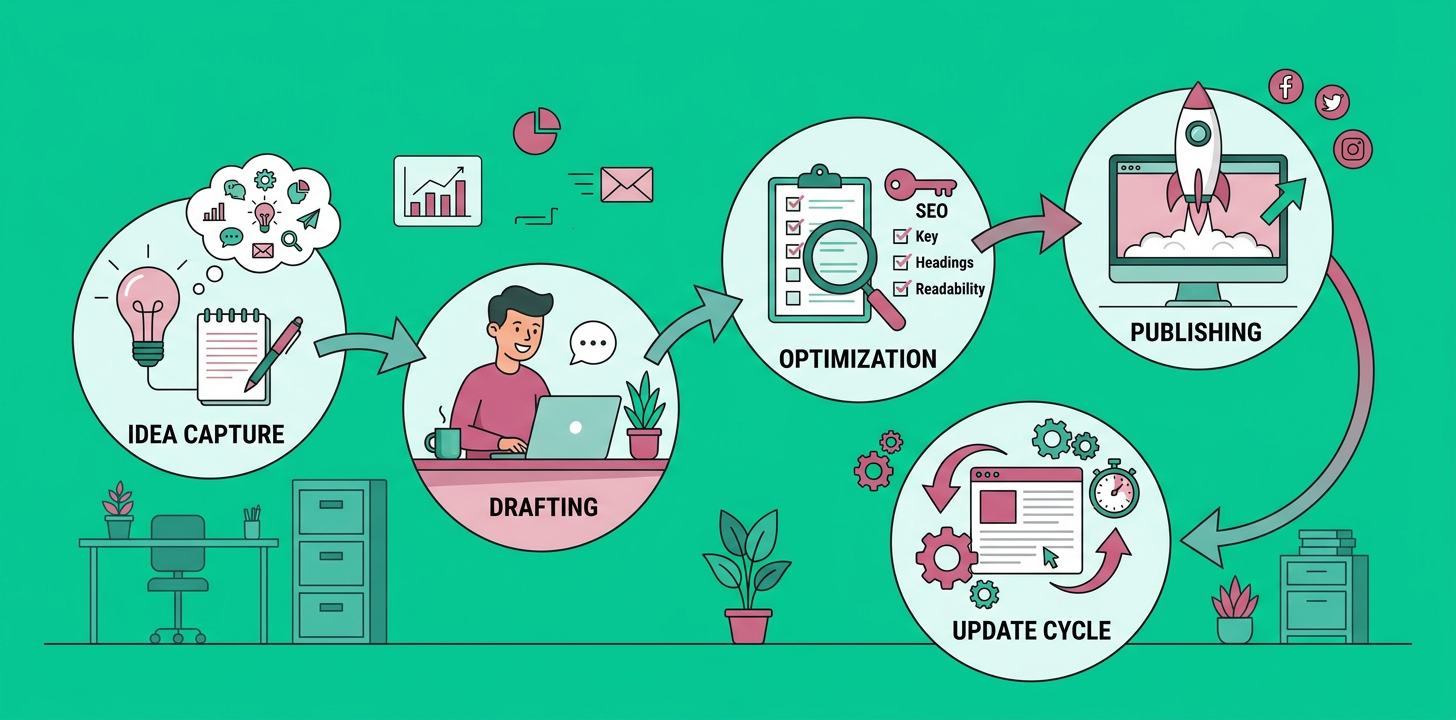
How to Build a Consistent Blogging System
The easiest way to stay consistent is to stop treating every post like a separate project. Instead, build a system that reduces decision fatigue and makes publishing feel predictable.
Step 1: Choose content pillars
Pick 3 to 5 core themes that match your audience’s biggest priorities. For example, a SaaS company might focus on product education, workflow efficiency, integrations, and industry best practices.
Step 2: Create repeatable post types
Not every article needs to be original in format. You can rotate between how-to guides, comparison posts, FAQs, case studies, opinion pieces, and problem-solution articles.
Step 3: Use a simple editorial calendar
A basic calendar keeps your team aligned and removes the daily question of “What should we write next?” Plan topics 30 to 90 days ahead, then batch research, drafting, and optimization.
Step 4: Optimize for search and AI discovery
Use clear headings, direct answers, internal links, and concise summaries. Search engines and AI tools both tend to reward content that is structured, useful, and easy to interpret.
Common Reasons B2B Blogging Falls Apart
Most blogging problems are not really content problems. They are process problems.
No clear ownership
If everyone is responsible, nobody is responsible. Assign one owner who can keep topics moving from idea to publication.
Unrealistic publishing goals
A team that commits to too much will usually burn out fast. It is better to publish fewer posts consistently than to swing between overload and silence.
Weak topic strategy
If your posts are too broad, they will struggle to rank and rarely convert. Focus on topics tied to specific pain points, search intent, and buyer questions.
No update process
A blog is not a one-time project. Old posts should be refreshed, expanded, and re-optimized so they keep earning traffic.
A Better Progressive Content Strategy for B2B Teams
If you want content that compounds, start with low-friction wins and build from there.
Phase 1: Capture demand
Write about questions people are already asking. These posts help you get discovered and build early traction.
Phase 2: Build trust
Add deeper guides, frameworks, and comparisons. This is where you show expertise and help buyers evaluate their options.
Phase 3: Support conversion
Create content that addresses objections, explains your process, and shows why your solution fits.
Phase 4: Scale with automation
Once you know what works, use automation to support topic planning, repurposing, optimization, and publishing workflows. That is often the simplest way to keep consistent blogging for B2B websites without constant manual effort.
Practical Blogging Ideas for B2B Websites
If your team is stuck, start with these formats:
- What is X, and why does it matter?
- How to solve a specific business problem
- X vs. Y comparisons
- Common mistakes in your industry
- Buyer FAQs and objections
- Checklists and implementation guides
- Case studies and lessons learned
The best topics usually come from sales calls, support tickets, product questions, and customer language. If your team hears the same question repeatedly, that is a blog post waiting to happen.
How to Measure Whether Your Blogging Is Working
Do not judge performance only by traffic in the first few weeks. B2B content often takes time to build.
Track the right signals
Look at organic impressions, keyword movement, time on page, assisted conversions, and the number of sales conversations influenced by content.
Watch for compounding growth
A strong blog often starts slow, then accelerates as more pages support each other through internal links and topical relevance.
FAQ
How often should a B2B website blog?
There is no universal answer, but weekly or biweekly is a strong starting point for many teams. The key is choosing a pace you can sustain for months, not just a few weeks.
What should a B2B blog write about first?
Start with the questions your prospects ask most often. Focus on pain points, comparisons, and “how to” topics that match real search intent.
Does blogging still help B2B SEO?
Yes, especially when posts are useful, well-structured, and aligned with search demand. Blogging also helps create more opportunities for internal linking and topical authority.
How can a small team stay consistent with content?
Use templates, topic batches, and a simple editorial workflow. Automation can also reduce repetitive work, especially for planning and optimization.
How long does it take for B2B blog posts to rank?
It varies by competition, site authority, and topic quality. Some posts gain traction in weeks, while others take several months to build momentum.
Should old blog posts be updated?
Absolutely. Refreshing older posts can improve rankings, keep information current, and extend the life of your content library.
Get a Blogging System That Keeps Working
If you want consistent blogging for B2B websites without the stress, focus on a repeatable process instead of chasing one-off wins. The right system makes it easier to publish, easier to rank, and easier to scale as your business grows.
If you want help turning blogging into a reliable growth channel, visit https://contentbeast.com and see how a simpler content engine can support your traffic goals.
Conclusion
Consistent blogging is not about being everywhere all the time. It is about showing up with the right content, on a schedule you can maintain, so your website keeps earning trust and visibility.
For B2B teams that want growth without constant manual effort, a structured blogging system, supported by smart automation, is often the most practical path forward.