

AI can feel like a magic button, but the real wins come from smart automation that saves time and moves the needle. If you run a blog, manage content for a SaaS, or handle marketing for an e-commerce store, you want systems that produce consistent visibility with minimal friction.
In this guide I’ll show practical, low-effort AI tactics you can adopt this week. I’ll also explain the workflows that scale, quick experiments that often pay off, and how to prioritize automation so your content actually grows traffic. Along the way you’ll see how AI automation for content marketers fits into a repeatable playbook.
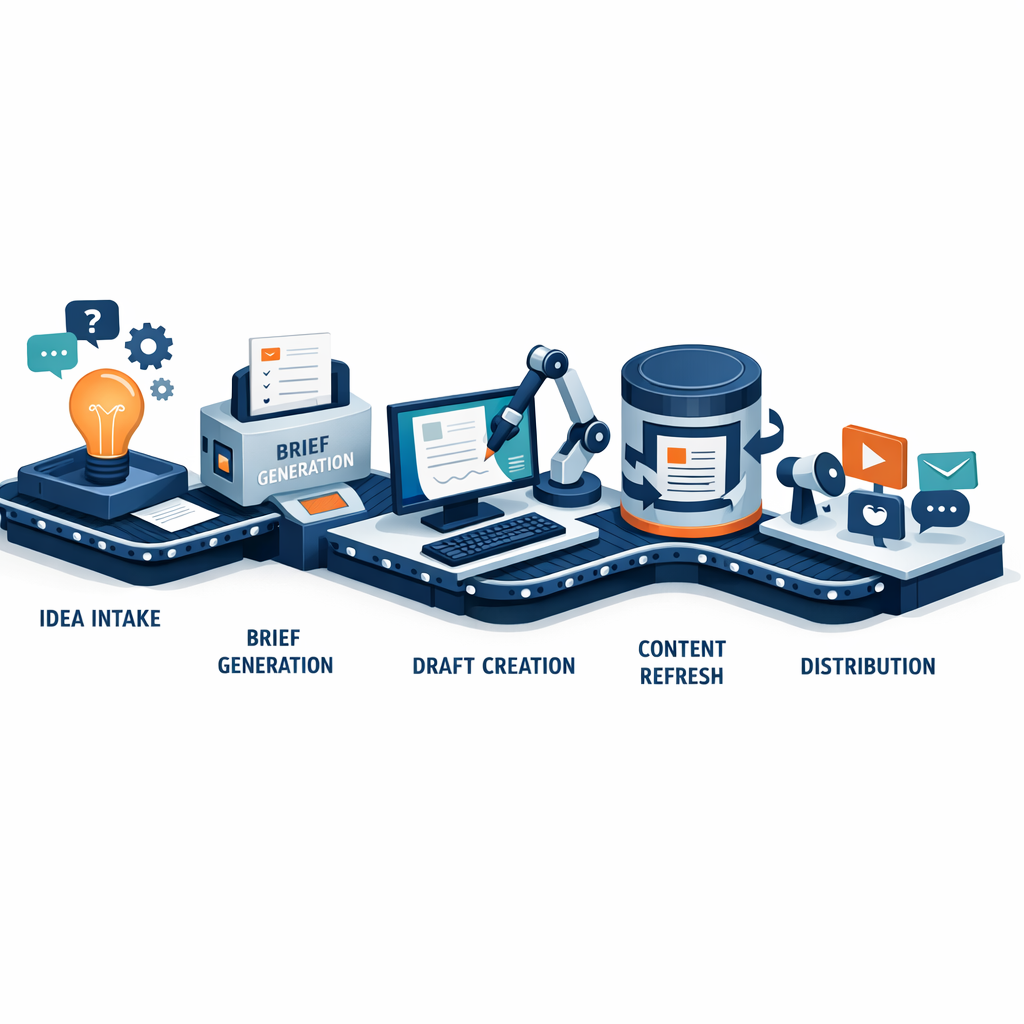
Why automate, and where to start
The case for automation
Manual content systems hit bottlenecks fast. Automation eliminates repetitive tasks, shortens turnaround, and lets your team focus on strategy. You don’t need to replace human writers, you need to remove busywork: brief creation, topic clustering, internal linking suggestions, and distribution scheduling.
Quick prioritization checklist
- Fix high-impact, low-effort tasks first, like refreshing top-performing posts and adding internal links.
- Automate content briefs and outlines to speed writing.
- Use AI for repurposing long posts into short social clips or email snippets.
Quick-win automations you can set up in a day
1. Automated brief and outline generator
Feed the AI your target keyword and top competitors, then generate a short brief: target intent, suggested H2s, top keywords, and a call to action. This saves hours when scaling to dozens of posts.
2. Content refresh scheduler
Identify pages with steady traffic decline and use AI to suggest updated sections, new examples, and current stats. Schedule monthly refresh tasks and track CTR and rankings.
3. Lightweight repurposing pipeline
Turn a single long article into: 5 tweets, 3 LinkedIn posts, a short YouTube script, and two email bullets. Use templates so the AI outputs usable drafts you only need to tweak.
4. Internal linking assistant
Run a crawl, then use AI to propose internal link targets and anchor text based on topical relevance. Implement the highest-impact links first, like from pages with strong authority to pages you want to rank.
Practical AI-driven workflows (repeatable weekly plan)
Week 1: Audit and quick fixes
- Export top 100 pages by traffic. Identify 10 pages for refresh. Use AI to draft updates.
- Run a lightweight keyword gap check and add 5 low-competition keywords to your editorial calendar.
Week 2: Scale content creation
- Use automated briefs for 6 posts. Assign writers or an AI-assisted editor.
- Publish 2 refreshed posts and track performance.
Week 3: Repurpose and distribute
- Repurpose one top post into short social content and newsletters using AI templates.
- Run a small paid social test if distribution budget exists.
Repeat, measure, and iterate. The goal is consistent weekly momentum rather than sporadic big launches.
Tools and integrations to consider
You don’t need every shiny tool. Start with 2-3 that integrate with your CMS and workflow. Look for: brief generation, outline and draft support, and integrations to scheduling tools. Favor tools with robust export options so you keep ownership of content.
Measuring success: metrics that matter
- Organic sessions and keyword positions for refreshed pages
- Time to publish per post (hours saved) after automation
- Number of repurposed assets produced per pillar post
- Conversion lift from updated calls to action
Here’s the thing, automation isn’t valuable unless it improves an outcome. Track what changes and attribute performance to the system, not the tool.
Overcoming common objections
"AI will lower content quality"
AI should handle structure, repetitive writing, and idea generation. Keep humans in editing and final storytelling. Use AI to free creative energy, not replace it.
"This is expensive"
Start with targeted automations that reduce labor: outline generation, internal linking suggestions, and repurposing. These often pay for themselves in hours saved or traffic gains.
"It feels risky for SEO"
Avoid handing raw AI drafts straight to publish. Always include an editorial review that checks for accuracy, brand voice, and SEO intent.
Examples of simple AI agent ideas for traffic and leads
- Daily content-idea bot that emails 3 micro-topics pulled from trending queries in your niche
- Weekly page-priority agent that flags decaying pages and generates a refresh brief
- Internal-linking agent that recommends anchors and destinations after each publish
Content refresh ideas that lift rankings without new posts
- Update statistics, add current case studies or examples
- Expand sections with deeper intent-focused answers
- Add targeted FAQs to capture featured snippets
- Improve CTAs and internal links to conversion pages
Lightweight distribution tactics with big upside
- Post micro excerpts to LinkedIn and link to the refreshed article
- Use email subject line variants created by AI to test open rates quickly
- Automate content snippets for your product or help center to drive internal search visibility
FAQs
How quickly will I see traffic improvements from AI automation?
You can often see engagement and small ranking improvements within 2 to 8 weeks for refreshed pages, depending on competition. New posts may take longer, but automation accelerates throughput and iteration.
What content tasks should I not automate?
Do not fully automate thought leadership, investigative reporting, or pieces that require proprietary insights. Automate repetitive, structural, and distribution tasks instead.
Can I use AI for keyword research and topic discovery?
Yes, AI helps surface topic clusters and long-tail opportunities. Always validate AI suggestions against real keyword tools and search intent before building content.
Is internal linking automation safe for SEO?
Yes, when supervised. Use automated recommendations, then review top suggestions to ensure relevance and avoid over-optimization.
How do I maintain brand voice when using AI?
Create a concise style guide and train your prompts. Use human editing to polish tone and nuance. Over time, you can refine prompts to produce closer-to-voice drafts.
Which metrics should I track to prove ROI?
Track organic sessions, ranking movements for target keywords, time saved per content asset, and conversion lift from refreshed pages.
Ready to implement AI automation?
If you want step-by-step templates, brief generators, and a repeatable weekly playbook to produce more content with less work, start by mapping one small automation. Try automating brief generation or content repurposing for a week, measure time saved, and double down on what works. Learn more and get hands-on resources at https://ContentBeast.com.
Conclusion
AI automation for content marketers is not about replacing people, it is about removing friction. Start small, focus on high-impact automations like briefs, content refreshes, repurposing, and internal linking. Measure results, keep humans in the loop, and scale the workflows that actually move traffic and conversions. When you treat automation as a system, you win consistent, repeatable growth without burning out your team.