

Consistent organic traffic feels out of reach for many small teams, yet a handful of smart automations can move the needle fast. You do not need to publish dozens of long posts each week to see results, what you need are repeatable processes that multiply impact with minimal time.
In this article I explain practical, low-friction AI systems and workflows that drive measurable blog traffic gains, and how to set them up without hiring a large team. Below you will find tactical steps, real distribution plays, internal linking wins, and quick testing ideas you can implement this week using affordable tools.
Why automation beats random publishing
Here is the thing, publishing more content is only useful when each post is targeted, discoverable, and connected to your site. Automation helps you do three high-impact things reliably, without extra headcount:
- Find low-competition topics that actually drive visits
- Publish consistent, search-optimized content on a schedule
- Connect content with internal links and distribution so gains compound
When you combine small AI automations across research, writing, publishing, and distribution, you stop trading hours for traffic, and start building a compounding engine.
How AI Automation for Blog Traffic works
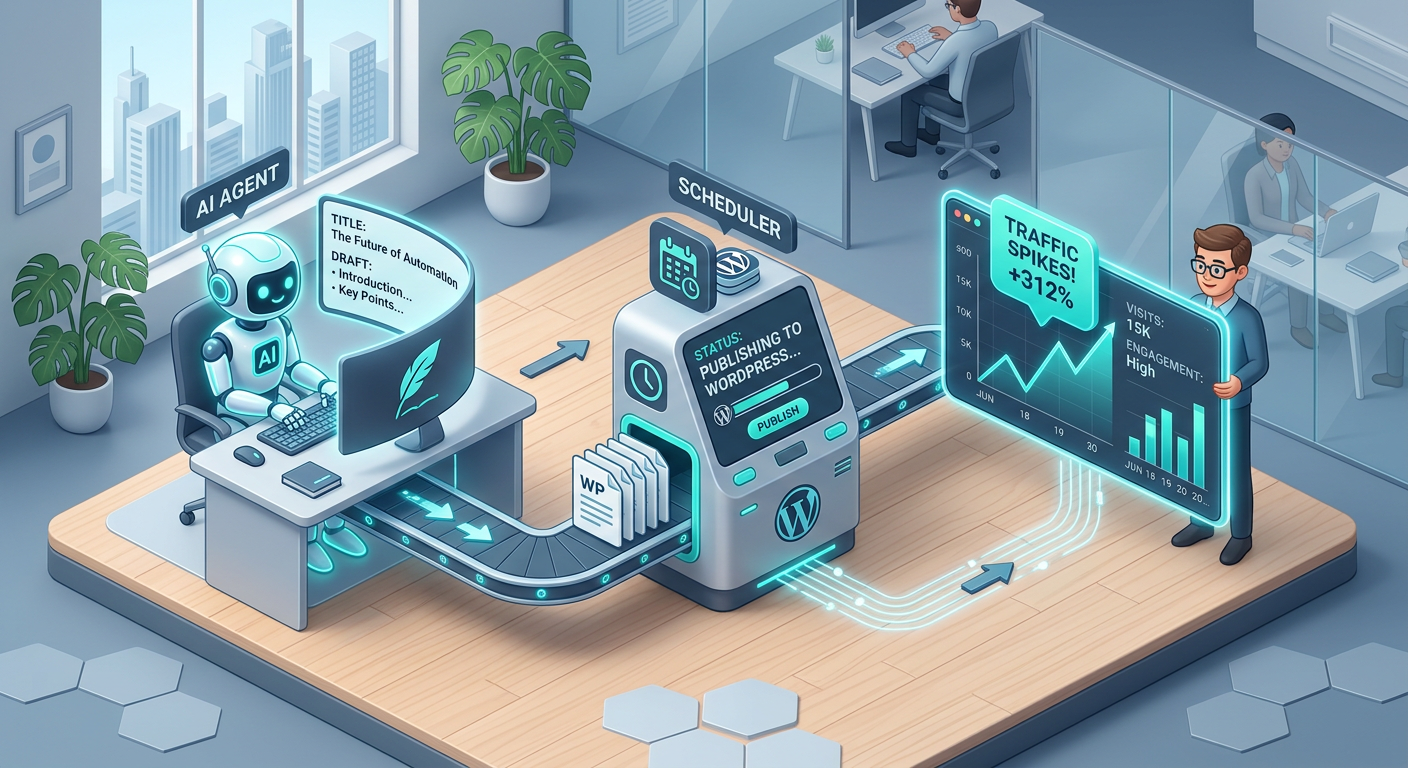
Automation for blog traffic is a chain, not a single tool. Break it into four linked systems:
1) Topic discovery and keyword triage
Use lightweight automation to scan SERPs, question forums, and your site analytics for high intent, low-competition phrases. Prioritize keywords that align with product pages and evergreen how-tos. This reduces wasted posts and shortens the time to rank.
2) Fast drafting with AI templates
Feed brief research notes into an AI draft template that outputs a structured article, meta tags, and a TL;DR. Keep human review lightweight: edit for accuracy, brand voice, and add unique examples. This preserves quality while saving 60 to 80 percent of writing time.
3) Automated publishing and internal linking
Automate formatting, schedules, images, and necessary internal links so each new post plugs into your site architecture. Proper internal linking distributes PageRank immediately and helps search engines find your new pages faster. If you use tools that can scan your sitemap and suggest contextual links, that is an immediate multiplier.
4) Lightweight distribution and monitoring
Automate social snippets, syndication to newsletters, and tracking. Set alerts for early ranking signals so you can prioritize quick updates and internal link pushes when a post starts to gain traction.
Quick setups that deliver traffic in weeks
Automate a weekly micro-post workflow
Pick one day a week. Use an AI outline + 600-900 word draft, add a short human edit, publish, then share three short social snippets. Small, consistent content that targets low-competition phrases often begins ranking within 4 to 8 weeks.
Run content refresh scripts
Identify pages with steady impressions but low click-through rates or falling rankings. Automate an audit to surface those pages, then use an AI-assisted refresh template that updates facts, expands sections, and improves CTAs. Refreshing can lift rankings faster than new posts.
Auto-insert contextual internal links
Use an automation that scans your sitemap and suggests 2-4 internal links for each new post. Contextual internal links improve crawl efficiency and user journeys, increasing average session time and supporting rankings.
Tools and integrations that shorten setup time
You do not need a huge stack. Look for these capabilities in tools or plugins: automated keyword discovery, draft templates, one-click publishing to your CMS, sitemap scanning for links, and automatic image generation. Solutions that combine several of these reduce overhead and implementation time. For example, product platforms that automate research to publish in minutes can be an immediate shortcut.
Measuring success without noise
Track three metrics first:
- Organic sessions from targeted keywords
- Click-through rate for pages you refreshed
- New internal link distribution and pages receiving at least one internal link
Use these to prioritize where to double down. If a post gets early traffic, boost it with extra internal links and a social push.
Objections and real constraints
You might worry AI will produce low-value content or trigger search penalties. That is avoidable. Focus automation on repetitive tasks, keep human oversight for accuracy and storytelling, and demonstrate E-E-A-T by adding author bios, original insights, and references. Quality matters more than whether the draft came from AI.
Practical 30-day plan
Week 1: Set up topic discovery automation, pick 8 low-competition targets.
Week 2: Create a draft template and publish two micro-posts after light edits.
Week 3: Enable sitemap scanning and automatic internal link suggestions, add 6 contextual links across your site.
Week 4: Refresh two underperforming pages, monitor ranks and traffic, and push social snippets for the best-performing post.
FAQ
Can AI content get my site penalized by Google?
AI-generated text alone is not automatically penalized, but low-quality or manipulative automatic content can be. Focus on helpful, original content that adds value, and make sure human oversight and E-E-A-T signals are present.
How much human editing is required?
For most workflows, a lightweight 10 to 30 minute edit per draft is sufficient. Editing time depends on niche complexity and compliance needs.
Which content types respond fastest to automation?
How-to guides, quick answer posts, and niche problem-solution content often see quicker ranking wins than broad opinion pieces.
Will internal linking automations help small sites?
Yes, especially for sites with scattered content. Automated suggestions speed up linking and ensure new posts are discoverable by crawlers.
How do I choose which pages to refresh?
Start with pages that have impressions but dropping clicks or pages that rank on page two. Those are the highest upside for small edits and updates.
What metrics show automation is working?
Look at search impressions, organic sessions, pages with improved rank, and increased conversions from updated content.
Is expensive software required?
No, many affordable tools combine the needed features. Prioritize tools that automate research, publishing, and link discovery over fancy editor features.
Next steps to get automation working for you
If you want to move faster, try a platform that connects research, drafting, and publishing into one workflow. For a ready-to-run solution that automates blog publishing, image generation, and internal linking, check tools designed for automated blogging and integrations. Visit https://ContentBeast.com to evaluate ready-made automations and quick-start templates.
Conclusion
AI automation for blog traffic is not about replacing human writers, it is about removing repetitive friction so your team can focus on insight and strategy. Start small, measure short-term lifts, and expand what works. The right automations switch your blog from a cost center to a compounding traffic engine.