

Here’s a simple truth: you do not always need new posts to win more search traffic. By updating, reorganizing, and republishing existing pages you can get measurable ranking lifts fast. Below are practical, prioritized tactics you can apply today that save time and drive results, including low-effort hacks and small AI-assisted automations. I highlight content refresh ideas for seo you can test in the next 7 days.
Why refresh content instead of publishing brand new posts
Updating an existing page sends strong signals to search engines, and often costs a fraction of producing new content. Here’s why it works:
- Existing pages already have backlinks and some authority. A targeted refresh amplifies those signals.
- Small UX or on-page improvements can increase click through rate and dwell time, which help visibility.
- You get faster wins, because you’re improving pages that Google already knows about.
Here’s the thing, you should prioritize pages by traffic potential and ease of change. Start with high-impression pages that rank on page two, or posts that used to perform well and slid over time.
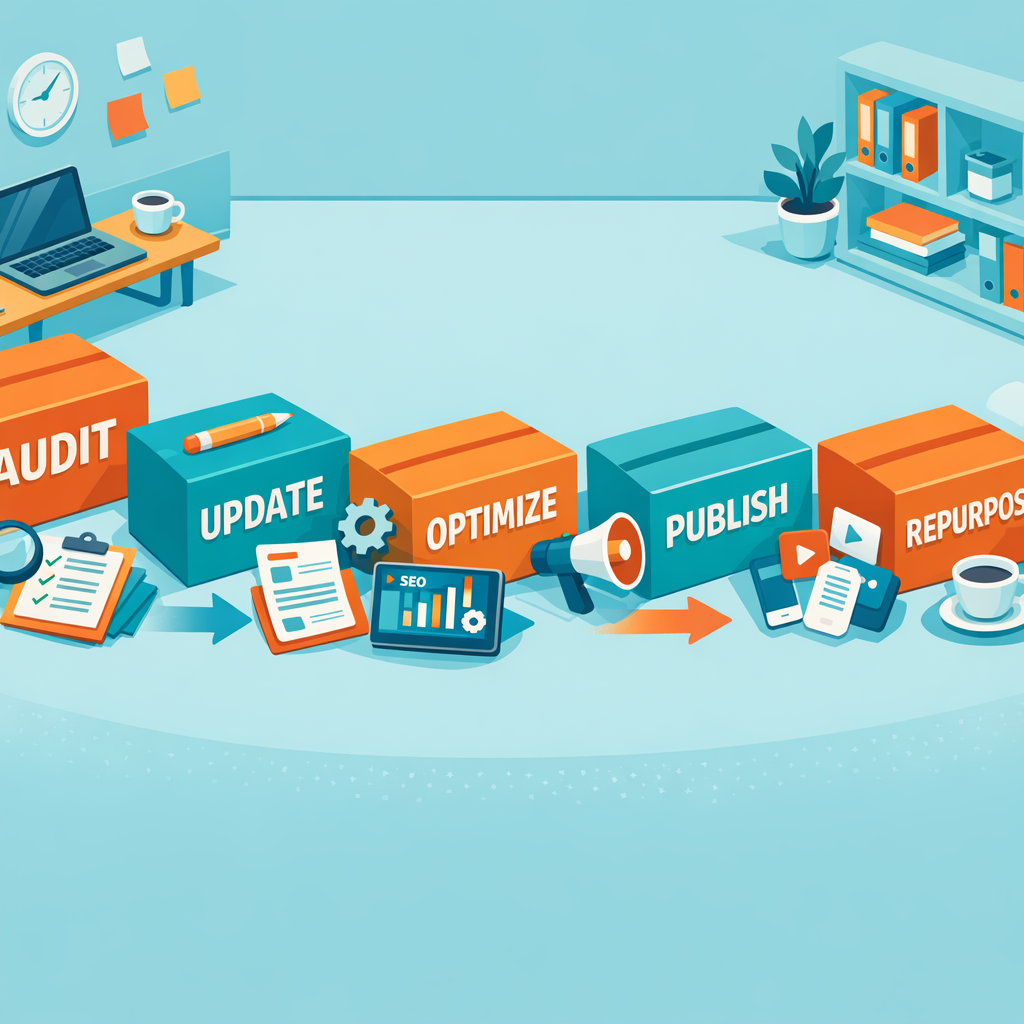
Quick audit to find the best refresh candidates
1. Identify “near-wins” (low-hanging fruit)
Look for pages ranking between positions 8 and 30 for keywords you care about. Those are easiest to push up with small changes.
2. Check historical performance
Sort by pages that once drove traffic but declined. Restoring relevancy or updating facts often returns traffic.
3. Prioritize by business value
Value beats volume. Focus on pages tied to conversions, product pages, category pages, or high-intent blog posts.
11 Practical content refresh ideas (fast, high-impact)
- Update title tags and meta descriptions for CTR
- Rewrite titles using power words and intent signals, test a different value proposition, and shorten overly long titles.
- Refresh meta descriptions to match current search intent and include a clear call to action.
- Improve headings and structure
- Add clear H2/H3s, use question-style subheads, and break long blocks of text into scannable sections.
- Add a short summary or TL;DR at the top
- Give readers and search engines an immediate snapshot of value, including target keywords naturally.
- Refresh statistics, dates, and references
- Replace outdated stats, link to newer research, and add publication dates to show freshness.
- Expand selectively where it matters
- Add 200 to 500 well-targeted words to cover missing subtopics or answer common questions.
- Optimize images and add captions
- Compress large images, add descriptive alt text, and include one or two new visuals to increase engagement.
- Prune or combine thin pages
- Merge low-value posts into a stronger pillar post, and 301 redirect removed pages to consolidate authority.
- Internal linking optimization
- Add contextual links from relevant, higher-authority pages to the refreshed content, using descriptive anchor text.
- Use schema for rich results
- Add FAQ, article, or product schema where relevant to increase SERP real estate.
- Improve readability and UX
- Shorten paragraphs, add bullet lists, increase font sizes for mobile, and use clear calls to action.
- Republishing and promotion
- Update the publish date only if the content is substantively refreshed, then promote the refreshed page via newsletter and social. Small promotional spikes can lead to reindexing and ranking gains.
Lightweight AI and automation ideas that save time
- Use AI to draft new meta descriptions and generate concise TL;DR summaries you edit for accuracy.
- Automate internal link suggestions by exporting top pages and matching target keywords in a spreadsheet.
- Run a quick SERP intent check with an AI prompt to summarize the top 5 competitors and spot missing angles.
Measuring success and timelines
Realistic expectation: small on-page updates can show movement in 2 to 8 weeks. Combine measurable KPIs:
- Organic clicks and impressions
- Average position for target keywords
- Click through rate and bounce/dwell metrics
- Conversion events tied to the page
If you do 3 to 5 targeted refreshes per month, you should see cumulative gains and discover which tactics consistently work for your site.
Common objections and answers
- "Will updates reset my traffic?" No, minor updates rarely harm rankings. Avoid drastic content removals without redirects, and keep the core value intact.
- "Is republishing necessary?" Only if the update is significant. Otherwise, keep the original publish date and add an "Updated" note.
- "Won't this take too much time?" Start with 30 to 90-minute refreshes targeted at high-potential pages. Small wins compound.
Frequently asked questions
How often should I refresh content?
Aim for a lightweight review every 6 to 12 months, and a deeper refresh for high-value pages every 3 to 6 months.
Which pages give the fastest wins?
Pages ranking just off page one, historically strong posts, and product/category pages that lack current signals are fastest.
Should I change the URL when refreshing a page?
No, avoid changing URLs unless you must. Changing a URL risks losing existing signals unless you implement a proper 301 redirect strategy.
How do I measure whether a refresh worked?
Track impressions, clicks, average position, CTR, and conversion rate over a 4 to 12 week window after publishing updates.
Can I use AI to rewrite whole articles?
AI is great for drafts and ideation. Always review and add authoritativeness, original examples, and accurate facts before publishing.
What’s the best internal linking strategy after a refresh?
Link from pages with related topical authority, use natural anchor text, and avoid linking from every paragraph. Aim for 2 to 5 high-quality contextual links.
Where to start this week
Pick 3 pages: one quick fix (meta + headings), one medium effort (add 300 words + internal links), and one merge/prune candidate. Track results and iterate.
Ready to scale content refreshes efficiently?
If you want a plug-and-play workflow and tools to systematize refreshes, check out resources and templates at ContentBeast. Use the site to get repeatable checklists, internal linking scripts, and a publishing cadence that fits small teams. Visit ContentBeast to explore templates and examples.
Conclusion
Refreshing content is one of the highest ROI activities for organic growth. You do not need a large budget or full rewrites to move the needle. Focus on pages with traction, apply the fast tactics above, measure outcomes, and scale the wins. Small, consistent improvements build authority and compound into meaningful traffic growth over time.