

You want faster organic traffic without hiring an agency or rewriting your entire site. That’s exactly the problem this guide solves, with practical steps you can run in hours, not weeks. In the opening below I’ll show simple, repeatable tactics for diy seo for ecommerce sites that move the needle today and build momentum for long-term growth.
Why quick-win SEO matters for online stores
If you run a store, every incremental lift in organic traffic correlates to revenue. The problem is time and resources. The good news, here’s the thing, small targeted changes to product pages, internal links, and content can unlock immediate visibility. You don’t need perfect content or huge link budgets to see impact.
Core quick-win strategies (what to do first)
1. Optimize high-intent product pages
- Audit top-selling SKUs and pages with product detail content. Prioritize pages already getting impressions or clicks.
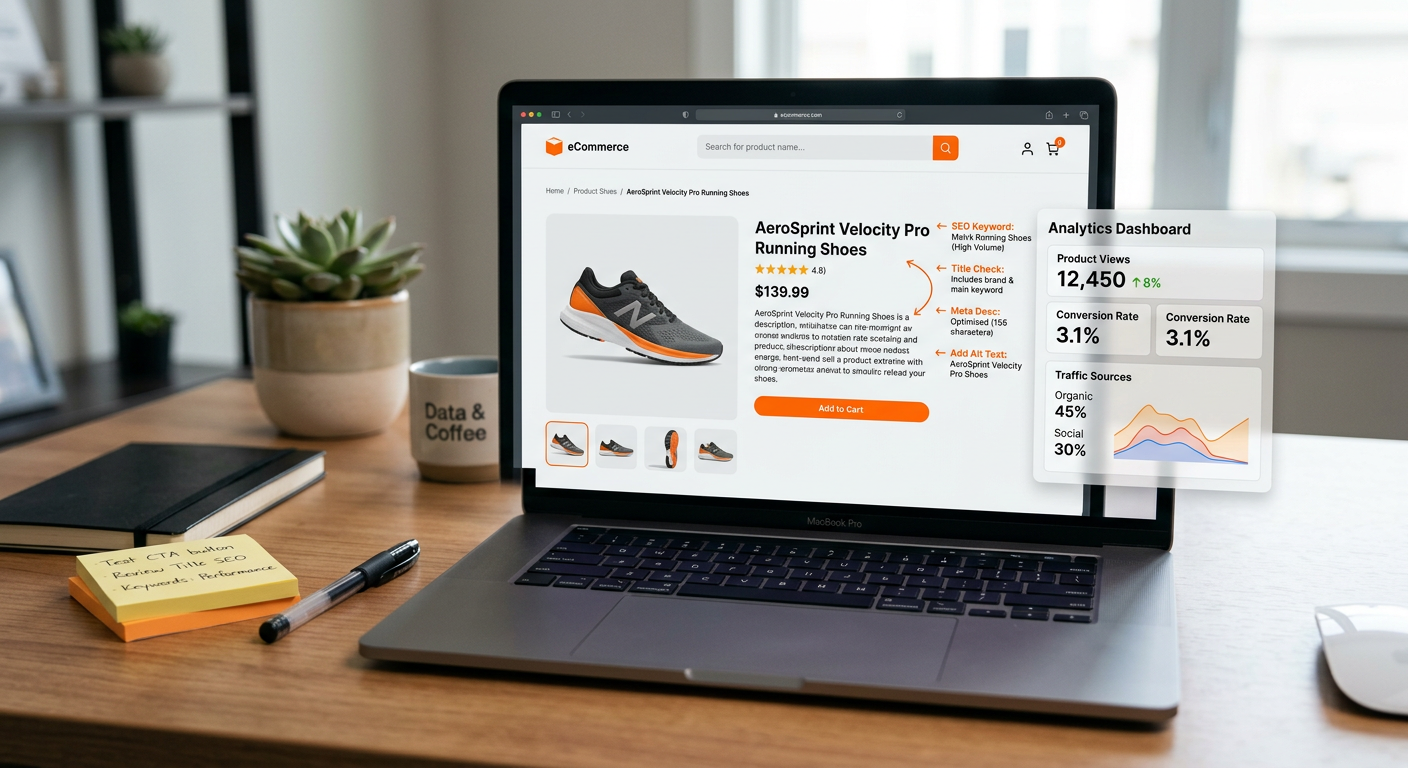
- Improve title tags and meta descriptions with natural, purchase-focused phrases, include size/color/brand variations.
- Add or refine unique product descriptions that answer buyer questions and reduce duplicate manufacturer copy.
Why it works: Search engines reward pages that clearly match buyer intent and reduce duplicate content across the catalog.
2. Low-friction content refreshes that lift rankings
- Update older blog posts or guides with recent stats, new images, and 1–2 extra headings.
- Add internal links from refreshed posts to high-margin product pages.
- Rewrite the intro and the first 300 words to include clearer intent signals and current offers.
Result: Freshness signals and better internal links often cause ranking bumps without publishing new posts.
3. Fast internal linking wins
- Create a simple topical hub page (collection page or category guide) and link to 8–12 product pages.
- Use descriptive anchor text with product attributes, like "best waterproof running shoes" rather than generic anchors.
- Fix orphaned pages that have no internal links — even one link from a category page helps discovery.
Impact: Improved crawl paths and stronger relevance signals for priority SKUs.
4. Lightweight schema and rich snippets
- Add product schema: price, availability, SKU, and rating markup. Many platforms offer plugins that add this quickly.
- Implement review markup for rated products to increase click-through rates and SERP real estate.
Why: Rich snippets can increase clicks even if rank doesn’t move much, delivering more traffic for the same position.
5. Target low-competition, high-intent keywords
- Use simple keyword filters: long-tail phrases with transactional modifiers like "buy", "best", "cheap", and specific attributes.
- Prioritize keywords with moderate search volume and low competition for faster gains.
- Optimize one product page or category per keyword cluster rather than scattershot changes.
Realistic timeline: 4–8 weeks for noticeable ranking and traffic movement on low-competition terms.
Content distribution and lightweight repurposing
- Turn a product guide into 3 short social posts, one email blurb, and two internal links to related SKUs.
- Use screenshots and short videos to repurpose existing posts — video thumbnails and product demos often increase engagement.
Automation tip: Use simple AI prompts to generate meta descriptions and social captions, then human-edit for brand voice.
Quick AI agent ideas to save time
- Create a nightly script to scan Google Search Console for pages with impressions but low clicks, then auto-generate 3 headline variants.
- Use an AI template to draft product description variants, then A/B test the top two on pages with traffic.
These automations reduce manual grunt work and let you focus on the highest-impact edits.
Measurement: what metrics to watch first
- Organic clicks and impressions (Search Console) for targeted keywords.
- Conversion rate and revenue per product page.
- Core Web Vitals for priority pages after changes.
Set a 30–60 day review cadence and iterate on the changes with data.
Common objections and how to answer them
- "We don’t have time for content" — Start with a 1-hour audit that finds 5 pages with the highest conversion potential and apply quick fixes.
- "SEO is slow" — Some tactics like internal linking, meta changes, and schema can increase clicks quickly, often within a few weeks.
- "Our platform is limited" — Focus on content, titles, and internal linking which are platform-agnostic.
FAQs
How soon will I see results from these DIY SEO changes?
Expect to see initial changes in clicks and impressions in 2–6 weeks for low-competition keywords. Full ranking improvements can take 4–12 weeks depending on competition and crawl frequency.
Which pages should I prioritize on a large catalog?
Start with best-sellers, pages with impressions but low clicks, and products with high margin. These give the fastest revenue impact.
Do I need to hire developers for schema or technical fixes?
Not necessarily. Many platforms and plugins add product schema and structured data without coding. For advanced technical issues, a short freelance engagement can be cost-effective.
How many internal links are too many?
There’s no strict cap, but keep links relevant and logical. 5–15 contextual links from a hub page to products is a practical range.
Can AI write product descriptions for me?
Yes, AI can draft descriptions quickly, but always edit for brand voice, accuracy, and unique selling points to avoid duplicate content.
Will these tactics help with Google Shopping or paid channels?
Improved titles, descriptions, and schema also improve feed quality and relevance for shopping ads, often reducing CPCs and improving conversion.
Which analytics tools should I use for tracking?
Start with Google Analytics and Search Console. Add lightweight tools for heatmaps and session recordings if you need deeper UX insights.
Ready to scale consistent results?
If you want step-by-step templates and workflows to implement these fast wins, check out practical resources and content templates at https://ContentBeast.com. Use them to run experiments, refine copy, and scale SEO without blowing your budget.
Conclusion
DIY SEO for ecommerce sites does not require perfect processes or big budgets. Focus on the highest-impact, low-effort moves: optimize priority product pages, refresh content, improve internal linking, add schema, and target low-competition keywords. Make small, measurable changes, track results, and repeat the cycle. Over time these quick wins compound into steady organic revenue growth.