

Small business owners and busy marketers need results, not theory. If you want faster organic traffic without hiring an agency or learning complicated tools, focus on the low-hanging fruit. This article shows practical, repeatable ways to find and use easy SEO keywords for small business, plus templates and quick tasks you can complete in a day.
Why small businesses should target easy SEO keywords
Big, competitive keywords are expensive and slow to win. Instead, prioritize narrow, high-intent phrases your audience actually types when they want a local service, quick fix, or product buy. Focused keywords deliver faster rankings, better conversion rates, and less time spent chasing top-tier authority sites.
Here is the thing, when you pick the right low-competition phrases and pair them with helpful pages and internal links, you get consistent traffic that converts.
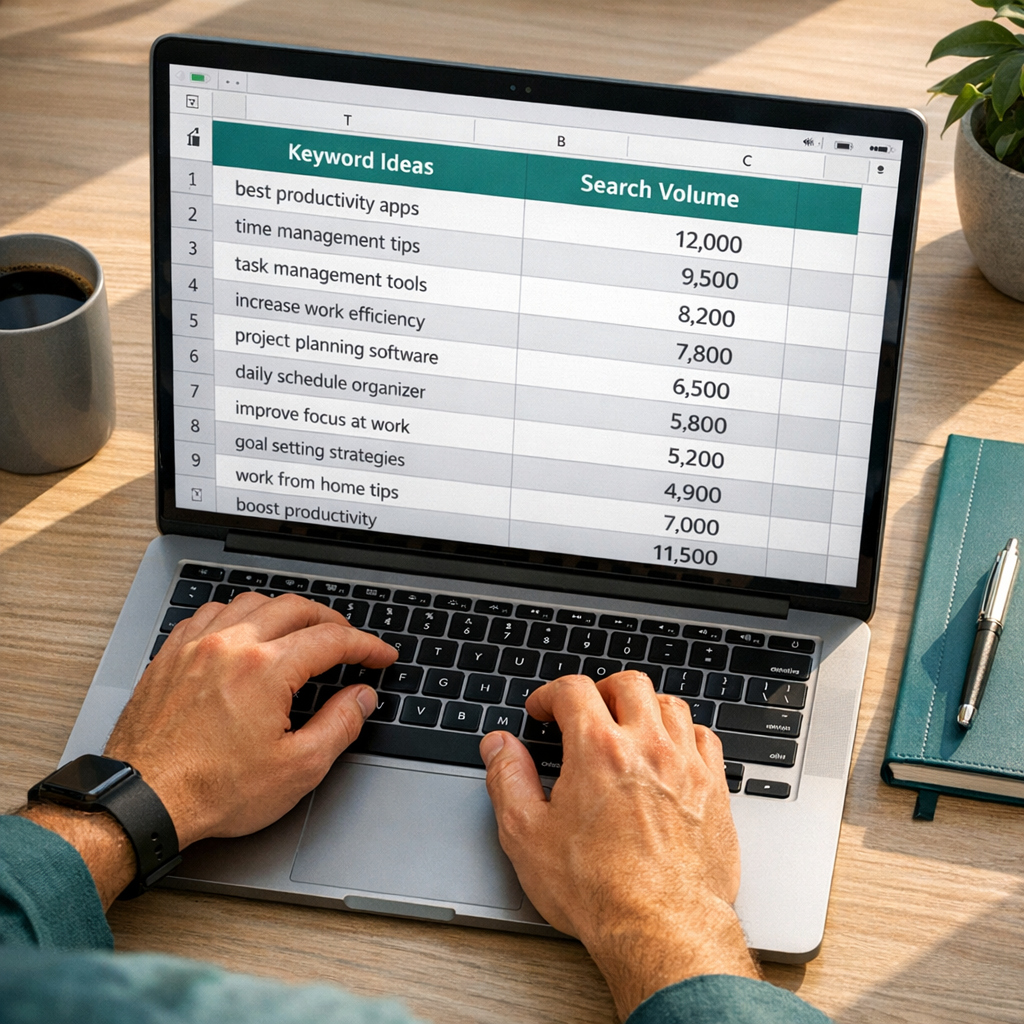
How to find easy SEO keywords in under an hour
1. Use intent-first brainstorming
- List 10 customer problems, questions, or micro-tasks related to your product.
- Convert each into 2-3 search phrases, e.g., "repair [product] near me", "best cheap [service] for [audience]", "how to [task] quickly".
2. Check low-competition signals
- Look for keywords with clear user intent and limited top-ranking pages.
- Prefer queries where top results are local pages, forums, small blogs, or single-product pages.
3. Validate with free tools
- Use free keyword ideas in Google Autocomplete and People Also Ask.
- Check estimated traffic difficulty with simple tools or a quick SERP scan, focusing on results that lack authoritative long-form content.
Quick keyword ideas by industry (examples you can adapt)
- Local services: "plumber open now [city]", "emergency AC repair near me".
- Retail/e-commerce: "affordable [product] for [use case]", "best [product] under $50".
- SaaS/B2B: "how to export invoices from [tool]", "best lightweight CRM for startups".
- Restaurants: "late night delivery near [neighborhood]", "vegetarian lunch specials [city]".
These templates scale across niches. Swap your product, city, price point, or audience to generate dozens of target phrases.
On-page checklist for fast wins
- Put the target phrase in the page title and H1 naturally.
- Use the phrase once in the first 100 words, then in 1-2 subheadings.
- Add a short FAQ addressing related micro-questions.
- Optimize meta description to include intent and a clear benefit.
- Add internal links from 2-3 relevant pages to the new page, using descriptive anchor text.
Lightweight content formats that rank fast
- Short how-to posts (500-900 words) solving a specific problem.
- Local landing pages for neighborhoods or service areas.
- Comparison pages focused on a narrow set of alternatives.
- Quick templates, checklists, or downloadable one-pagers.
Internal linking hacks with immediate impact
- Create a topically relevant hub page and link from older posts to it.
- Convert a high-traffic, low-converting post into a support page that links to product or service pages.
- Use anchor text variations, but keep them natural and helpful.
AI automations and repurposing workflows that save time
- Use an AI draft to outline a 600-word how-to, then human-edit for voice and accuracy.
- Turn a blog post into social captions, a short video script, and an email — reuse the same keyword across formats.
- Schedule content refreshes for 6-12 month updates to keep rankings and relevance.
Tracking and realistic timelines
- Expect small keyword pages to show initial movement in 2-6 weeks, with stable ranking benefits in 2-4 months when supported by internal links.
- Track position, impressions, and clicks in Google Search Console for each new page.
Objections and quick responses
- "I don’t have time to write." Start with 500-word problem-solution posts and repurpose them. Use templates and AI outlines to cut drafting time in half.
- "My niche is competitive." Focus on hyper-local, long-tail, and task-based phrases your competitors ignore.
Frequently asked questions
What exactly are "easy SEO" keywords and how do they differ from regular keywords?
Easy SEO keywords are low-competition phrases with clear intent and fewer authoritative pages ranking for them. They are typically longer, more specific, or local, making them faster to rank for than broad, high-volume keywords.
How many keywords should a small business target at first?
Start with 5 to 10 prioritized phrases. Create one focused page per phrase or group closely related queries into a single, well-structured post.
Can I use AI to find or write content for these keywords?
Yes, AI speeds up research and drafting. Always edit AI output for accuracy, brand voice, and to add original insights or examples.
Which pages should I link from when building internal links?
Link from existing pages with related topics and reasonable traffic. Prioritize pages that already rank, because their link equity helps new pages gain visibility faster.
How do I measure success for easy keywords?
Track impressions, clicks, average position in Google Search Console, and conversion metrics like leads or sales from those pages. Prioritize keywords that drive business outcomes, not just visits.
How quickly can small businesses expect results?
You can see initial increases in 2 to 6 weeks for small, low-competition phrases; expect more durable gains in 2 to 4 months when you combine content, internal links, and small promotional pushes.
Ready to scale keyword wins without the overhead?
If you want to automate keyword discovery and publish optimized posts regularly, try a tool that handles research, drafts, and publishing for you. ContentBeast can analyze your site and create targeted articles on autopilot. Visit the ContentBeast homepage to learn more and explore pricing: https://contentbeast.com/.
Conclusion
Targeting easy SEO keywords for small business is one of the fastest, highest-ROI moves you can make. Start with customer problems, validate intent, publish focused helpful pages, and use internal links to amplify them. Do this consistently and you will see traffic and conversions grow without massive budgets or complex SEO teams.