
Getting noticed by AI-powered search tools feels different than chasing traditional SEO, but the fundamentals are familiar, practical, and repeatable. This guide shows exactly how to get mentioned in AI search, with quick wins you can implement in hours and a roadmap for steady gains over weeks.
Start by thinking like a generative engine, not like a human reader. AI models and answer engines favor concise, clearly structured facts, strong entity signals, and reliable sources. Below you will find tactical steps for on-page structure, schema and metadata, content framing that AI can reuse as an answer, and outreach moves that increase the chance your brand or page is quoted by ChatGPT, Perplexity, Gemini, and similar tools. Bold one key phrase where it fits, practical examples, and links to tools and docs you can use right away.
Why AI mentions matter now
AI search and generative engines summarize many sources into short answers. When your page is included in that summary or directly quoted, you win higher trust, referral traffic, and branded visibility, even when people use conversational assistants. Getting mentioned means your content is structured to be machine-consumable, authoritative, and concise.
Quick checklist to appear in AI answers
1. Give a scannable answer up top
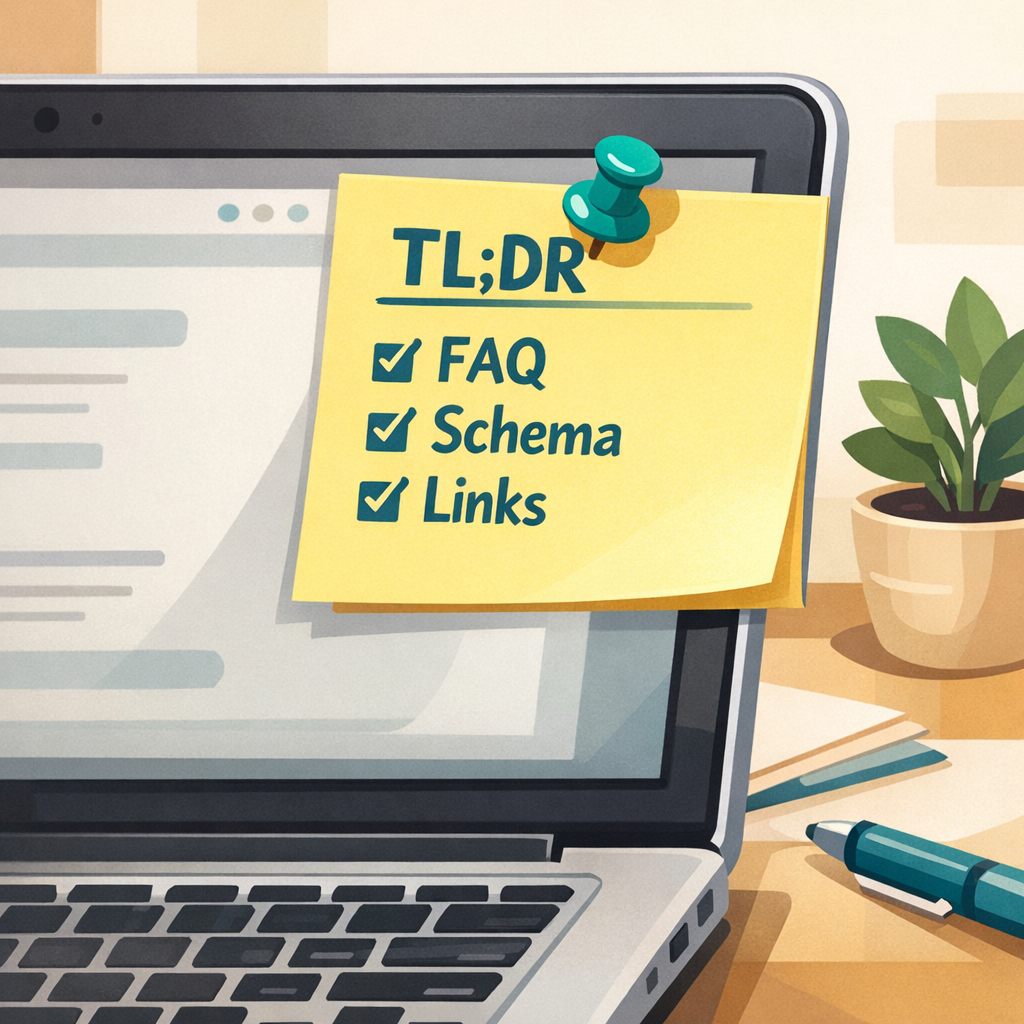
- Start every target page with a 40 to 80-word TL;DR that directly answers the query. Models favor short, explicit answer blocks.
- Use the primary phrase and synonyms naturally in the first 2–3 paragraphs, then expand with examples.
2. Use structured headings and modular blocks
- Break content into clear H2 and H3 sections, numbered steps, and short lists. AI systems prefer modular text they can reuse.
- Add short pull-out boxes labeled "Quick answer" or "In one sentence" near the top so a model can copy a definitive line without parsing long exposition.
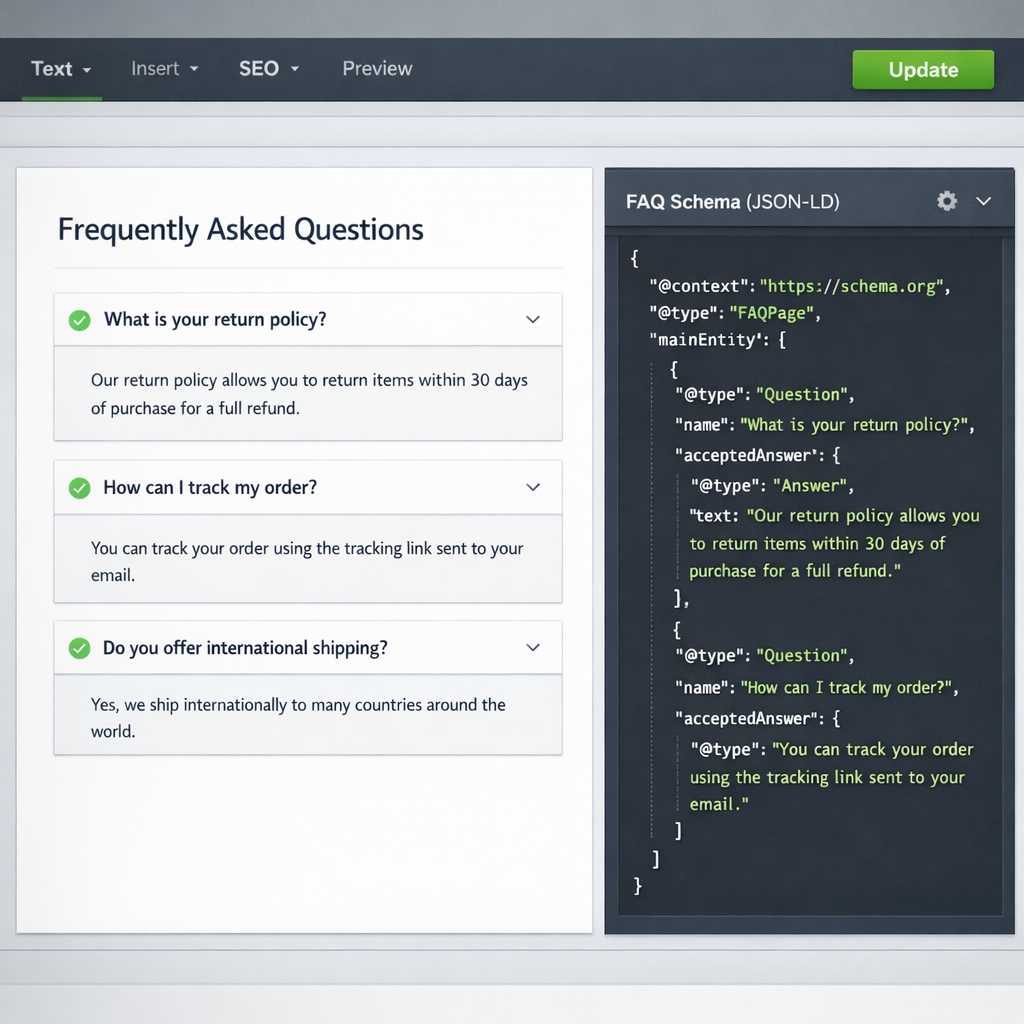
3. Add FAQ sections with schema
- Add relevant FAQs at the end of the page and mark them up with FAQPage schema. That makes your Q and A pairs easier for search systems to locate.
- Google’s documentation on FAQ structured data explains accepted formats and best practices, use that as your reference. Google Search Central: Mark Up FAQs with Structured Data
4. Signal entities and your brand clearly
- Use your brand name, product names, and category terms in short definitional sentences. AI models match those entity phrases to your brand.
- Example: "Acme Note, an AI writing plugin for Gmail, helps teams draft polished emails in minutes." That kind of line makes attribution simple.
Technical and metadata wins
Schema, metadata, and canonicalization
- Implement Article or BlogPosting schema and FAQPage where relevant. Use JSON-LD for consistency.
- Keep title tags concise and focused, and add a short meta description that reads like an answer snippet.
Performance and crawlability
- Ensure pages are indexable, fast, and mobile-friendly. AI engines may prioritize content they can easily fetch and parse.
- Submit updated sitemaps to speed re-crawl after edits.
Content plays that get mentions
Refresh existing pages first
- Pick pages with some impressions or backlinks, add a short TL;DR, an FAQ, and explicit brand sentences. Small updates lift visibility faster than brand-new pages.
Create modular answer pages
- Publish brief, highly focused pages that each answer one specific conversational query. These are low-competition and good candidates for AI answers.
Use examples and unique data
- AI is more likely to attribute content that contains concrete numbers, examples, or proprietary steps. Add quick case studies, micro-data, or short benchmarks.
Outreach and external signals
Get cited by trusted sources
- Earn mentions on reputable sites, industry roundups, and partner blogs. Generative engines pull from authoritative sources when available.
- Pitch roundups and contribute a concise, quotable sentence that mentions your product or data point.
Be discoverable in knowledge graphs
- Claim and optimize business profiles, make sure your About page and contact info are structured, and use consistent brand phrasing across the web.
Measure mentions and iterate
- Track referral traffic, branded query impressions, and snippets that include your brand. Look for pages that start to appear in answer cards or AI summaries, and double down on those topics.
- Use regular refresh cycles, updating TL;DRs and FAQs every 4–8 weeks to keep signals fresh.
Tools and resources
- Use lightweight schema generators or plugins to add FAQPage and Article schema without engineering work.
- Read Perplexity’s tips for clearer answers to understand what makes a query easy to satisfy. Perplexity Help Center: Tips for Better Answers
Practical example: 1-hour to higher AI visibility
- Pick a page with traffic, add a 60-word TL;DR at the top.
- Add 3 FAQs and insert FAQ schema.
- Add one definitional sentence that links your brand to the category.
- Update title and meta to read like an answer.
- Submit URL to search console and share the update on a partner or social channel.
Frequently asked questions
How long does it take to see AI mentions?
You can see changes in impressions within days, but meaningful AI mention traction usually takes 4 to 12 weeks, depending on crawl frequency and how competitive the topic is.
Will adding schema guarantee mentions in AI answers?
No, schema helps by making content more machine-readable, but it does not guarantee selection. Combine schema with concise answers, strong authority signals, and unique facts for the best chance.
Should I create new pages or update old ones?
Start by refreshing pages that already get impressions, then create targeted modular pages for gaps you can own. Updating existing pages often moves the needle faster.
Do I need developers to implement these changes?
Many CMS platforms and plugins make it simple to add FAQ schema and meta updates without code. For advanced schema and performance work you may need light engineering help.
Which AI search tools should I target first?
Target systems that return sourced answers or link lists, like Perplexity, Chat-enabled search features, and major search engines. Focus on channels where branded attribution is visible.
Can automation help keep my content AI-ready?
Yes, small automations that refresh TL;DRs, rotate FAQ updates, and surface internal linking opportunities can maintain freshness and improve chances of being cited.
Ready to start getting mentions today
If you want to automate updates and publish answer-focused content at scale, consider tools that handle research, schema, and publishing for you. ContentBeast can automate blog production, add FAQ schema, and optimize for AI visibility so you can focus on product and outreach. Learn more at https://ContentBeast.com and try a quick demo.
Conclusion
Appearing in AI search is a mix of clarity, structure, and authority. Make your pages easy to digest for a machine, explicit about who you are, and full of concise, quotable lines. Start with quick TL;DRs, add FAQs with schema, and refresh pages that already have traction. Those changes are efficient, low-cost, and they give generative engines clear reasons to mention your brand.