

If you publish content and want it to be found by AI assistants and modern search engines, you need a different checklist than classic SEO. AI-driven search systems look for concise, factual answer fragments, clearly structured content, and reliable entity signals. Use the right mix of structure, short answers, and internal authority to win both Google and AI mentions.
This article explains simple, fast tactics you can implement this week to boost how to improve ai search visibility, with low setup cost and realistic timelines. These steps are tailored for busy founders, content marketers, and small teams who need quick wins without huge resource investments.
Why AI search visibility matters now
AI search tools and assistant overlays pull concise answers from the web, not full blog posts. That means a short answer block, a clear FAQ, and consistent entity signals increase the chance your content will be used as a direct answer. The bottom line, you don’t need to rewrite everything — you need to reformat and signal the right pieces.
Here’s the thing, you still benefit from classic SEO work, but layering AI-friendly formatting makes your pages appear in AI answers and search overviews faster. If you want a turnkey approach, consider automated content systems that optimize articles for both Google and AI mentions.
Quick technical wins you can do this week
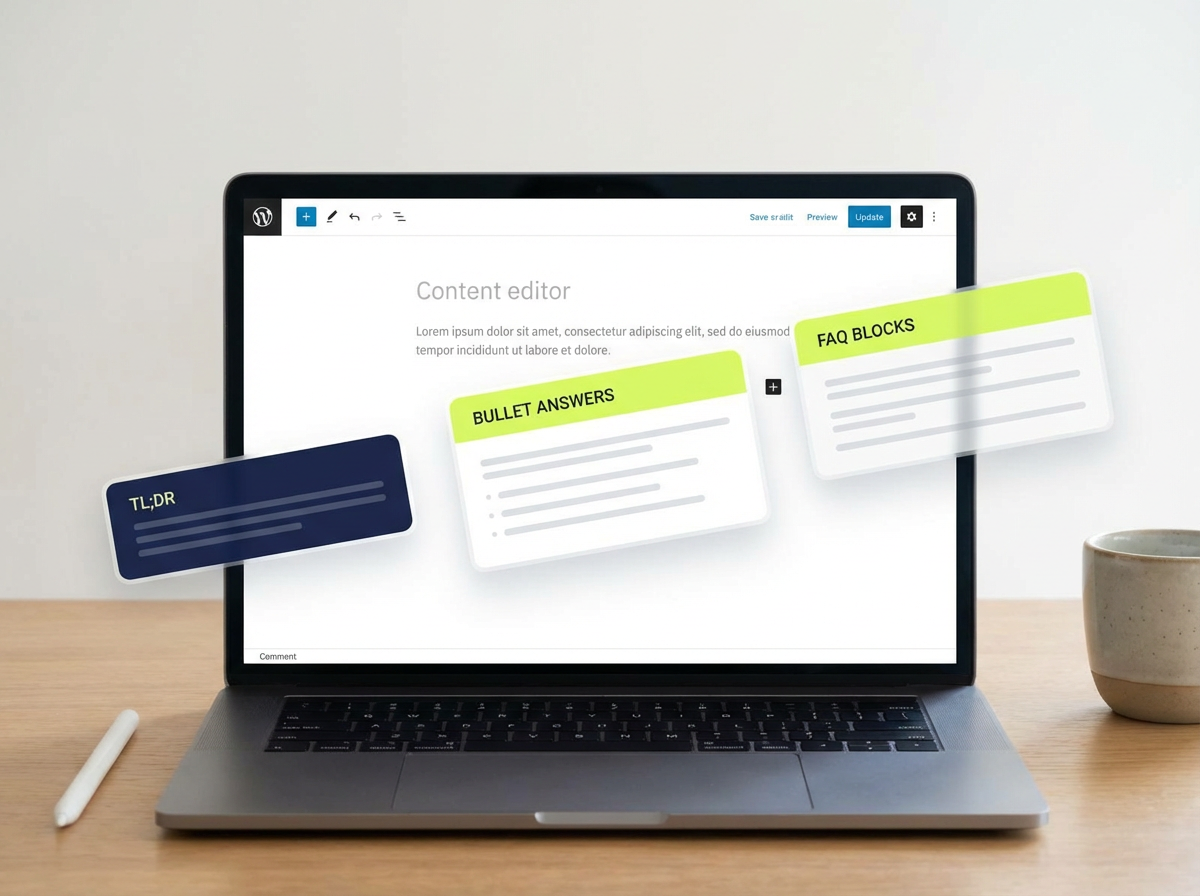
Add FAQ structured data
Implement FAQPage schema for relevant pages and keep answers short, 40 to 70 words. This makes your content machine-readable and increases the chance of being used in assistant responses. Google’s guidance on marking up FAQs is a good reference for implementation.
Add concise TL;DR answer blocks
Place a 40–80 word scannable answer at the top of each post that directly answers the primary query. AI models and snippet extractors favor short, clear answer modules.
Use clear headings and named entities
Use descriptive H2 and H3 headings, and define product names, industry terms, and people in plain language near the top. Named entities help AI systems link your content to known concepts and knowledge graphs.
Ensure fast mobile load and correct metadata
AI overviews often rely on fast, crawlable pages. Fix mobile rendering issues, add intent-focused title tags and meta descriptions, and surface canonical URLs so crawlers and indexers can read your best content quickly.
Content and structure tactics for AI pickup
Chunk content into modular answer blocks
Break long posts into small modules: summary, 3–5 step lists, short examples, and a small FAQ. Those modules are the exact snippets AI tools prefer when compiling answers.
Refresh existing posts first
Identify pages that already get impressions and add a TL;DR, a short FAQ, and 1–2 internal links from authority pages. Small updates often yield faster results than brand-new posts.
Target long-tail conversational queries
Search queries used in AI assistants are conversational. Target phrases like "how do I set up X in 10 minutes" rather than terse keywords. These are often lower competition and high intent.
Keep answers factual and sourceable
AI systems prefer content that is accurate and traceable. When you make claims, link to authoritative sources or internal documentation that supports the statement.
Internal linking and mention strategies with immediate impact
Create answer flows with internal links
Build logical pathways: a problem page links to a solution page, which links to a compact FAQ snippet. Use descriptive anchor text that mirrors conversational queries.
Use high-traffic pages to boost new content
Add contextual links from your most visited pages to the new answer-focused posts, so link equity and crawl signals flow quickly.
Seek mentions in partner roundups and integration pages
Short, factual mentions in niche roundups, directories, or partner integration pages often surface in AI knowledge graphs and drive fast referral traffic. If you use integrations, document them clearly on an integrations page to increase visibility.
Lightweight automations and repurposing that save time
- Automate TL;DR creation for every new and refreshed post, then human-edit for accuracy.
- Convert 2–3 key answer blocks into micro-posts for social and short-form video. AI overviews often embed short content like tweets or video clips.
- Use an internal linking tool or simple site map scan to find orphan pages and link them into answer flows.
If you want automation that handles research, structured formatting, and image generation automatically, explore platforms that publish AI-optimized posts on your schedule.
Measuring success and realistic timelines
- Fast wins: add TL;DRs, FAQs, and internal links now, expect measurable impressions and CTR improvements in 2–8 weeks.
- Medium wins: refreshed content and targeted long-tail posts usually move into top SERPs and AI pick-up within 4–12 weeks.
- Ongoing: persistent growth from a structured publishing plan compounds over months.
Where to start this afternoon
- Pick 3 pages with impressions in Search Console and add a top TL;DR and 3 FAQs.
- Add FAQ schema to those pages and validate in the rich results test.
- Create 2 new short posts targeting conversational long-tail queries, and link from a popular hub page.
For practical templates and automated publishing, see the quick AI visibility tactics and SaaS SEO playbook at ContentBeast: how-to-get-ai-visibility-for-blog-quick-win-seo-tactics-for-traffic, and the SaaS quick-win guide. If you publish multiple integrations, document them on your integrations page to increase mention opportunities.
FAQs
How quickly will AI assistants pick up my changes?
AI systems vary, but small formatting changes like TL;DRs and FAQs can start showing in impressions and snippets within 2 to 8 weeks, depending on crawl rate and query volume.
Do I need special schema for AI visibility?
Use FAQPage and Article schema where appropriate. Structured data helps machines understand your content and increases the chance of rich answers.
Will updating content hurt existing rankings?
If updates are helpful and add clarity, they typically help. Avoid removing valuable content; instead, reorganize and add short answer modules.
Should I write differently for AI vs human readers?
Write for humans first, then format for machines. Short, factual answer blocks help both audiences, and clear structure makes your human readers happier too.
Can automated tools handle AI optimization for me?
Yes, automation can speed research, formatting, schema insertion, and image creation. Always human-review automated drafts to ensure accuracy and brand voice.
What metrics should I track for AI visibility?
Track impressions and queries in Search Console, SERP CTR, and the number of answer-style snippets or features your pages appear in. Also monitor referral traffic from partner mentions.
Are there quick content types that AI loves?
Short how-to lists, concise definitions, troubleshooting Q and A, and integration or comparison snippets are highly machine-friendly and tend to show up in assistant responses.
Next steps to get momentum
If you want to speed this up, try automating repetitive tasks like TL;DR creation, FAQ generation, and internal link suggestions. For a practical, automated approach to publish AI-optimized content at scale, visit https://ContentBeast.com and explore tools that research, write, optimize, and publish content for you.
Conclusion
Improving AI search visibility is mostly about structure, clarity, and quick, surgical updates to your existing content. Focus on short answer blocks, FAQ schema, and smart internal linking to get noticed by both AI assistants and classic search. Start with three pages today, automate the repetitive parts, and measure changes in impressions and CTR over the next 4 to 8 weeks. Small, consistent wins compound into real traffic and lead flows.