

You probably already publish useful content, but most sites leave ranking gains on the table because their pages are not connected in a way that helps search engines or readers. Fixing link structure is one of the fastest, lowest-cost SEO moves that produces measurable traffic and crawlability wins.
Here’s the thing, when you apply a focused Internal Linking Strategy for SEO you convert existing posts into a linked network that boosts authority, relevance, and discoverability across your site.
Why internal linking matters now
- Internal links help search engines discover and index pages, and they pass relevance and authority across your site. Google advises that every page you care about should be linked from at least one other page on your site. See Google Search Central for guidance.
- Unlike external link building, internal linking is fully under your control and can produce quick wins with minimal technical setup.
- Proper linking improves user signals like time on site and pages per session, which indirectly support rankings and conversions.
Core principles that guide every decision
Relevance over volume
Link where it makes sense for readers. Too many contextual links look spammy and dilute value. Aim for a handful of useful internal links per article, not dozens of unrelated anchors.
Descriptive anchor text
Use concise, natural, descriptive anchors that tell both readers and search engines what the destination page is about. Avoid generic anchors like "click here".
Link to pages you want to rank
Prioritize links that help convert or that target keywords you want to improve. Link from high-traffic or high-authority pages to underperforming, valuable pages.
Quick-win tactics you can apply this week
-
Add 2-4 contextual links from recent posts to your highest-value pages. Pick articles published in the last 12 months that are already getting traffic, and add links pointing to product pages or pillar posts.
-
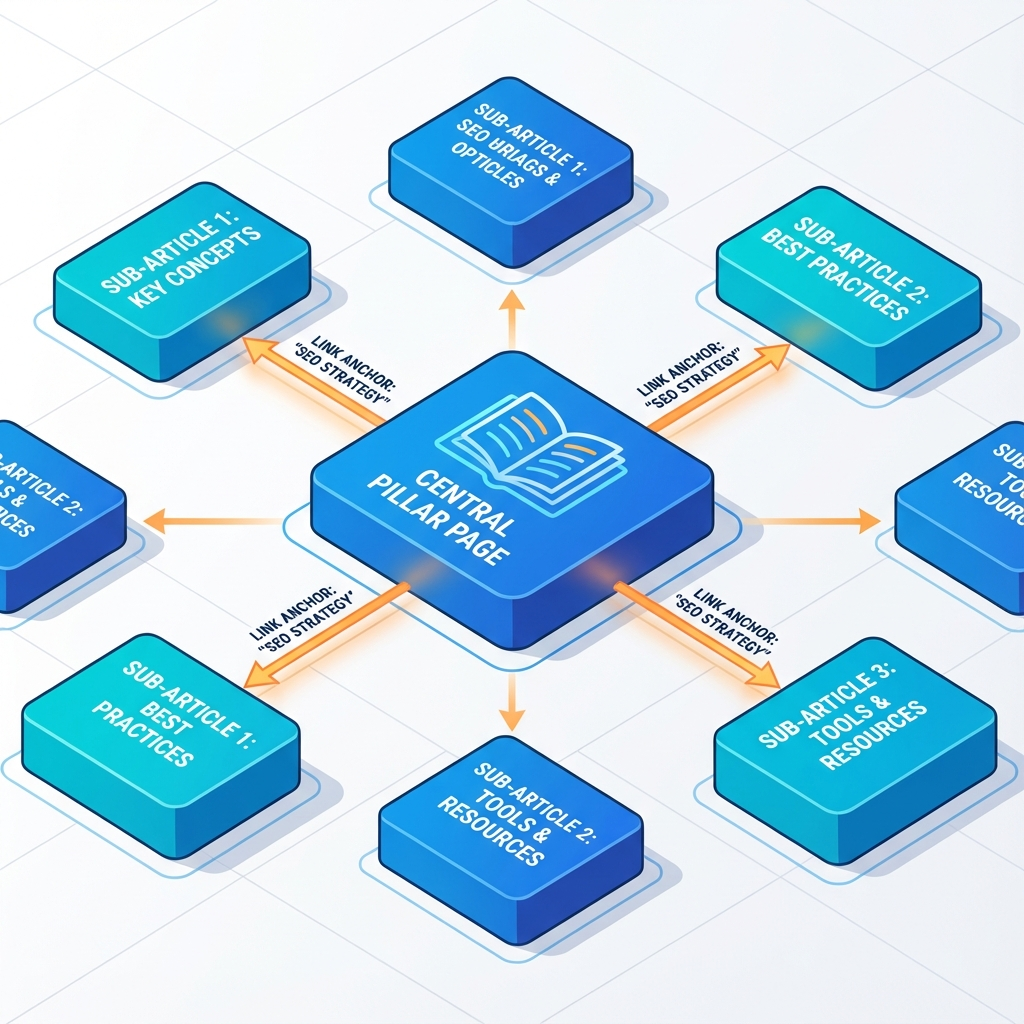
Create a pillar page and cluster content around it. Turn an existing long-form guide into a hub that links to and from supporting subtopics.
-
Fix broken internal links and remove nofollow when it was accidentally applied. Broken links waste crawl budget and frustrate readers.
-
Use breadcrumb navigation on category and product pages to help users and crawlers understand hierarchy.
-
Add relevant links within high-impression pages (top blog posts or category pages) to new or low-visibility pages to speed up indexing.
Implementing an internal linking strategy for SEO (step-by-step)
1. Audit and map
- Export a list of all indexed pages from your CMS or Google Search Console sitemap.
- Use a simple spreadsheet to record page title, target keyword, monthly traffic, and current inbound internal links.
2. Prioritize targets
- Mark priority pages: money pages, new content needing a boost, or pages with conversion value.
- Identify donor pages that already rank or attract traffic and are contextually relevant.
3. Plan anchor text and placement
- For each target page, pick 2-3 donor pages and draft 1-2 natural anchors per donor.
- Place anchors where they add clear value to the reader, ideally within the first half of the article.
4. Execute and monitor
- Implement links in batches, track changes in organic traffic and impressions for the target pages.
- Use a 4-8 week window to evaluate early movement, then iterate.
Content refresh ideas that lift rankings without new posts
- Update outdated examples and add 1-2 contextual internal links to authority pages.
- Turn list-style posts into cluster hubs by adding subsections that link to deeper content.
- Combine short related posts into a single long-form resource and redirect the old posts into the new hub.
Technical checklist (fast fixes with big impact)
- Ensure internal links are crawlable (not injected in a way bots can’t render).
- Remove accidental rel="nofollow" from internal links.
- Add HTML sitemaps or index pages for large blogs to surface buried content.
- Use canonical tags carefully; don’t canonicalize away pages you want crawled and linked.
Measuring impact and realistic timelines
- Expect to see small ranking and traffic changes within 2-8 weeks for most content updates.
- Measure clicks, impressions, and positions in Google Search Console, and track pages-per-session and bounce rate in analytics.
- Focus on lift in organic entrances and conversions tied to the pages you relinked.
Common mistakes to avoid
- Overlinking, which distracts readers and looks manipulative to search engines.
- Using generic anchor text, losing topical clarity and missed SEO value.
- Linking only to top-level pages, and ignoring deep pages that contain unique value.
- Treating internal linking as a one-time task instead of ongoing sitehousekeeping.
Frequently asked questions
How many internal links should I include per page?
There is no exact number, but aim for 3-8 contextual internal links in a 1,000-word post. Prioritize quality and user value over hitting a quota.
Should I use exact-match anchor text for target keywords?
Use natural, descriptive anchor text. Exact-match anchors can be helpful when they fit the context, but excessive exact-match anchors across your site can look manipulative.
Can internal linking replace external link building?
No, they are complementary. Internal links help distribute authority and aid indexing, while external links build domain authority and topical trust.
Will adding internal links trigger a Google penalty?
No. Internal linking is a standard best practice. Penalties come from manipulative link schemes and spammy behavior, not from thoughtful internal links.
What's the fastest way to find linking opportunities?
Filter recent posts for related topics, find pages with traffic but low conversions, and add contextual links from high-traffic donor posts. A quick site search for keywords can reveal natural anchor points.
How do I measure whether internal linking changes worked?
Monitor impressions and clicks for target pages in Google Search Console, watch organic entrances in analytics, and check ranking positions for target keywords over 4-8 weeks.
Ready to scale content and traffic fast?
If you want proven, repeatable internal linking frameworks and daily blog workflows that save time and lift rankings, see how ContentBeast helps teams publish consistent, linked content that drives results: https://ContentBeast.com
Conclusion
Internal linking is a high-leverage, low-cost approach to improve crawlability, authority distribution, and user journeys. Start with a short audit, pick your priority pages, and add 2-4 thoughtful links per article. Iterate every month, and you will see measurable improvements without a big content budget. Small, consistent changes to link architecture compound into meaningful SEO gains.