

Content marketing for SaaS founders works best when it is tied directly to growth, not just visibility. If you want more qualified traffic, better brand recall, and a pipeline that compounds over time, you need a system that connects every post to a real customer problem.
The good news is that you do not need a massive team to make that happen. You need a clear message, a repeatable publishing process, and a strategy that helps your product show up when people are actively searching for solutions.
What Content Marketing for SaaS Founders Really Means
Content marketing for SaaS founders is the practice of creating helpful, search-friendly content that attracts the right audience, educates them, and moves them toward trying your product. It is not about chasing random traffic or writing blog posts just to stay busy.
For founders, the best content usually does three things:
- Answers urgent customer questions
- Builds trust before the sales call
- Supports product-led or sales-led growth
Why this matters for SaaS growth
SaaS buyers rarely convert the first time they discover you. They compare options, read reviews, search for how-to content, and look for proof that your product solves a real problem. That is why strong content can shorten the buying cycle and make your brand feel familiar before a demo even happens.
The biggest mistake founders make
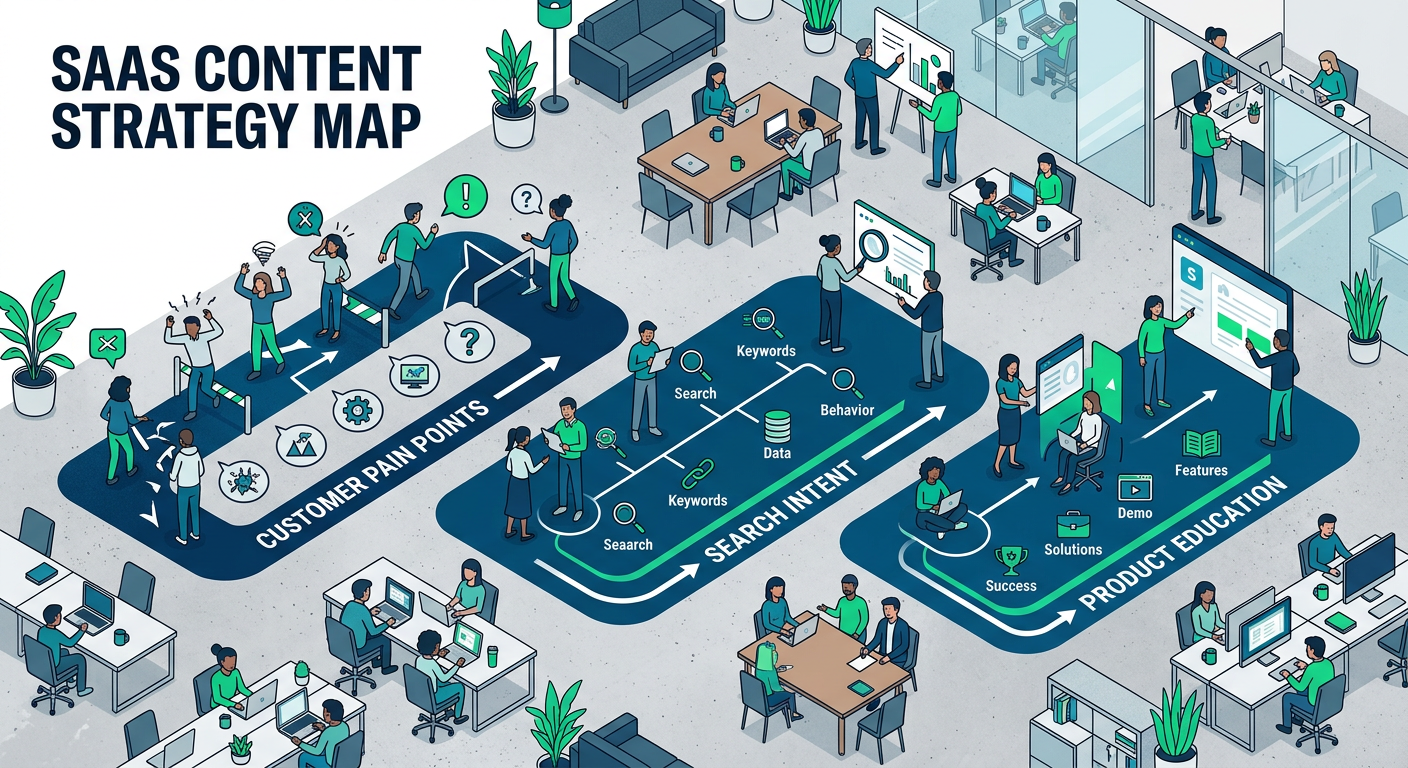
A lot of founders publish content around whatever feels easiest to write that week. The result is a blog full of disconnected posts that do not rank, do not convert, and do not help the product story. Instead, every piece should fit into a broader system built around customer pain points, search intent, and product relevance.
Build Your SaaS Content Engine Around Demand
If you want content to work, start with demand. That means identifying the topics your buyers are already searching for, then building content around those themes consistently.
Start with customer language
Use sales calls, support tickets, onboarding questions, and competitor comparisons to find the exact phrases your audience uses. Those phrases are often more valuable than broad industry keywords because they reveal intent.
Focus on three content buckets
A simple SaaS content strategy usually works best when it includes:
- Problem-aware content, like “how to reduce churn”
- Solution-aware content, like “best customer onboarding software”
- Product-aware content, like “how our platform helps automate reporting”
This balance helps you attract people at different stages of the funnel without making every article sound like a pitch.
Prioritize topics with commercial value
Not all traffic is equal. A founder should care less about vanity metrics and more about pages that attract ideal-fit users, generate demos, or support self-serve signups. That is where content marketing for SaaS founders becomes a revenue lever, not just a brand exercise.
The Best Content Types for SaaS Founders
You do not need to publish everything. You need the right mix of formats that match how people search and how they buy.
SEO blog posts
SEO articles are the backbone of most SaaS content programs. They help you capture search traffic from users who are actively looking for answers, comparisons, and solutions.
Great examples include:
- “How to improve team productivity without adding headcount”
- “Best workflow automation tools for small teams”
- “What is customer retention and how to improve it”
Comparison pages
Comparison content is powerful because it catches high-intent buyers near the bottom of the funnel. These pages can answer questions like how your tool compares to alternatives, what features matter most, and who each product is best for.
Use case pages
Use case pages let you speak directly to a niche audience. For example, a SaaS platform might create pages for agencies, startups, consultants, or operations teams. These pages are great for relevance and conversion.
Educational guides
Educational guides build trust and authority. They are especially useful when your product solves a complex or technical problem that requires some explanation before a buyer feels ready.
How SaaS Founders Can Turn Content Into Leads
Traffic is nice. Leads are better. Revenue is the goal.
Add a clear next step
Every strong piece of content should point readers toward something useful, whether that is a demo, a template, a checklist, or a free trial. If you do not give people a next step, you are leaving momentum on the table.
Match the CTA to intent
A reader at the top of the funnel may not be ready for a demo. They might prefer a practical resource or a product overview. A reader comparing solutions, on the other hand, may be ready for a trial or sales conversation.
Make the product part of the story
The best SaaS content does not force product mentions into every paragraph. It naturally shows how your product helps solve the problem being discussed. That makes the transition from education to conversion feel smooth instead of awkward.
How to Create a Content Calendar Without Burning Out
Many founders overcomplicate the publishing process. You do not need 50 ideas. You need a realistic plan you can actually sustain.
Use a monthly topic system
Pick one core theme per month, then create supporting content around it. For example, if the theme is onboarding, you might publish one pillar article, two supporting posts, one use case page, and one comparison page.
Batch your workflow
A simple workflow might look like this:
- Research keywords and questions
- Outline the topic cluster
- Draft multiple posts at once
- Edit for clarity and SEO
- Publish and distribute
- Review results and update winners
This keeps your team from constantly switching gears.
Automate the repetitive parts
If you are short on time, automation can help with research, outlines, publishing workflows, and content repurposing. That is one reason many founders look to tools and systems that reduce manual effort while keeping quality high.
SEO Basics That Matter Most for SaaS
You do not need to master every technical SEO detail to get results. Focus on the fundamentals that move the needle.
Search intent comes first
Before you write, ask what the searcher actually wants. Are they trying to learn, compare, solve a problem, or buy? Your content should match that intent as closely as possible.
Build internal linking intentionally
Connect related articles so readers can move deeper into your site. For example, a guide on onboarding can link to a comparison page, a use case page, and a product feature page. That helps users and search engines understand your site structure.
Refresh old content regularly
SaaS topics change fast. Update screenshots, examples, feature descriptions, and statistics so your content stays accurate and competitive. A refreshed article often performs better than a brand-new one.
Content Marketing for SaaS Founders on a Lean Team
If your team is small, your process has to be efficient. The goal is not perfection. It is momentum.
Start with fewer, better pieces
Publishing one strong article per week is often more effective than shipping four weak ones. Quality content that answers real questions can compound for months or years.
Repurpose everything
One pillar post can become:
- Social posts
- Email content
- Sales enablement material
- Webinar talking points
- Short-form video scripts
This gives you more mileage from each idea.
Consider outsourcing or automation
If content keeps slipping through the cracks, it may be time to bring in support. Systems like Content Beast can help founders publish consistently, improve SEO performance, and reduce the manual work that slows teams down.
What Success Looks Like
The right content strategy should do more than boost pageviews. You should see stronger rankings, more qualified traffic, better engagement, and more conversions over time.
Track the metrics that matter
Focus on:
- Organic traffic to commercial pages
- Demo or trial conversions from content
- Assisted conversions in the funnel
- Rankings for high-intent topics
- Content production consistency
Think in compounding terms
Content marketing for SaaS founders is a long game, but it is one of the few growth channels that gets stronger when you keep investing in it. The more useful pages you publish, the more opportunities you create for search traffic, trust, and leads.
Frequently Asked Questions
How often should SaaS founders publish content?
Consistency matters more than volume. Start with a pace you can sustain, then increase output once your workflow is stable.
What should SaaS founders write about first?
Start with customer problems, common objections, use cases, and comparison topics. These are usually the fastest paths to relevant traffic and conversions.
Is SEO still worth it for SaaS?
Yes, especially for long-tail, high-intent queries. SEO can bring in buyers who are already looking for solutions like yours.
How long does content take to work?
Some content can start ranking in weeks, but the real payoff often shows up over months. The goal is to build a compounding asset, not chase instant results.
Should founders write content themselves?
Founders can add a lot of value early because they know the market deeply. Over time, many teams pair founder insight with writers, editors, or automation to scale more efficiently.
What makes SaaS content convert better?
Clear intent, helpful examples, strong structure, and a natural product fit all improve conversion rates. Readers should feel informed, not pressured.
Grow Faster With a Smarter Content System
If content has been draining your time without producing results, it is probably a process problem, not a motivation problem. The right system can help you publish consistently, rank more often, and turn traffic into real growth.
If you want a simpler way to build momentum, explore how Content Beast helps teams create SEO-driven content without the usual bottlenecks. It is a practical way to keep your blog moving while you stay focused on building the product.
Final Thoughts
Content marketing for SaaS founders works when it is focused, repeatable, and tied to real buyer needs. Once you stop treating content like a side task and start treating it like a growth engine, everything changes.
Keep the strategy simple, keep the topics relevant, and keep publishing. That steady effort is what creates compounding results.
