

How do you get mentioned when people ask AI tools for answers? The short version is this, you need content that is easy to understand, easy to trust, and easy for AI systems to connect to a clear topic. That means strong structure, useful specifics, and consistent authority across your website.
The good news is that this is not just for giant brands. If you publish helpful content in a smart way, you can improve your chances of being surfaced, summarized, or recommended by AI search tools. That is exactly what this guide is about.
What It Means to Be Mentioned in AI Search Results
Being mentioned in AI search results means your brand, page, or idea shows up in answers generated by tools like AI search assistants, answer engines, and chatbot-style search experiences. Sometimes this happens as a direct citation, sometimes as a named recommendation, and sometimes as a supporting source behind the answer.
This is different from classic SEO, where the main goal is ranking on a results page. In AI search, the goal is to become part of the answer itself. That means your content has to be clearly useful, well organized, and easy for models to extract.
Why AI Search Mentions Matter
If an AI tool mentions your site, you are getting visibility at the exact moment someone is looking for help. That can lead to more branded searches, higher trust, and better-qualified traffic.
For website owners, SaaS founders, agencies, and e-commerce teams, this is a huge opportunity because AI search can act like a recommendation layer on top of Google and other discovery channels.
How to Be Mentioned in AI Search Results
The best way to earn AI visibility is to create content that answers real questions better than most alternatives. Here’s the thing, AI systems tend to favor clarity over cleverness.
1. Answer the Question Fast
Start with the direct answer near the top of the page. Don’t make readers or AI tools dig for the point.
If your page is about how to be mentioned in ai search results, open with a concise explanation, then expand into steps, examples, and proof. This makes your content easier to summarize and quote.
2. Use Clear Headings and Logical Structure
AI systems love well-structured content because it is easier to parse. Use descriptive H2 and H3 headings that mirror the way people actually ask questions.
Good structure helps both humans and machines. It also improves scannability, which is great for busy marketers and teams trying to move fast.
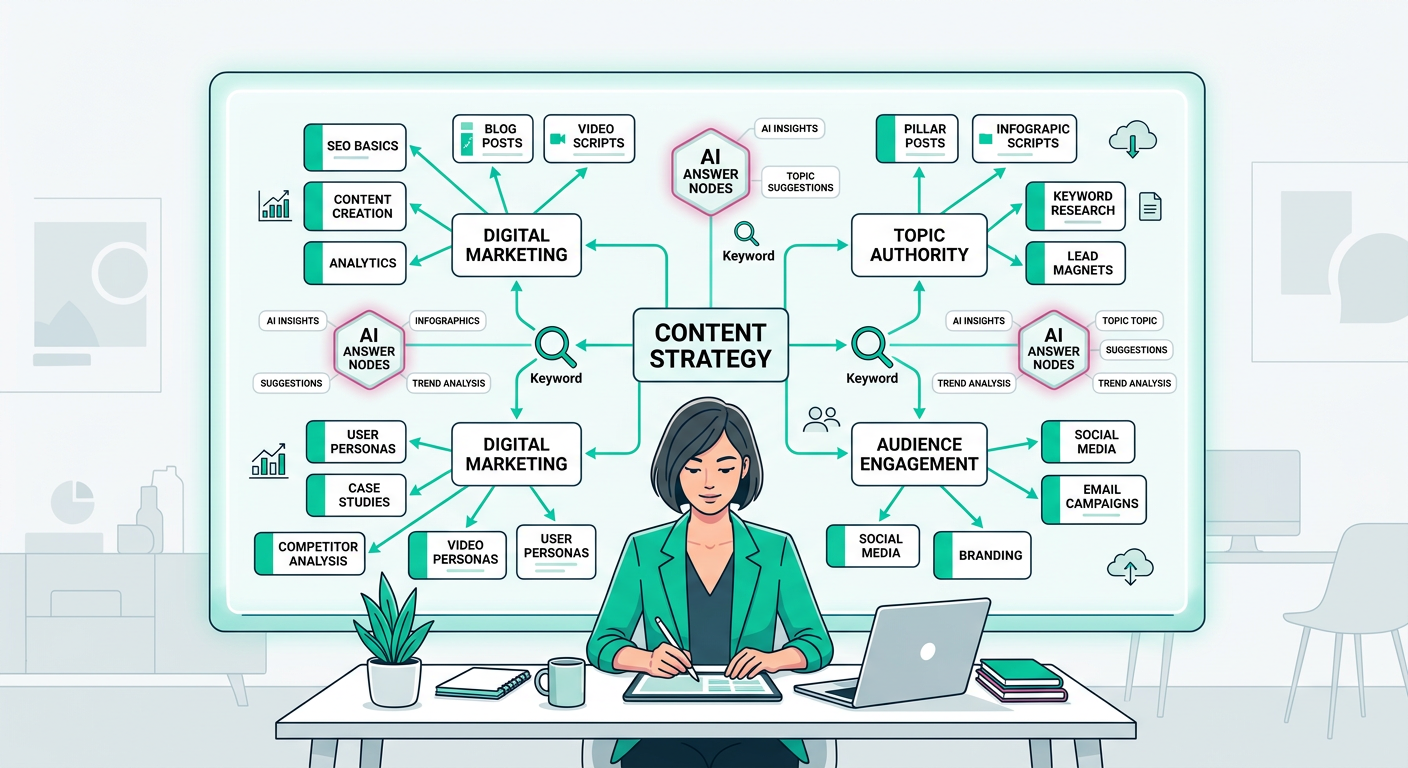
3. Build Topical Authority
One good page is helpful, but a cluster of related content is much stronger. If your site covers a topic deeply, AI is more likely to see you as a reliable source.
For example, a site publishing articles on SEO basics, content strategy, internal linking, and content automation sends a clearer signal than a site with one random post.
4. Add Specifics, Not Fluff
Vague content is easy to ignore. Specific content is easier to trust, summarize, and mention.
Use examples, definitions, step-by-step explanations, and concrete outcomes. If you can say exactly who a tactic helps and why, you are already ahead of most content online.
5. Write for Questions, Not Just Keywords
AI search is driven by natural language. People ask full questions, not just short keywords.
That means your content should reflect real intent, such as:
- How do I get my website mentioned by AI?
- What kind of content does AI prefer?
- Why is my brand not showing up in AI answers?
- How do I make my pages easier for AI to understand?
When you mirror real questions, your content becomes more relevant to search and answer engines.
6. Make Your Content Easy to Trust
Trust matters a lot. If your content looks thin, outdated, or generic, AI systems may skip it.
Ways to strengthen trust include:
- Clear author or brand identity
- Fresh updates when the topic changes
- Real examples and practical advice
- References to authoritative sources when useful
- Consistent publishing on the same subject areas
7. Publish Content That Is Actually Useful
AI tools are not looking for filler. They are looking for content that solves a problem.
If your content helps someone make a decision, compare options, or take the next step, it has a better chance of being used in an answer. That is especially true for product-led businesses, service firms, and content teams that want measurable visibility.
Content Formats That AI Search Likes
Some formats are more AI-friendly than others because they are easier to summarize and reuse.
Definitions and Explainers
Simple “what is” and “how does it work” pages do well because they provide clean, direct answers. These are especially useful for early-stage discovery.
Step-by-Step Guides
How-to content is ideal because it breaks the topic into a clear sequence. That helps AI understand the process and helps users take action.
Comparison Posts
Pages that compare tools, strategies, or approaches often perform well because they support decision-making. Be honest and specific, not overly promotional.
FAQ Sections
FAQ blocks are extremely useful for answer engines. They give you multiple question-and-answer pairs in a format that is easy to extract.
Topic Hubs
Hub pages bring related content together under one umbrella. They strengthen topical authority and make your site easier to understand.
Technical Basics That Help AI Find You
Great content is essential, but technical clarity helps too. If your site is hard to crawl or interpret, you are making life harder for AI systems.
Use Clean URLs and Internal Links
Keep URLs simple and descriptive. Link related pages together so search systems can understand the relationships between topics.
This also helps visitors move through your content naturally, which supports both engagement and authority.
Add Schema Where It Makes Sense
Structured data can help search engines understand the page type, such as article, FAQ, product, or organization. That does not guarantee a mention, but it gives helpful context.
Keep Pages Fast and Accessible
A slow, messy site makes it harder for people and machines to engage with your content. Clean design, readable text, and mobile-friendly layouts all matter.
How ContentBeast Fits Into the Strategy
If you need to publish consistently but do not have the time, team, or process to do it yourself, this is where smart automation can help. A content system can support faster topic research, more consistent publishing, and stronger SEO execution without requiring constant manual effort.
For many small and mid-size businesses, that is the difference between having a blog that sits idle and having one that actually drives discovery. If you want to grow traffic through blogging, SEO, and automation, a steady system can make the whole process easier to sustain.
Common Mistakes That Hurt AI Visibility
Even strong brands miss opportunities because of a few avoidable issues.
Writing for Algorithms Instead of People
If the content sounds robotic, AI may have trouble identifying value. Readers will notice too.
Publishing Thin Pages
Short pages with no depth rarely earn attention. AI needs enough substance to understand what you know.
Ignoring Consistency
A single post will not build much authority. Consistent publishing creates clearer topic signals over time.
Making the Site Hard to Navigate
If your pages are scattered, disconnected, or buried, you reduce the odds of discovery. Internal linking is a simple fix that pays off.
A Practical 30-Day Plan
If you want a simple way to start, focus on progress instead of perfection.
Week 1
Pick one topic cluster and map out 5 to 10 related questions people ask.
Week 2
Write one strong pillar article with clear headings, a direct answer, and examples.
Week 3
Publish supporting posts that go deeper on subtopics and link them together.
Week 4
Review the content for clarity, update weak sections, and add FAQ answers where needed.
FAQ
How long does it take to get mentioned in AI search results?
There is no fixed timeline. It depends on your authority, content quality, site structure, and how quickly search systems discover and trust your pages.
Do I need a big website to get noticed by AI?
No. Smaller sites can absolutely earn mentions if they publish focused, useful, well-structured content consistently.
Is SEO still important for AI search visibility?
Yes. Traditional SEO still matters because AI systems often rely on content that is discoverable, understandable, and trusted by search engines.
What kind of content works best for AI mentions?
Clear explainers, how-to guides, comparisons, FAQs, and topic hubs tend to work well because they are easier to summarize and connect.
Should I write differently for AI than for Google?
You should write for people first, but structure the content so machines can understand it easily. In practice, that means clarity, depth, and organization.
Can automation help with AI search content?
Yes, especially for teams that need to publish more consistently. Automation can help you scale research, drafting, and updates while keeping the workflow efficient.
What is the biggest mistake brands make?
They publish content that sounds generic and never goes deep enough to be genuinely useful. AI tends to reward helpful, specific, and trustworthy content.
Grow Your AI Visibility With a Smarter Content System
If you want to be mentioned more often in AI search results, start by publishing content that is clear, useful, and built around real questions. Then strengthen your site with topic clusters, internal links, and a consistent publishing rhythm.
If you want help doing that faster, ContentBeast can support your blogging and SEO workflow so you can grow visibility without adding more manual work. Visit ContentBeast to explore a simpler way to publish content that is built for Google and AI discovery.
Final Thoughts
AI search visibility is not magic, and it is not reserved for huge companies. If you create genuinely helpful content and organize it in a way that is easy to understand, you give yourself a real shot at being mentioned.
Stay consistent, stay specific, and keep building around the questions your audience is already asking. That is how you turn content into visibility, and visibility into growth.