

If you’ve been thinking, no time to blog for business, you are not alone. Most owners and marketers know blogging matters, but between client work, operations, sales, and everything else, content usually gets pushed to “later.”
Here’s the good news, you do not need to become a full-time writer to make blogging work. You need a simpler system that helps you publish consistently, improve SEO, and stay visible on Google and AI tools without draining your schedule.
Why Blogging Still Matters When You’re Busy
Blogging is still one of the most practical ways to attract search traffic, answer customer questions, and build trust over time. For small and mid-size businesses, it creates reusable assets that keep working long after you publish them.
The bigger issue is not whether blogging works. The issue is how to make it work when you are already maxed out.
Blogging builds compounding traffic
A single post can bring in traffic for months or even years if it targets the right keyword and solves a real problem. That makes blogging very different from one-off social posts or ads that disappear when you stop paying or posting.
It helps your brand show up where buyers are searching
People do not just search Google anymore. They also use AI tools to summarize answers and recommend brands. Strong blog content increases the chances that your business gets mentioned in those discovery moments.
The Real Reason Most Businesses Stop Blogging
Most teams do not fail because they lack ideas. They fail because the process is too manual.
If every post requires hours of brainstorming, writing, editing, formatting, and publishing, blogging quickly becomes the first thing cut from the calendar. That is especially true for teams without in-house writers, SEO support, or a dedicated content manager.
Common blogging blockers
- No clear topic plan
- Too many other priorities
- Not enough writing time
- Unclear SEO strategy
- Inconsistent publishing habits
- No system for repurposing content
If this sounds familiar, the problem is not motivation. It is workflow.
What To Do When You Have No Time to Blog for Business
The solution is to stop treating blogging like a custom project every time. Instead, build a repeatable content system that lowers the effort required to publish.
Start with topics that already have demand
Do not guess what to write about. Start with the questions your customers already ask, then organize those into themes like:
- How-to guides
- Beginner explanations
- Comparison posts
- Mistake-based posts
- Product use cases
- Industry FAQs
This approach makes content easier to plan and more likely to attract qualified traffic.
Use a recurring content model
A recurring content model means you publish from a repeatable set of templates instead of reinventing every post. For example, you might rotate between educational posts, comparison posts, and conversion-focused articles.
That is how businesses keep momentum without needing a brand-new strategy every week.
Automate the parts that slow you down
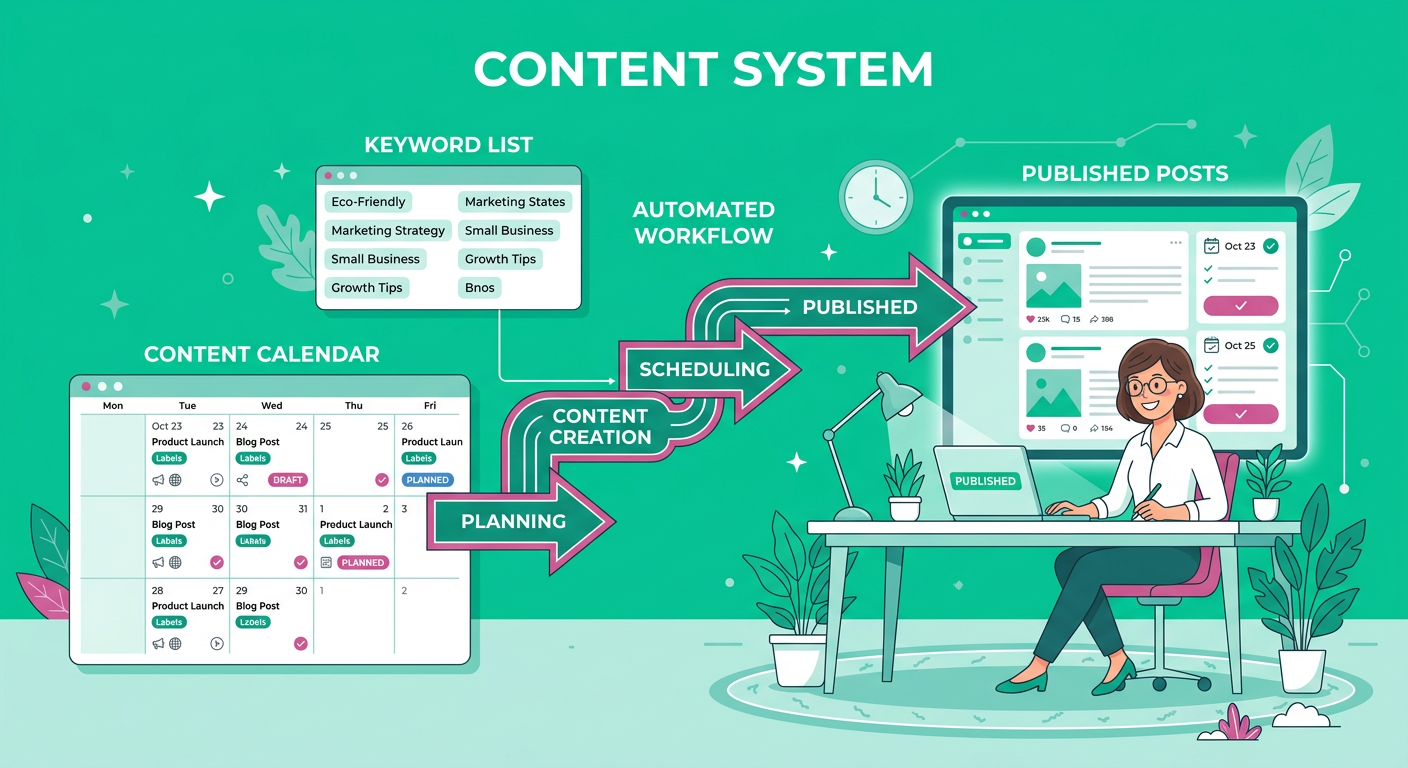
Automation is the simplest way to make blogging realistic for busy teams. You can automate topic research, outlines, drafts, publishing workflows, and even internal repurposing across channels.
That is where a platform like Content Beast can help businesses turn blogging into a system instead of a burden.
A Simple Blogging Workflow for Busy Teams
If you want consistent content without the chaos, use this 4-step flow.
1. Pick one business goal
Choose one primary goal for your blog content, such as:
- More organic traffic
- More leads
- More product signups
- Better AI visibility
- Lower content costs
When you focus on one goal, topic selection becomes much easier.
2. Build a small keyword list
You do not need hundreds of keywords. Start with a focused list of questions, problems, and comparisons your audience is already searching for.
For example, instead of writing randomly, create posts around phrases like:
- What is content automation?
- How to get more traffic from blogging
- Best blog topics for SaaS
- Why your blog is not ranking
3. Use templates for faster production
Templates save time because they give you a structure to follow. A standard blog template might include:
- Problem statement
- Short answer
- Why it matters
- Practical steps
- FAQ section
- Strong conclusion
That makes content easier to create, edit, and scale.
4. Repurpose every post
One blog post can fuel many other assets. You can turn it into a newsletter, social caption, short video script, sales enablement piece, or FAQ page.
That is a huge win for teams that need more output without hiring a bigger content team.
How Automation Solves the No-Time Problem
The fastest way to stay consistent is to reduce manual work wherever possible. Automation helps you publish more often, keep quality steady, and avoid the “start-stop-start” cycle that kills most content programs.
Automation helps with consistency
Consistency matters because search engines reward topical depth and ongoing relevance. If you publish irregularly, you slow down that momentum. If you publish on a system, you build it.
Automation reduces content costs
Hiring writers for every single post can get expensive fast. Automation can lower the cost per article by streamlining the repetitive parts of the process, which is especially helpful for SMBs and agencies.
Automation supports better SEO execution
SEO content works best when it is planned, structured, and published with intention. Automation makes it easier to keep title formats, keyword targeting, internal linking, and content cadence aligned.
A Practical Content Strategy for Busy Business Owners
If you only have a few hours a month, do not try to publish everything. Focus on the highest-value content types first.
Best post types for limited time
- FAQ posts that answer customer objections
- “What is” articles for educational search traffic
- Comparison posts that help buyers decide
- How-to guides tied to your offer
- Problem-solving posts for top-of-funnel discovery
These formats are efficient because they map directly to what buyers already want to know.
Aim for depth, not volume
Publishing one strong post consistently is better than publishing three rushed ones and disappearing for a month. A reliable content rhythm builds more trust than sporadic bursts of activity.
Keep your voice practical and helpful
You do not need to sound overly polished or overly promotional. Focus on clarity, usefulness, and relevance. That is what helps content rank and convert.
What Good Blogging Looks Like for Small Teams
A good blog strategy for a small team is not about churning out endless articles. It is about creating a repeatable engine that supports growth without overwhelming your team.
It should:
- Answer real questions
- Support SEO
- Feed sales and marketing
- Work across multiple channels
- Stay manageable week after week
If your current process feels too heavy, it is a sign you need a simpler model, not more pressure.
FAQ
How often should a busy business blog?
Start with a realistic cadence, even if that means one or two posts per month. Consistency matters more than volume when you are building an early or lean content program.
Can blogging still work if I do not have a writer?
Yes. Many teams use templates, automation, or a content partner to remove the writing bottleneck. The key is to create a repeatable system, not rely on inspiration.
What should I blog about first?
Start with the questions customers already ask during sales calls, support conversations, and onboarding. Those topics are usually the fastest path to useful content.
Is automation bad for content quality?
Not when it is used correctly. Automation should support planning, drafting, and publishing workflows, while your team still reviews the final strategy and message.
How long until blog content starts working?
It depends on your niche, competition, and consistency. In general, blog content compounds over time, so the key is to stay active long enough for search visibility to build.
What if my blog has no traffic yet?
That is exactly when a focused strategy matters most. Start with low-competition, high-intent topics and build from there instead of trying to rank for broad terms immediately.
Ready to Make Blogging Easier?
If you have been stuck because you have no time to blog for business, the fix is not more pressure. It is a better system.
At Content Beast, we help businesses grow with blogging, SEO, and automation so they can publish consistently, reduce manual effort, and get found on Google and in AI tools. If you want a smarter way to scale content, visit Content Beast and see how it can fit your workflow.
Final Thoughts
You do not need to become a content machine overnight. You need a strategy that respects your time, supports your goals, and removes the bottlenecks that keep blogging stuck on the backlog.
With the right workflow, blogging stops feeling like one more chore and starts becoming a growth channel your business can actually sustain.