
What Are AI Agents for Marketing?
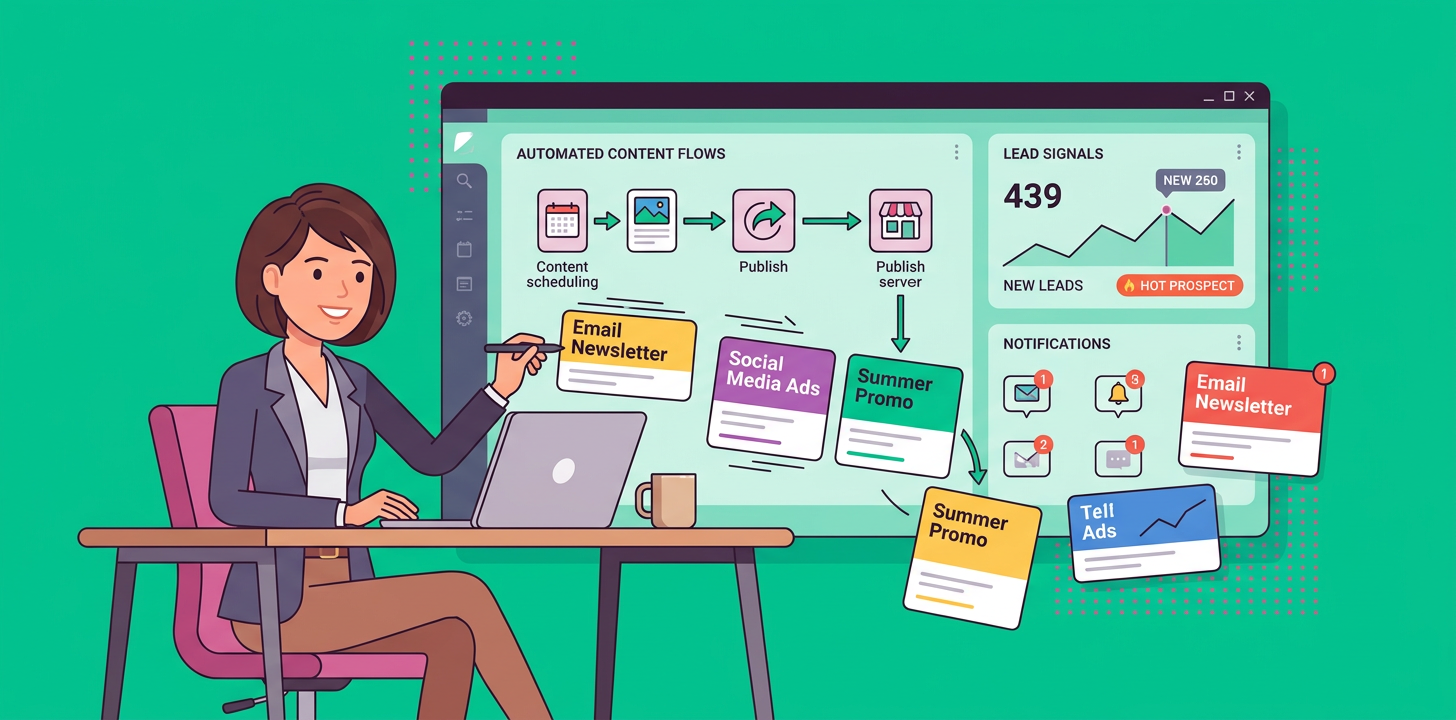
AI agents for marketing are software systems that can plan, create, optimize, and sometimes execute marketing tasks with limited human input. Instead of just answering questions or generating one-off text, they can take actions, follow workflows, and help your team move faster.
If you’re trying to publish more content, stay consistent, and get better visibility on Google and in AI tools, this matters. The big win is not just speed, it’s consistency, because consistency is what usually separates growing brands from stalled ones.
Why AI Agents for Marketing Matter Now
Marketing teams are under pressure to do more with less. You need blogs, landing pages, emails, social posts, SEO updates, and content refreshes, often without extra headcount.
That is exactly where AI agents for marketing can help. They reduce manual work, speed up repetitive tasks, and support a more reliable content engine.
For businesses that struggle with no traffic, inconsistent blogging, or limited time, automation can turn content from a bottleneck into a growth system.
How AI Agents for Marketing Actually Work
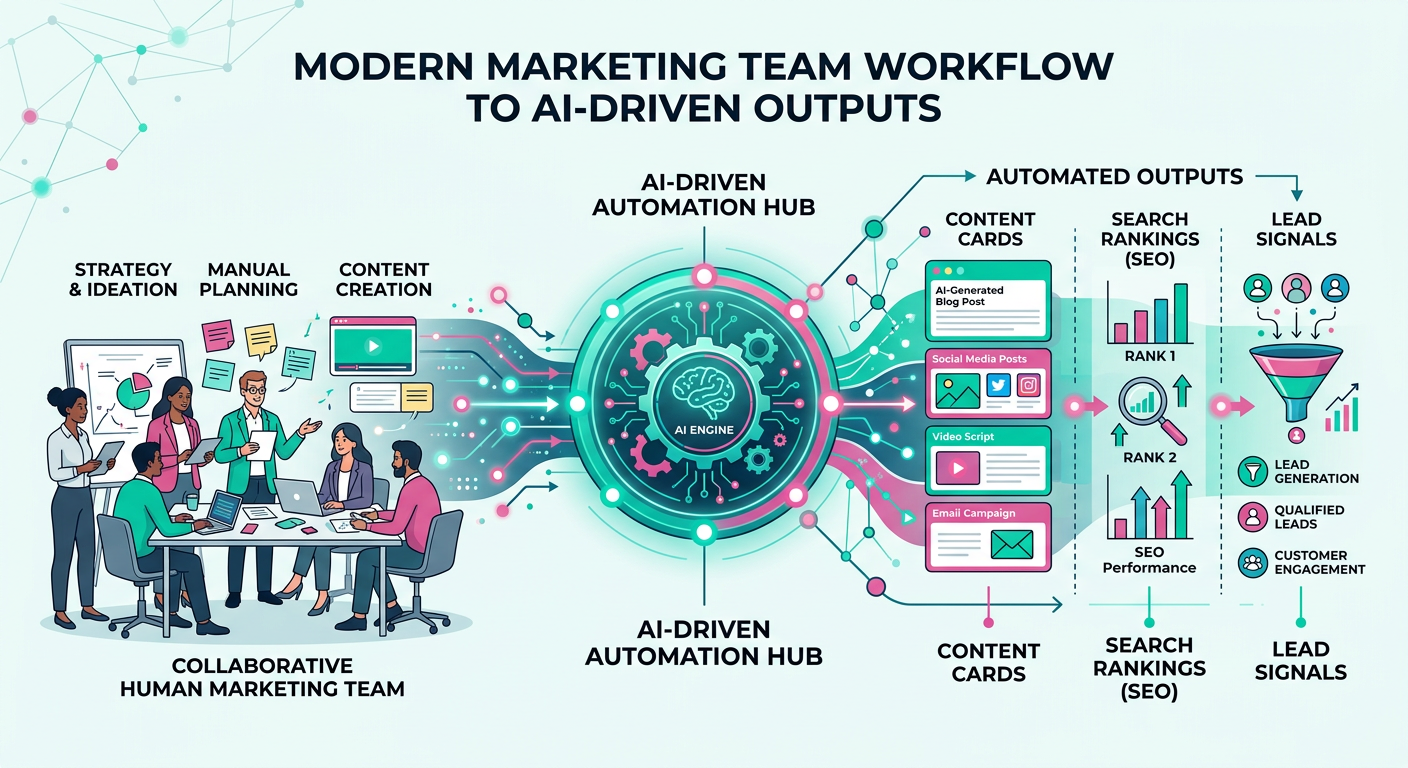
Think of an AI agent as a digital teammate with a specific job. You give it goals, rules, and tools, then it works through tasks like researching topics, drafting outlines, summarizing customer feedback, or suggesting campaign improvements.
Common tasks they handle
- Keyword and topic research
- Blog outline creation
- First-draft content generation
- Content repurposing for email and social media
- Ad copy variations
- Lead qualification support
- Reporting summaries
- Content refresh suggestions
The best marketing agents are not replacing strategy. They are removing the repetitive work so your team can focus on decisions that actually move revenue.
Best Use Cases for Small and Mid-Size Teams
If you run a small team, you probably do not need a giant AI system. You need practical help that saves time right away.
1. Blogging at scale
A lot of teams know blogging works, but they cannot keep up with publishing. AI agents can help you brainstorm, outline, draft, and refresh posts so you can publish more often without starting from zero every time.
2. SEO support
AI can speed up keyword clustering, internal link ideas, title testing, and content updates. It is especially useful if you want more organic traffic but do not have a full-time SEO specialist.
3. Content repurposing
One strong blog post can become an email, a LinkedIn post, a short FAQ page, and a sales follow-up. AI agents make that repurposing process much easier.
4. E-commerce marketing
Product descriptions, category page copy, promotional email variants, and FAQ content can all be systematized with the right workflow.
5. Agency output
Agencies can use AI agents to draft briefs, speed up production, standardize quality, and handle more clients without adding endless manual labor.
What Makes an AI Agent Different From a Chatbot?
This is where a lot of people get stuck. A chatbot usually responds to a prompt. An AI agent can complete a task sequence.
That difference matters because marketing is rarely one step. You research, plan, draft, edit, publish, distribute, and measure. Agents are built for that multi-step flow.
If you want a practical example, a chatbot might help you brainstorm blog titles. An AI agent can help you go from topic selection to outline to draft to repurposed social snippets.
How to Use AI Agents for Marketing Without Losing Quality
Automation works best when you treat it like a system, not a shortcut.
Start with a clear workflow
Pick one process, like weekly blog creation or monthly content refreshes. Then define the inputs, the steps, and the output quality you want.
Build guardrails
Set brand voice rules, approved topics, SEO requirements, and review checkpoints. This keeps your content from sounding generic.
Keep a human in the loop
AI should accelerate your team, not replace editorial judgment. A quick review for accuracy, voice, and usefulness goes a long way.
Focus on recurring content
This is one of the smartest plays for lean teams. Recurring content creates momentum, improves search visibility, and gives AI systems more chances to understand your brand.
Common Mistakes to Avoid
Even strong teams make the same mistakes when they start.
- Using AI without a strategy
- Publishing unedited drafts
- Chasing volume instead of usefulness
- Ignoring SEO structure
- Forgetting internal linking
- Creating content that sounds robotic
- Treating automation as a one-time setup instead of an ongoing system
The real goal is not “more content.” The goal is better content, published consistently, with less effort.
AI Agents for Marketing and SEO Visibility
AI search is changing how people discover brands. That means your content should be clear, specific, and easy for both search engines and AI tools to understand.
Strong marketing content usually has:
- Clear answers to common questions
- Tight topic focus
- Helpful subheadings
- Relevant examples
- Strong internal linking
- Fresh updates over time
If you want to show up in Google and AI-powered answers, consistency matters more than ever. That is why recurring publishing and content automation are such powerful advantages.
A Simple Progressive Content Strategy
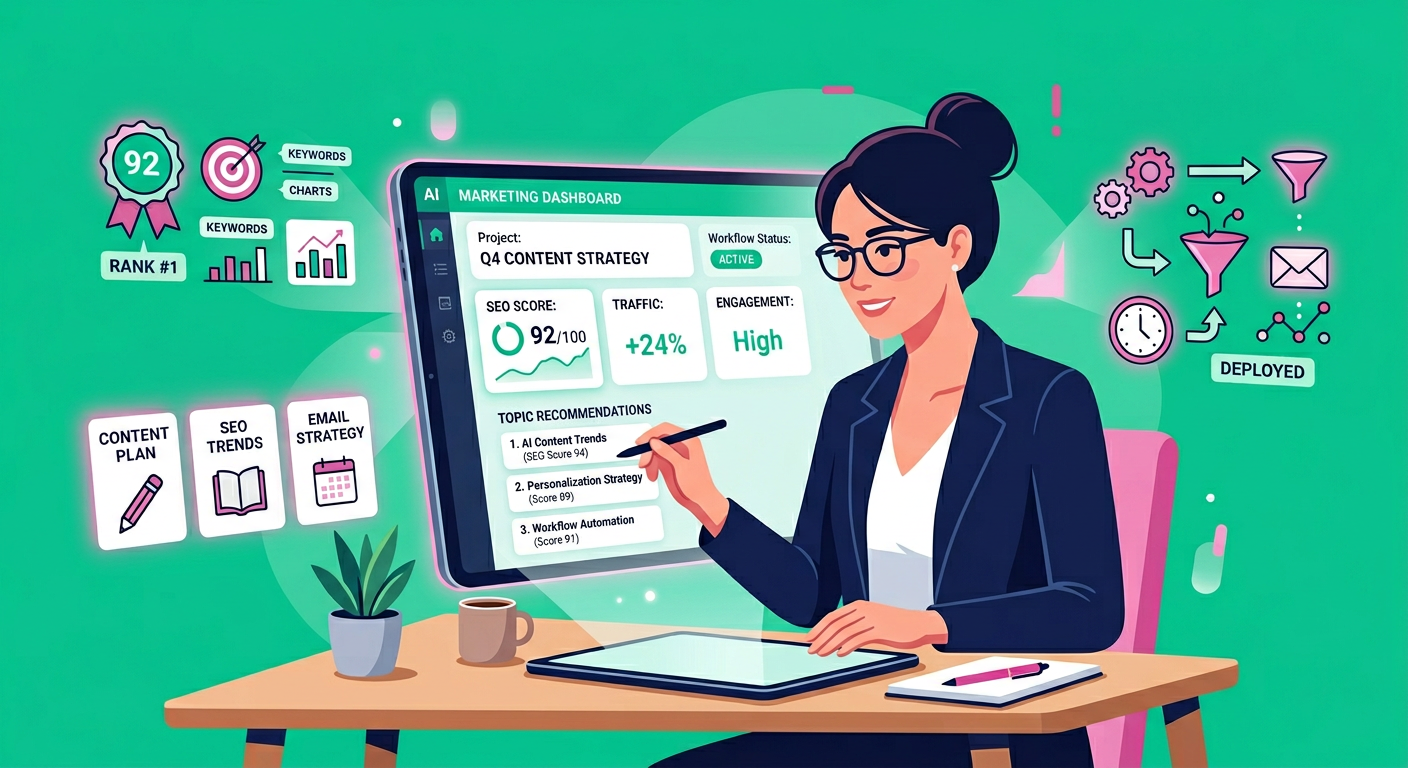
If you want quick wins, start small and build from there.
Phase 1: Foundation
Create one core workflow, such as weekly blog drafts or one SEO refresh cycle. Focus on consistency before complexity.
Phase 2: Optimization
Improve your prompts, refine your brand voice, and track what content performs best. This is where quality starts to compound.
Phase 3: Expansion
Add email, social, lead nurturing, and content updates into the same system. Once the base is working, scaling becomes much easier.
This approach works well for startups, agencies, SaaS teams, and e-commerce brands because it keeps effort focused on what actually produces growth.
Why Automation Is Often the Simplest Option
A lot of teams want marketing growth, but they do not want another complicated process. That is why automation is so useful.
It reduces decision fatigue, keeps content moving, and helps you avoid the common stop-and-start cycle that kills momentum.
For teams with limited budgets or no in-house writers, it is often the most practical path to consistent publishing and better visibility.
FAQ
What are AI agents for marketing used for?
They are used for tasks like content creation, research, repurposing, SEO support, lead handling, and workflow automation. The best use cases are repetitive tasks that benefit from speed and consistency.
Are AI agents for marketing replacing marketers?
No, they are supporting marketers. Strategy, positioning, creative judgment, and brand oversight still need people.
Can small businesses use AI agents effectively?
Yes. In fact, small businesses often benefit the most because they usually have limited time and fewer resources.
Do AI agents help with SEO?
They can help with keyword research, outlines, refreshes, internal links, and content scaling. They work best when paired with a solid SEO strategy.
Are AI-generated marketing assets good enough to publish?
Sometimes, but not always. The strongest results usually come from AI-assisted drafts that are reviewed and improved by a human.
How do I start using AI agents for marketing?
Start with one repeatable workflow, like blog drafting or content repurposing. Once that process works, expand into other parts of your funnel.
Grow Faster With a Smarter Content System
If your team is stuck trying to publish more content with less time, you do not need more chaos. You need a system that makes marketing easier to repeat.
That is where Content Beast can help. We help you grow traffic through blogging, SEO, and automation so you can get seen on Google and mentioned in AI tools without relying on constant manual effort.
Conclusion
AI agents for marketing are not just a trend. They are a practical way to build consistency, speed up production, and support smarter growth.
If you want more traffic, better SEO results, and less time spent staring at a blank page, the answer is not working harder. It is building a repeatable content system that does more of the heavy lifting for you.