

What Is Automated Blogging for Small Business?
Automated blogging for small business is a way to plan, create, optimize, and publish content with less manual work. Instead of starting from scratch every week, you use systems, templates, workflows, and AI-assisted processes to keep content moving consistently.
That matters because most small teams do not have endless time, a full editorial department, or extra budget for trial and error. With the right setup, automated blogging for small business can help you publish more often, stay visible in search, and stop relying on last-minute content scrambles.
Why Automation Changes the Blogging Game
Small businesses usually hit the same wall. They know content matters, but writing every post manually is slow, expensive, and hard to sustain. One week you publish. The next week gets busy. Then momentum disappears.
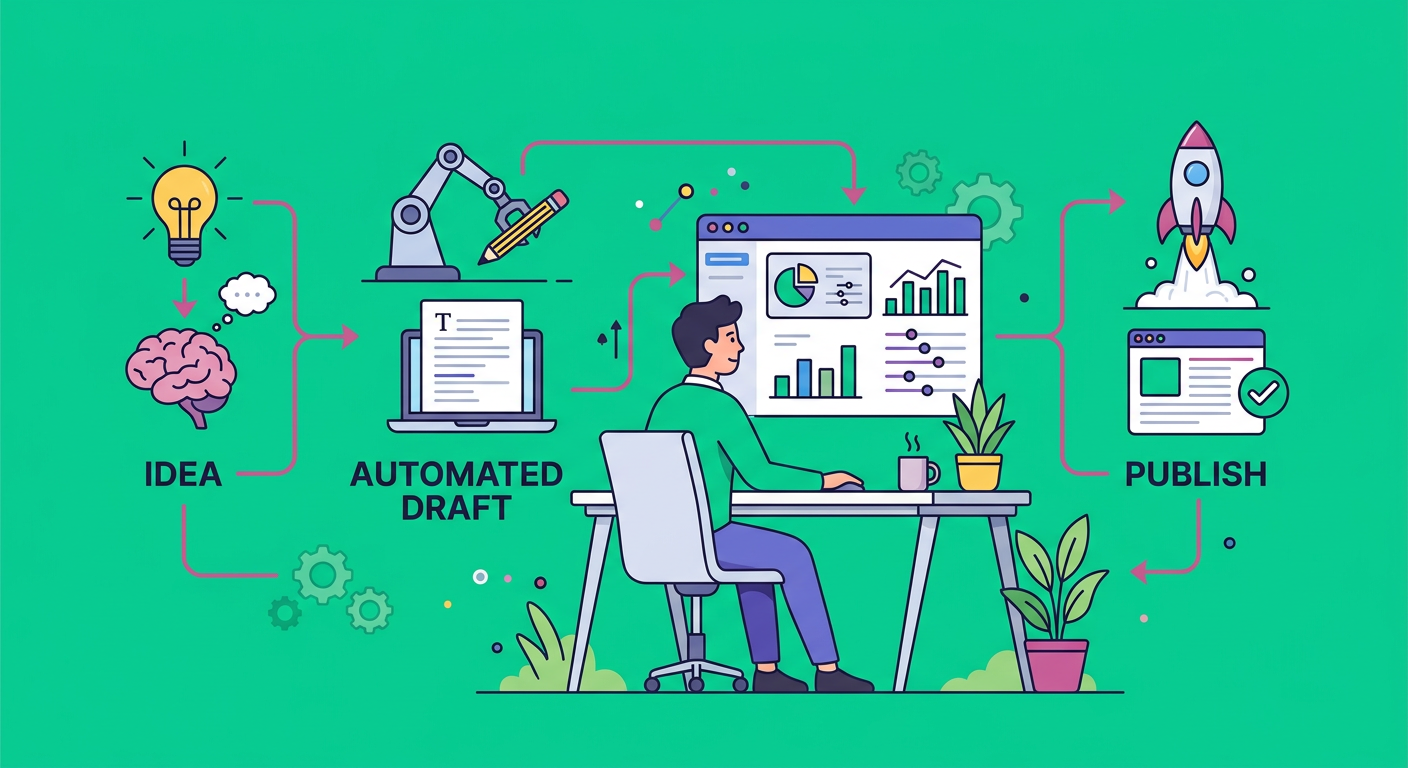
Automation helps solve that by turning blogging into a repeatable system. You can automate parts of the process like topic research, content briefs, outlines, SEO checks, internal linking suggestions, publishing workflows, and performance tracking. That means your team spends less time on repetitive tasks and more time on strategy, sales, and customer experience.
The Biggest Benefits for Small Businesses
More consistency without more stress
Consistency is one of the biggest predictors of blog success. Search engines reward fresh, useful content, and readers trust brands that show up regularly. Automation makes it easier to keep a publishing rhythm even when your team is busy.
Lower content costs
Hiring writers, editors, and strategists for every single post can get expensive fast. Automated workflows reduce wasted time, shorten production cycles, and help you get more value from every hour and every dollar.
Better SEO foundations
Good blogging is not just about writing. It is about choosing the right topic, matching search intent, using clear structure, and linking pages together strategically. Automation helps standardize those SEO basics so nothing slips through the cracks.
Faster path to traffic
When you publish more consistently and optimize content more effectively, you give your site more chances to rank. Over time, that can compound into steady organic traffic instead of random spikes.
What to Automate in Your Blogging Process
Topic discovery
Use a repeatable process for finding topics your audience actually searches for. This can include keyword clusters, question-based queries, competitor content gaps, and customer pain points.
Content briefs
A strong brief saves a huge amount of time. It should include the target keyword, search intent, headline direction, core points, internal link ideas, and a clear call to action.
Drafting support
AI can help with first drafts, section expansion, and idea generation. The key is to use it as an accelerator, not a replacement for your brand voice, customer insight, and expertise.
SEO optimization
Automate checks for headings, keyword usage, meta descriptions, internal linking, and readability. That way every post starts from a stronger baseline.
Publishing and distribution
Once content is approved, automate scheduling, formatting, and sharing across channels. You can also repurpose each post into email content, social posts, and short-form updates.
How Automated Blogging for Small Business Works
The best setup is simple and repeatable. Here is a practical workflow:
- Pick a topic cluster tied to a business goal.
- Generate or collect keywords and questions.
- Build a content brief.
- Create the draft with human review.
- Edit for clarity, accuracy, and brand tone.
- Optimize the post for SEO.
- Publish and distribute it.
- Track results and improve the next post.
That system keeps your blog moving without making every article feel like a giant project.
A Smarter Strategy for Different Business Types
For local service businesses
Focus on educational and trust-building content, like common questions, pricing guides, service comparisons, and local problem-solving topics. These posts help you get found and build credibility before the first call.
For SaaS companies
Create content that supports product discovery, use cases, comparisons, and onboarding. Automation is especially useful here because SaaS teams often need to produce a lot of high-intent content quickly.
For e-commerce brands
Use automation to scale category content, buying guides, product education, and seasonal content. This helps you capture more long-tail search traffic and support conversions.
For agencies
Automated blogging can help you serve more clients without increasing overhead at the same pace. It becomes easier to produce repeatable content frameworks while still tailoring strategy to each account.
Best Practices That Keep Automation Effective
Keep humans in the loop
Automation should remove busywork, not judgment. Always review content for accuracy, tone, examples, and brand alignment before publishing.
Prioritize search intent
A post can be perfectly written and still miss the mark if it does not answer what the reader is really looking for. Make sure each article solves a real problem.
Build content around clusters
One-off posts are fine, but clusters are better. Group related content together so your site becomes a stronger authority on a topic.
Refresh older posts
Automation should not stop at creation. Use it to monitor old content, identify pages that need updates, and keep your best posts from going stale.
Measure what matters
Track organic traffic, rankings, click-through rate, conversions, and assisted revenue. That tells you whether blogging is actually helping the business, not just filling the calendar.
Common Mistakes to Avoid
Publishing too much generic content
If every post sounds the same, readers will tune out. Automation works best when each article still has a clear point of view and useful insight.
Ignoring quality control
Fast content that is inaccurate or thin can hurt more than it helps. Make quality review part of the process.
Chasing keywords only
Keywords matter, but the real goal is helping a specific audience solve a specific problem. Start there, then optimize.
Overcomplicating the workflow
The best system is the one your team will actually use. Keep it lean enough to maintain week after week.
The Role of AI in Automated Blogging for Small Business
AI makes automation more powerful by speeding up research, outlines, drafts, summaries, and repurposing. It can help you move from blank page to workable draft much faster.
Still, AI performs best when guided by a clear strategy. You want a process that combines automation with human experience, because your customers need more than surface-level content. They need insight, specificity, and trust.
If you want to go deeper on the mechanics of search visibility, it can also help to study how Google Search Central explains content quality and indexing basics, then build your workflow around those principles.
How to Start Without Overwhelm
You do not need a massive system to begin. Start with one blog workflow, one keyword cluster, and one repeatable publishing schedule.
A simple way to begin is:
- Choose one audience segment.
- Pick one business outcome.
- Build five to ten article ideas.
- Create a brief template.
- Use automation to speed up drafting and publishing.
- Review results after 30 days.
That small start can create momentum quickly, especially for teams that have struggled to stay consistent.
FAQ
What is the best use of automated blogging for small business?
The best use is to reduce repetitive work while keeping quality high. It is especially useful for topic research, outlines, SEO checks, scheduling, and content repurposing.
Will automation replace my writer or marketer?
Not if you use it well. Automation should support your team, not replace strategic thinking, customer knowledge, and editing.
Can automated blogging still rank on Google?
Yes, if the content is useful, relevant, and optimized properly. Search visibility comes from value, structure, intent match, and consistency, not just writing speed.
How often should a small business blog publish?
There is no universal number, but consistency matters more than volume. A realistic schedule that you can maintain is usually better than a burst of posts followed by silence.
Is automated blogging good for beginners?
Yes, especially if you are short on time or unsure what to write. A structured system can help beginners avoid guesswork and stay organized.
What tools do I need to get started?
You need a topic research method, a content brief template, a drafting workflow, an SEO review checklist, and a publishing schedule. The exact tools matter less than having a repeatable process.
Get a Blogging System That Actually Scales
If blogging has felt slow, inconsistent, or overwhelming, automation may be the simplest way to make it sustainable. The goal is not to publish more for the sake of it, the goal is to create a system that keeps bringing in traffic, leads, and visibility without eating your whole week.
At Content Beast, we help businesses turn blogging into a repeatable growth engine. If you want a smarter way to scale content without adding more manual work, explore how a streamlined blogging system can help at Content Beast.
Conclusion
Automated blogging for small business is not about cutting corners. It is about building a better process. When you combine automation, SEO, and human strategy, you get a content system that is faster, more consistent, and far easier to scale.
That is the real advantage. You stop guessing, you stop scrambling, and you start publishing with purpose.