
Blogging for SaaS Founders With No Time
What is the fastest way to make blogging for SaaS founders with no time actually work? The answer is to stop treating content like a side hobby and start treating it like a repeatable growth system. You do not need to write every post yourself, publish every day, or spend hours buried in keyword research to see results.
If you are building a SaaS company, your time is already split between product, sales, customer feedback, hiring, fundraising, and support. That is exactly why a simple, automated blogging system can be the difference between inconsistent effort and predictable organic growth.
Why SaaS Founders Struggle to Blog Consistently
Most founders do not fail at content because they lack ideas. They fail because the process is too manual, too slow, and too disconnected from revenue.
The real bottlenecks
- You are juggling too many priorities.
- You do not want to spend hours writing posts that might never rank.
- You are unsure what topics will bring in the right traffic.
- You may not have an in-house writer or SEO specialist.
- Even when you publish, the work often stops there.
That is why so many blogs turn into abandoned projects. The problem is not blogging itself. The problem is the system behind it.
What SaaS content needs to do
A good SaaS blog should do more than fill your website with words. It should:
- Attract qualified traffic from search
- Educate people at the problem-awareness stage
- Build trust before the demo
- Support product positioning
- Help your team show up in AI-powered search tools as well as Google
A Better Way to Approach Blogging for SaaS Founders With No Time
The smartest founders do not try to become full-time content creators. They create a lightweight system that keeps publishing moving without dragging them out of product work for hours every week.
Start with the right content buckets
Instead of chasing random ideas, build around a few repeatable categories:
- Problem-aware articles that address pain points
- Comparison posts that help buyers evaluate options
- How-to guides tied to your product category
- Use-case posts for specific industries or roles
- Opinion or trend posts that reinforce your expertise
This gives you structure, which makes content easier to plan, faster to produce, and more likely to support your pipeline.
Focus on search intent, not just keywords
A lot of founders ask, “What should I write about?” The better question is, “What is my buyer already searching for?”
If your audience is looking for solutions, you want to show up when they search for:
- How to solve a specific problem
- Best tools for a job
- Alternatives to a competitor
- Ways to improve a process
- Common mistakes in your category
That is where SaaS blogging starts pulling its weight.
The 80-20 Content Strategy That Saves Time
If you only have a limited amount of bandwidth, you need a strategy that gives you the most impact for the least effort.
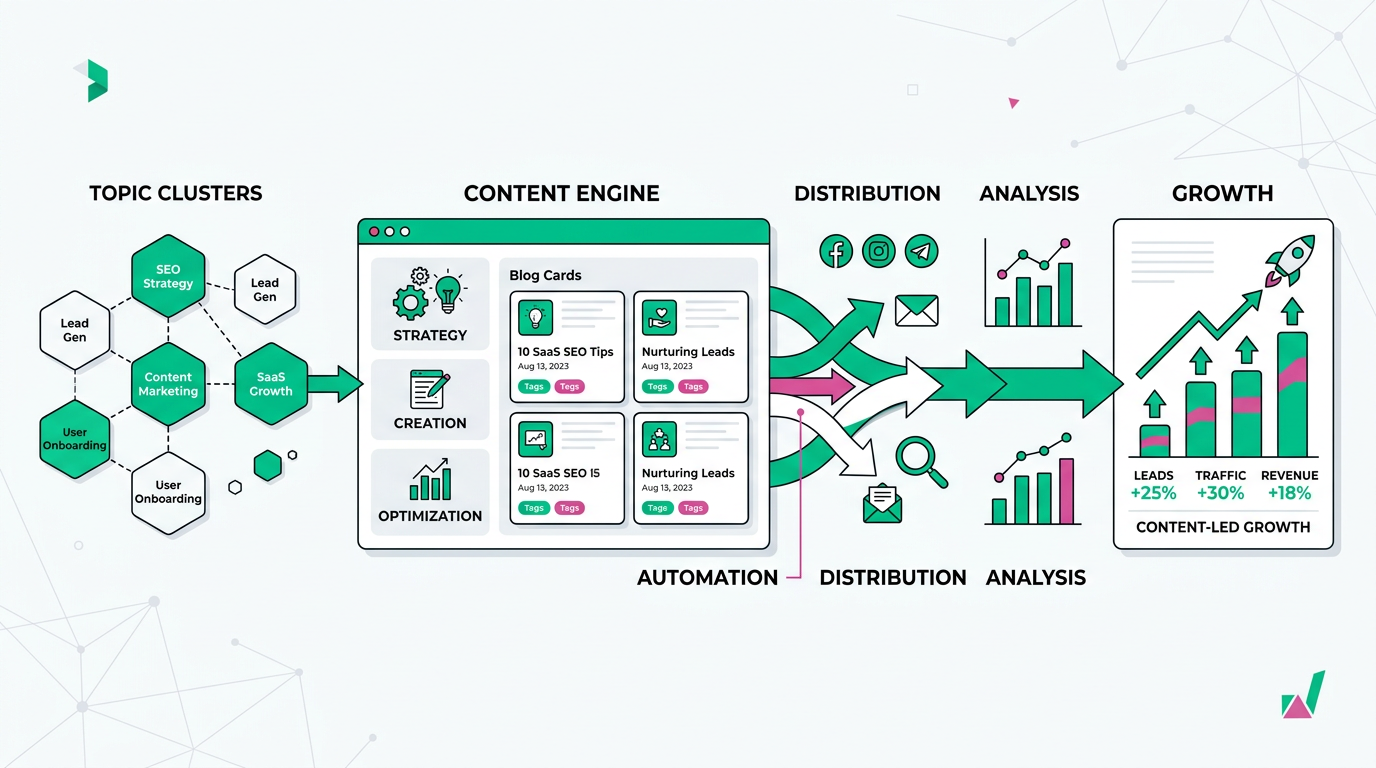
1. Build around one core topic per month
Choose one theme that matters to your buyers and create supporting content around it. For example, if you sell a workflow tool, one month might focus on team efficiency, another on automation, and another on reporting.
This helps search engines understand your site and makes your content easier to reuse across channels.
2. Repurpose one idea into multiple assets
One strong blog post can become:
- A LinkedIn post
- A short email newsletter
- A sales enablement asset
- A landing page section
- A script for a webinar or demo
That is how busy founders get more leverage from the same research.
3. Use templates to reduce decision fatigue
Templates save time because they remove the blank-page problem. At minimum, create repeatable outlines for:
- How-to posts
- Comparison posts
- Problem-solution articles
- Product-led educational posts
- FAQ and glossary content
This keeps your blog consistent even when your schedule is not.
How Automation Helps Without Making Your Content Feel Generic
Automation does not mean publishing robotic content. It means removing repetitive work so you can focus on what actually needs your judgment.
Where automation helps most
- Topic discovery
- Keyword grouping
- Content briefs
- Draft generation
- Internal linking suggestions
- Publishing workflow
- Refreshing older content
When the heavy lifting is automated, your team can spend more time adding perspective, product insight, and examples that sound like your brand.
Where human input still matters
You should still shape the final message around:
- Your product’s unique angle
- Customer pain points
- Proof and examples
- Founder insight
- Conversion goals
That combination is powerful. The system handles speed, and you handle strategy.
What to Publish First If You Have Almost No Time
If your blog is still small, do not start with broad thought leadership. Start with the pages that can earn attention fastest.
Best first posts for SaaS founders
-
Problem-solving guides
Write about the exact issue your product solves. These often align well with search intent and early buyer research. -
Alternatives and comparisons
Buyers love comparison content because it helps them narrow options quickly. -
Use-case pages and posts
Show how your software helps a specific role, team, or industry. -
FAQ content
Answer the questions prospects ask before they book a demo. -
Feature education posts
Help people understand what your product does and why it matters.
These topics are practical, search-friendly, and easier to turn into a repeatable system.
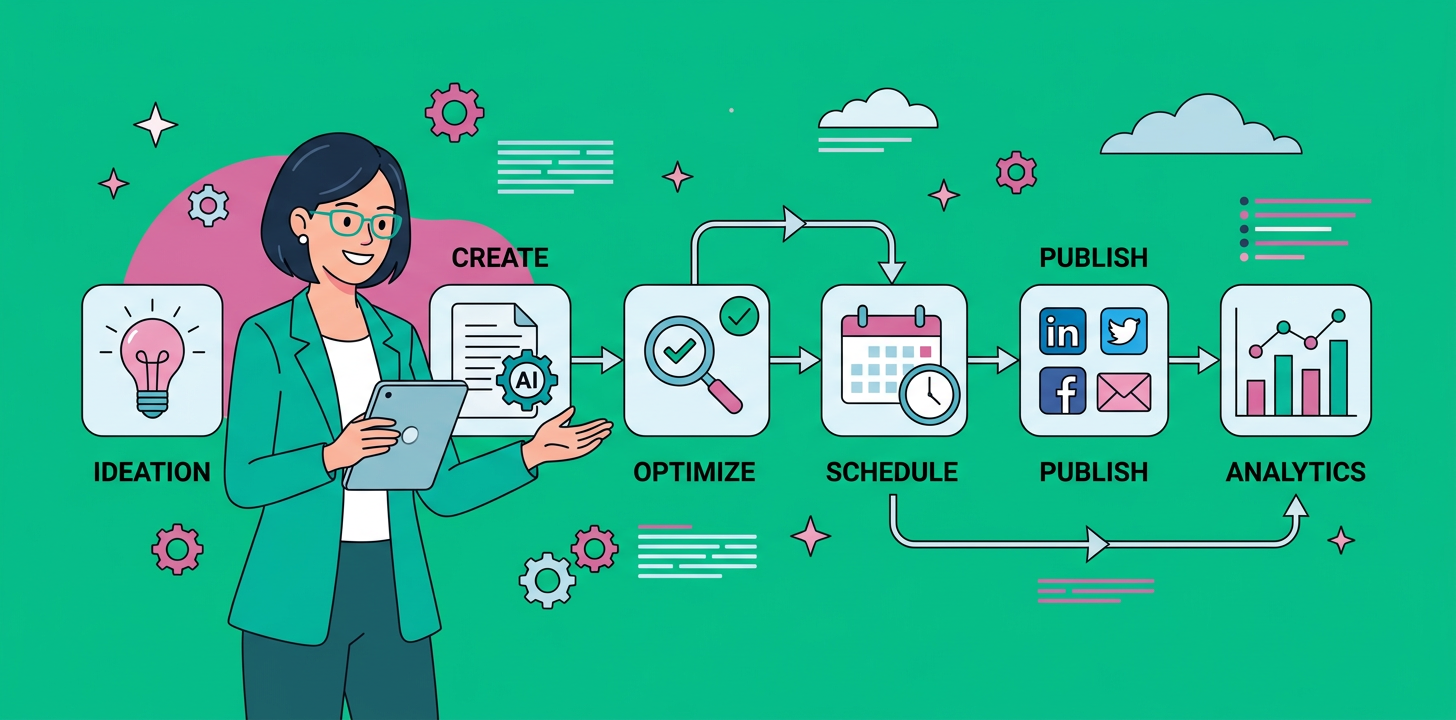
Blogging for SaaS Founders With No Time: A Simple Weekly Workflow
You do not need a massive content team to stay consistent. You need a workflow you can actually keep.
A realistic weekly rhythm
Monday: Pick one topic and one primary keyword
Tuesday: Generate a brief or outline
Wednesday: Draft the post or have it drafted
Thursday: Edit for voice, examples, and accuracy
Friday: Publish, interlink, and repurpose the content
That is it. A lean process beats a perfect one you never finish.
The minimum viable content stack
A practical SaaS blogging workflow usually includes:
- One content calendar
- One topic template
- One SEO checklist
- One publishing process
- One repurposing routine
If you have those five pieces, you can keep moving without reinventing the wheel every week.
How to Measure Whether the Blog Is Working
You do not need vanity metrics. You need signs that content is supporting growth.
Track these signals
- Organic traffic growth
- Rankings for target topics
- Demo requests from blog readers
- Time on page and scroll depth
- Internal link clicks
- Assisted conversions
- Mentions in AI search tools and answer engines
A blog can be successful even before it becomes a lead machine, especially if it is helping your brand show up more often in search and AI discovery.
Give content time to compound
Many founders quit too early because they expect instant results. Search-driven content often takes time, but the upside is durability. One good article can keep working long after the publish date.
Common Mistakes to Avoid
When founders try to blog in a hurry, they usually make the same mistakes.
Publishing without a strategy
Random content feels productive, but it rarely compounds. Every post should support a topic cluster, a buyer stage, or a specific product goal.
Writing only for peers
It is tempting to write about industry trends and founder lessons, but your blog also needs content that buyers actively search for. Think like your customer, not just like a founder.
Trying to do everything manually
Manual content creation is one of the fastest ways to stall. If you are always starting from scratch, your blog will compete with your calendar, and your calendar will usually win.
Ignoring content distribution
Publishing is only half the job. Share each post through email, social, in-product touchpoints, and sales workflows so it gets more reach.
FAQ
How often should SaaS founders blog?
Consistency matters more than volume. Even one strong post per week can work if it is strategic, useful, and aligned with search intent.
Can a founder blog without hiring a writer?
Yes. A founder can absolutely build a blog with templates, automation, and a simple approval workflow. The key is not writing everything from scratch.
What kind of content works best for SaaS?
Problem-solving guides, comparisons, use-case posts, and educational articles tend to work well because they match how buyers research solutions.
How long should a SaaS blog post be?
Long enough to answer the question properly. For most topics, that means being comprehensive without padding the article just to hit a word count.
Is SEO still worth it for SaaS founders?
Yes. Search visibility can bring in high-intent visitors over time, especially when your content addresses pain points and decision-stage questions.
What if my product is too niche for blogging?
Niche products often benefit even more from content because the audience is specific. Focus on the exact jobs, workflows, and problems your buyers care about.
How does automation help with blogging?
Automation speeds up research, outlines, drafting, publishing, and content maintenance, so you can stay consistent without spending every week in production mode.
Grow Faster Without Living in Content Mode
If you are a founder, your job is to build the company, not become trapped in a content treadmill. The goal of blogging is not to create more work for you, it is to create a system that keeps traffic, trust, and demand growing in the background.
That is why a smart, automated approach to blogging for SaaS founders with no time is such a strong advantage. It gives you consistency, lowers content costs, and helps your brand show up where buyers are already looking.
If you want a simpler way to build content that ranks and compounds, visit Content Beast and explore how a more automated blogging system can help your team grow without the usual overhead.