
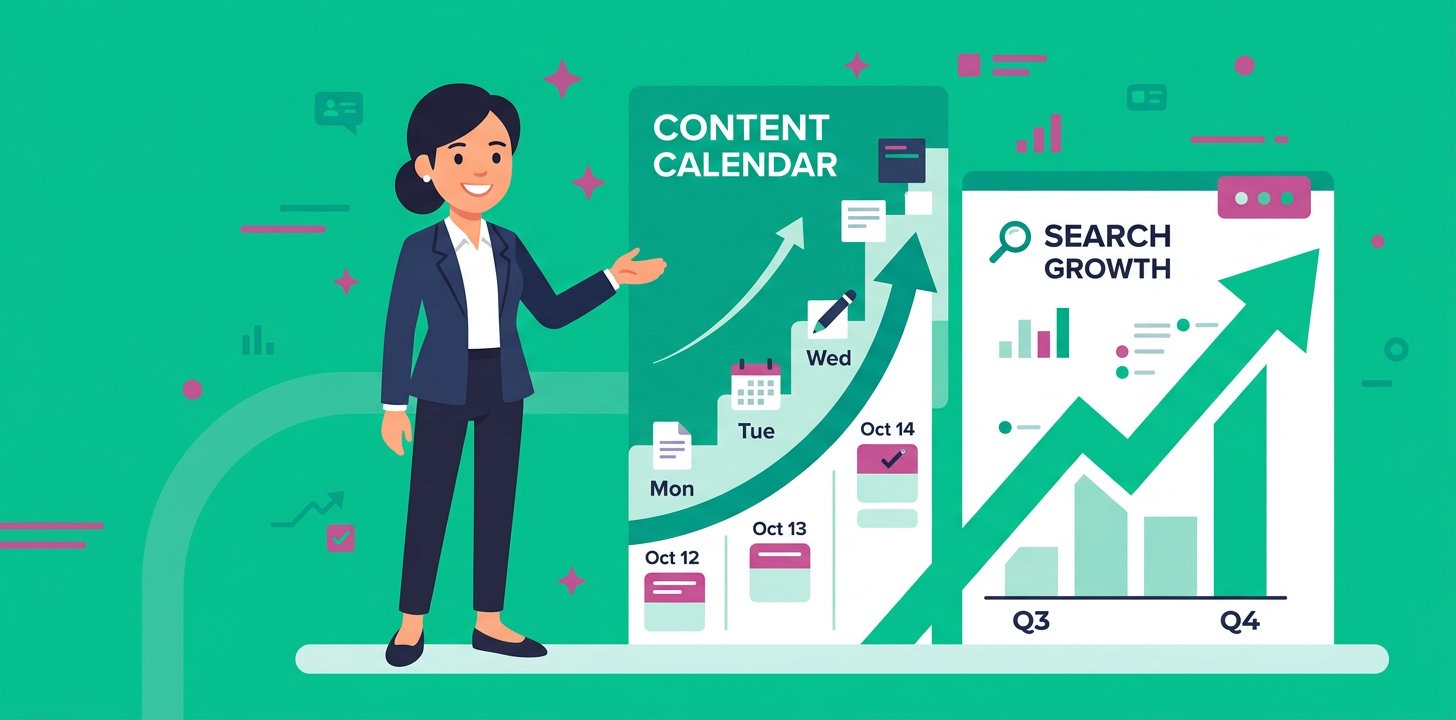
Automated SEO blogging for small business is one of the simplest ways to build consistent organic traffic without living inside a content calendar. If you’ve been stuck with no traffic, inconsistent publishing, or blog ideas that never seem to turn into rankings, this approach gives you a system instead of a guessing game.
Here’s the big advantage, you can create content that targets search intent, supports your sales funnel, and keeps working long after you publish it. For a small business, that means less manual effort, lower content costs, and a much better shot at showing up in Google and AI-powered search tools.
What Is Automated SEO Blogging for Small Business?
Automated SEO blogging for small business is a repeatable content system that uses automation to plan, create, optimize, publish, and update blog posts around keywords your audience is already searching for. Instead of starting from scratch every week, you build a workflow that consistently produces content aligned with your goals.
This is not about publishing random AI content and hoping for the best. It is about combining strategy, keyword research, content briefs, internal linking, optimization, and scheduling so your blog becomes a dependable growth channel.
Why automation matters now
Small business teams usually face the same challenge, too much to do and not enough time to blog consistently. Automation helps remove the bottlenecks that slow everything down, especially if you do not have an in-house writer, SEO specialist, or content manager.
With the right setup, you can stay visible without creating every post manually. That matters because search engines and AI tools reward helpful, consistent, well-structured content over time.
Why Small Businesses Need a Smarter Blogging System
A lot of small businesses know blogging can help, but they struggle with execution. The problem is rarely the idea itself, it is the process.
Common roadblocks
- Not knowing what to write about
- Publishing inconsistently
- Spending too much time on each post
- Writing content that never ranks
- Missing SEO basics like headings, internal links, and search intent
- Lacking the technical skills to keep everything organized
When those issues pile up, blogging becomes a chore instead of a growth engine. Automation gives you structure so your blog can keep moving even when your team is busy running the business.
The business impact of inconsistency
If you publish only when you have extra time, your blog will usually stay invisible. Search visibility tends to grow from steady effort, not bursts of activity.
That is why recurring content systems work so well. They make publishing predictable, which is exactly what a small business needs when time and budget are limited.
How Automated SEO Blogging Works
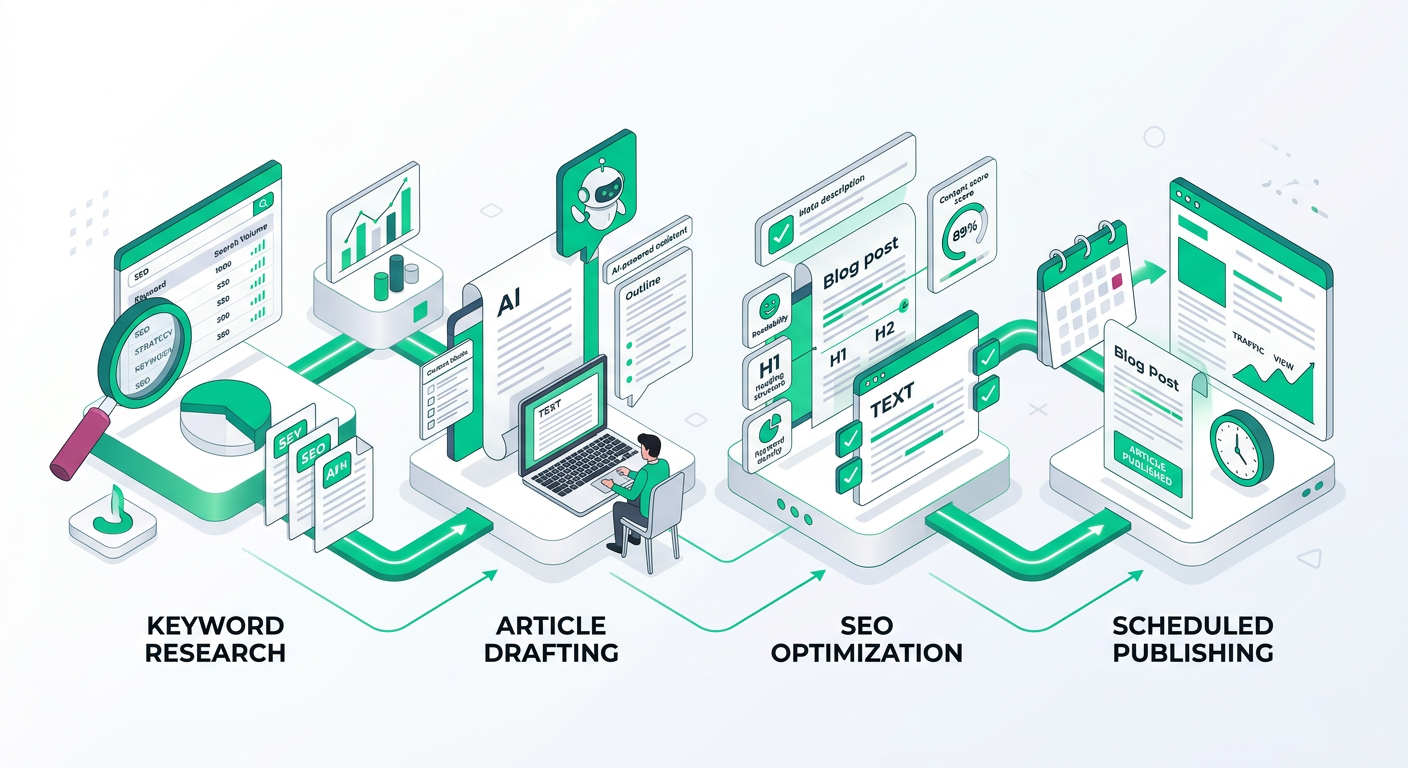
The best automated SEO blogging for small business follows a simple workflow. Each step reduces manual work while improving consistency and quality.
1. Keyword and topic selection
Start with search terms your audience uses when they are trying to solve a real problem. Focus on long-tail keywords, how-to questions, comparisons, and common pain points.
For example, instead of targeting only broad terms, go after phrases like:
- how to get more website traffic
- best blog topics for small business
- what is SEO blogging
- how to write blog posts that rank
These topics are easier to match with intent and often convert better than vague, high-competition keywords.
2. Brief creation and outline automation
Once the topic is chosen, automate the brief. A strong brief should include the keyword, audience, search intent, headings, FAQs, and key points to cover.
This step saves enormous time because your team is not reinventing the wheel for every article. It also helps keep content consistent across multiple posts, which improves quality and brand voice.
3. Drafting and optimization
Drafting can be partially or fully automated, but the smartest approach is to combine automation with human review. That way, the content stays efficient without losing clarity, accuracy, or brand fit.
SEO optimization should include title tags, headings, meta descriptions, internal links, and natural keyword placement. The goal is to make every post easy for both readers and search engines to understand.
4. Publishing and distribution
Automation can also handle scheduling and distribution. You can push new posts live consistently and share them across email, social, or other channels without doing everything manually.
That kind of system helps a small business stay active across the web, which improves discoverability and makes your marketing feel more cohesive.
5. Updating and repurposing
Good content should not disappear after publication. Automated reminders and content refresh workflows help you update posts that are losing traffic or need new examples.
You can also repurpose strong blog posts into newsletters, social posts, sales assets, and AI-friendly content summaries. That gives you more value from every article.
What Makes a Blog Post Rank Better
If you want automated SEO blogging for small business to actually work, the content still needs to be useful. Search engines are looking for content that matches intent and delivers value quickly.
Focus on search intent
Before you write, ask what the reader really wants. Are they looking for a definition, a tutorial, a checklist, a comparison, or a buying guide?
When your content matches the intent behind the query, you improve your chances of ranking and keeping readers engaged.
Cover the topic thoroughly
Thin content rarely performs well. A strong post answers the main question, addresses common follow-up questions, and includes practical advice the reader can use right away.
That is especially important for small business topics, where people want real solutions, not generic filler.
Use internal links strategically
Internal links help search engines understand your site structure and help readers move to related content. If you have service pages, case studies, or other blog posts, connect them naturally inside the article.
This creates a better user experience and strengthens topical authority over time.
Build content for AI discovery too
Search is changing, and many brands now want to be mentioned in AI tools as well as search engines. Clear headings, concise answers, structured information, and topic depth make your content easier for AI systems to interpret and summarize.
That is one reason automated SEO blogging can be so powerful when it is done well, it creates content that is easier to surface in multiple discovery channels.
Best Use Cases for Small Businesses
Automated SEO blogging is not just for big companies with large teams. In fact, smaller teams often benefit the most because they have the least time to spare.
Local service businesses
If you run a local business, automation can help you publish neighborhood pages, service explainers, FAQs, and educational posts that attract nearby searchers.
Think plumbers, dentists, law firms, agencies, coaches, contractors, and other service-based businesses that need steady lead flow.
SaaS founders
SaaS teams can use automated blogging to target product-led SEO topics, pain points, alternatives, and feature comparisons. That helps drive organic traffic from people actively researching solutions.
For lean teams, this can become a reliable top-of-funnel channel without requiring a huge content staff.
E-commerce brands
E-commerce businesses can publish buying guides, product comparisons, problem-solving content, and seasonal posts that support product discovery.
This is useful when you want to rank for informational searches that eventually support product sales.
Agencies and marketing teams
Agencies can use automation to scale output across multiple clients while keeping the workflow organized. That means more content delivered with fewer bottlenecks.
For in-house marketers, it simply means getting more done without burning out the team.
A Practical Automated SEO Blogging Workflow
If you are building a system from scratch, keep it simple.
Step 1: Pick one content goal
Decide what matters most right now, traffic, leads, product demos, or brand visibility. A focused goal helps you choose the right topics and measure the right outcomes.
Step 2: Create a topic list
Build a list of 20 to 50 topics based on questions, problems, comparisons, and long-tail keywords. Group them by intent so you can publish in a logical sequence.
Step 3: Automate the brief
Use a repeatable brief template that includes the keyword, angle, audience, outline, CTA, and linking opportunities. This keeps your workflow efficient and consistent.
Step 4: Produce and review content
Let automation speed up the draft, then review for accuracy, brand voice, and SEO quality. The best results usually come from a human plus automation approach, not one or the other.
Step 5: Schedule and track performance
Publish on a consistent cadence and monitor which posts bring traffic, engagement, and conversions. Then update what works and improve what does not.
Common Mistakes to Avoid
Even a good content system can fail if the execution is weak.
Publishing without strategy
If you publish just to publish, your blog can fill up with content that never supports business goals. Every post should have a purpose.
Ignoring quality control
Automation should speed up work, not remove judgment. Make sure the final content is accurate, readable, and relevant.
Chasing only broad keywords
Broad terms are usually more competitive and less likely to convert quickly. Smaller businesses often win faster with specific, intent-driven keywords.
Forgetting the CTA
A blog post should not stop at education. Guide readers toward the next step, whether that is reading another article, booking a call, or exploring your services.
FAQ
Is automated SEO blogging good for small businesses?
Yes. It helps small businesses publish consistently, reduce content costs, and improve visibility without needing a large team.
Will automated content actually rank on Google?
It can, if the content is useful, well-structured, and aligned with search intent. Automation is the workflow advantage, not the quality guarantee.
How much human review is needed?
At minimum, you should review for accuracy, brand voice, and SEO quality. A light human edit can make a huge difference in performance.
Can automation help with AI search visibility?
Yes. Clear structure, helpful answers, and consistent topical coverage make your content easier for AI tools to understand and reference.
What kind of businesses benefit most?
Local businesses, SaaS companies, agencies, e-commerce stores, and service providers usually see strong value because they need consistent content with limited resources.
How often should a small business blog?
Consistency matters more than volume. Even one strong post per week can be effective if it is targeted and optimized.
Do I need technical skills to start?
No, not necessarily. A good automated workflow can simplify research, drafting, publishing, and optimization so your team can focus on strategy.
Build a Blog System That Keeps Working
Automated SEO blogging for small business is really about turning content into a system. Instead of scrambling for ideas, you create a repeatable process that supports traffic, leads, and brand visibility over time.
If you want more output with less stress, this is one of the smartest moves you can make. The businesses that win are not always the ones publishing the most, they are often the ones publishing consistently with the right structure.
Ready to Make Blogging Easier?
If you want a simpler way to grow with content, start by building a system that does the heavy lifting for you. At Content Beast, we help businesses create consistent blogging workflows that support SEO, save time, and improve visibility.
Visit https://contentbeast.com to explore a smarter way to scale content without the usual manual grind.