
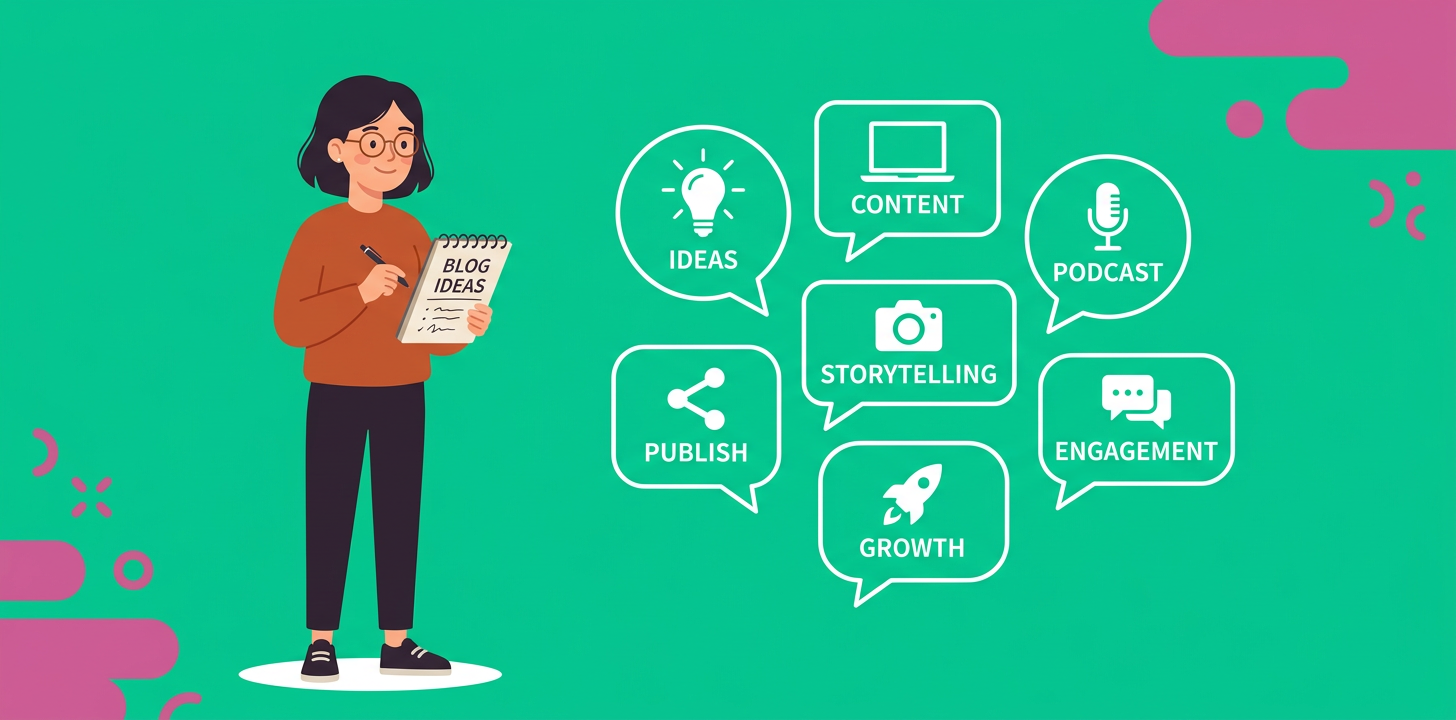
Stuck staring at a blank editor and wondering what to write about when you have writer's block? Start with a real reader problem, answer it in plain language, and shape it into a useful post your audience can act on today. If nothing comes to mind, pull ideas from customer questions, old posts, product lessons, industry myths, and simple how-to topics.
That is the short answer. The better answer is that writer's block usually is not a creativity problem. It is a system problem.
Introduction
If you run a blog for a business, you are not just trying to feel inspired. You are trying to publish consistently, rank higher in Google, build trust, earn visibility in AI answer tools, and create content that leads people toward your product or service.
That is a lot to ask from a blinking cursor.
Here is the thing: the best blog ideas rarely appear out of nowhere. They come from repeatable prompts, audience pain points, and a clear content plan. According to Orbit Media's annual blogger survey, marketers who publish detailed, helpful articles and track performance are more likely to report stronger results. So instead of waiting for motivation, you need a practical way to pick the next useful topic.
This guide gives you that system.
Why Writer's Block Happens to Bloggers
Writer's block feels personal, but for business bloggers, it usually comes from one of five issues.
You may not know who the article is for. You may be trying to say too much in one post. You may be choosing topics based on vague ideas instead of real questions. You may be tired from doing strategy, writing, editing, formatting, and promotion alone. Or you may be afraid the topic is too basic.
That last one is common.
Early-stage business blogs often skip beginner topics because the founder already knows the answer. But your audience may not. A WordPress blogger might need to know how often to publish. A SaaS buyer might need a plain explanation of content pillars. A local business owner might simply need a checklist for getting blog ideas from customer emails.
Simple does not mean shallow. Simple means clear.
What to Write About When You Have Writer's Block: Start With Reader Intent
Before you choose a topic, ask one question: what is the reader trying to do?
Most blog ideas fit into one of these intent buckets:
- Learn what something means
- Compare two options
- Fix a problem
- Follow a process
- Make a decision
- Avoid a mistake
- Find examples
- Plan the next step
If you are an early-stage business, prioritize topics that solve immediate pain. These posts build trust fast because they help people make progress before they buy.
For example, instead of writing a broad post like content marketing tips, narrow it into:
- How to plan your first month of blog content
- What to write about when your blog has no traffic yet
- Blog post ideas for a new SaaS company
- How to choose keywords without expensive tools
- Why your blog posts are not bringing in leads
That is how you move from vague inspiration to useful content.
Use the Day 4 Content Strategy Framework
Since this is Day 4 content for an early-stage business, your goal is not to publish a masterpiece. Your goal is to build publishing momentum while creating a foundation for topical authority.
Think of Day 4 as the bridge between random blogging and a real content engine.
Day 1: Define Your Audience
You identify who you serve. For ContentBeast, that includes bloggers, WordPress site owners, founders, marketers, agencies, and businesses that want scalable organic growth without managing a full content team.
Day 2: Choose Core Problems
You list the problems your audience feels daily. Examples include no time to blog, unclear keyword priorities, inconsistent publishing, low traffic, weak Google rankings, and uncertainty around AI visibility.
Day 3: Build Topic Pillars
You group those problems into themes. A blog automation company might use pillars like blogging basics, content planning, WordPress publishing, traffic growth, SEO workflows, and AI visibility.
Day 4: Write From the Blockers
Now you write about the friction that keeps the audience stuck. Writer's block is one of those blockers. So are lack of time, lack of ideas, lack of confidence, and lack of a repeatable workflow.
This is why what to write about when you have writer's block is not just a creativity topic. It is a business growth topic.

The Fastest Blog Idea Sources When You Feel Stuck
When your brain goes blank, do not start with a blank page. Start with inputs.
Customer Questions
Open your inbox, support tickets, sales calls, DMs, comments, and onboarding notes. Every repeated question can become a blog post.
If someone asks, how long should a blog post be, you can write:
- How long should a blog post be for a small business?
- Does blog length matter for SEO?
- Short blog posts vs long blog posts: which works better?
One question can create several useful articles.
Product Features
Your product can inspire educational posts without sounding like a sales pitch.
If you offer blog automation, write posts that explain the job your tool helps with:
- How automated blog publishing works
- How to create a monthly content calendar
- How to keep a WordPress blog active
- How to lower content costs without lowering quality
Then mention your product only where it fits naturally.
Mistakes You See Often
Mistake-based content works because readers want to avoid wasting time.
Try prompts like:
- Common blogging mistakes new website owners make
- Why publishing more posts does not always grow traffic
- Blog topics that sound good but do not help buyers
- Why your content calendar keeps falling apart
This format is especially useful for agencies, SaaS founders, and service businesses because it lets you teach from experience.
Comparisons
Comparison posts help readers make decisions.
Examples:
- Blog automation vs hiring freelance writers
- Content calendar vs content strategy
- WordPress blog vs Medium blog for business growth
- SEO content vs thought leadership content
These topics often attract readers who are closer to taking action.
Definitions and Simple Explainers
Do not ignore basic educational content. A lot of people are still learning.
Try:
- What is a content pillar?
- What is topical authority?
- What is blog automation?
- What is an internal link?
- What is an SEO-friendly blog post?
These posts are perfect for building a helpful knowledge base.
What to Write About When You Have Writer's Block and Need Traffic
If traffic is the goal, choose topics with clear demand and clear usefulness. But do not write for algorithms only. Write for the human who has the problem.
A strong traffic-focused post usually has:
- A specific question in the title
- A direct answer near the top
- Clear subheadings
- Examples readers can copy
- A practical next step
- Links to relevant pages
- A concise FAQ section
Nielsen Norman Group has long shown that people scan web pages rather than read every word, so structure matters. Short paragraphs, descriptive headings, and useful bullets help readers find the answer faster. You can read more from Nielsen Norman Group's writing guidance.
For a business blog, traffic without relevance is noise. A better goal is qualified traffic, meaning readers who match your audience and care about the problems your product solves.
Use These Blog Post Prompts Today
When you need an idea quickly, fill in these prompts.
The Beginner Prompt
Write: What is [topic] and why does it matter?
Examples:
- What is blog automation and why does it matter?
- What is topical authority and why does it matter?
- What is a content calendar and why does it matter?
The Pain Point Prompt
Write: Why is [problem] happening and how do you fix it?
Examples:
- Why is my blog not getting traffic?
- Why is my content taking too long to publish?
- Why are my blog posts not ranking?
The Comparison Prompt
Write: [Option A] vs [Option B]: which is better for [audience]?
Examples:
- AI writing tools vs blog automation: which is better for founders?
- Weekly blogging vs daily blogging: which grows faster?
- WordPress blogging vs newsletter publishing: which should you prioritize?
The Checklist Prompt
Write: A simple checklist for [desired outcome].
Examples:
- A simple checklist for publishing your first business blog post
- A simple checklist for optimizing a WordPress article
- A simple checklist for planning a month of blog content
The Myth Prompt
Write: [Common belief] is wrong. Here is what to do instead.
Examples:
- More blog posts are not always better. Here is what to do instead.
- You do not need a huge team to grow a blog. Here is the lean approach.
- Writer's block is not your real problem. Your workflow is.
Build a Simple Idea Bank
An idea bank prevents panic. It gives you a place to store topics before you need them.
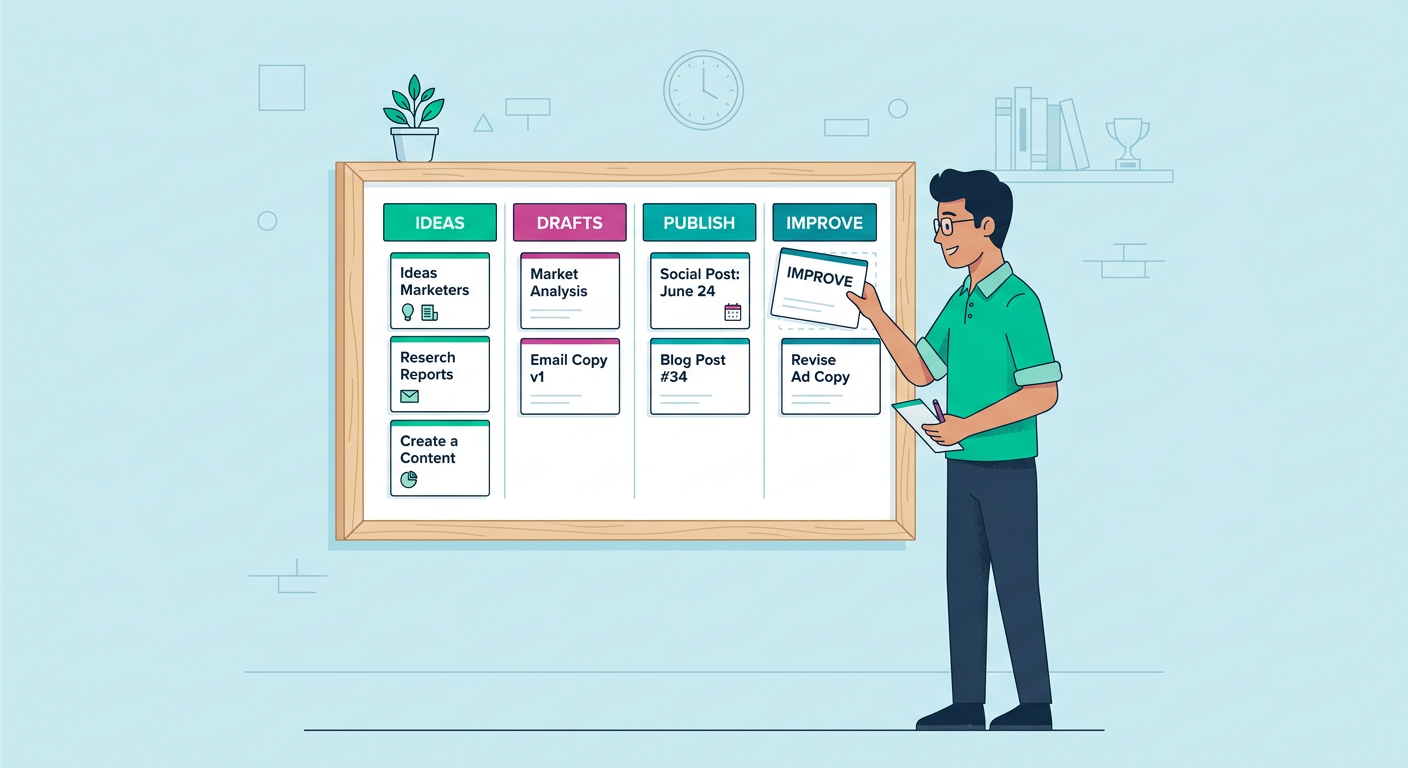
Create five columns:
- Audience question
- Keyword or phrase
- Content angle
- Funnel stage
- Next action
Here is an example:
Audience question: What should I blog about this week?
Keyword or phrase: blog post ideas for small business
Content angle: give twenty examples by industry
Funnel stage: early awareness
Next action: invite the reader to automate topic planning
This is simple, but it works. The next time you feel stuck, you are not inventing from nothing. You are choosing from a backlog.
Match Ideas to the Buyer Journey
Writer's block gets easier when you know where the article fits.
Awareness Topics
These help people name the problem.
Examples:
- Why your blog feels hard to keep up with
- What to write about when your business is new
- Signs your content process is too manual
Consideration Topics
These help people compare solutions.
Examples:
- Blog automation vs hiring writers
- How to choose a blogging tool for WordPress
- How to scale content without losing quality
Decision Topics
These help people act.
Examples:
- Best workflow for publishing blog posts every week
- How to automate a WordPress blog
- How much should consistent blogging cost?
If you only write awareness posts, readers may learn from you but never move closer to buying. If you only write decision posts, you miss people earlier in the journey. A healthy blog needs all three.
Make the Topic Easier to Write
Sometimes you have a good topic, but the post still feels hard. That usually means the angle is too broad.
Narrow it by adding:
- A specific audience
- A timeframe
- A platform
- A business type
- A clear outcome
Broad topic: blogging tips
Better topic: blogging tips for WordPress business owners with no content team
Broad topic: content strategy
Better topic: a 30-day content plan for early-stage SaaS founders
Broad topic: writer's block
Better topic: what to write about when you have writer's block and need to publish today
Specificity makes writing faster because it gives the article boundaries.
Use ContentBeast When You Need a Repeatable System
If writer's block keeps slowing down your publishing schedule, the answer is not always more willpower. Sometimes you need a better workflow.
ContentBeast helps website owners, founders, creators, and agencies plan, write, optimize, and publish blog content consistently. If you use WordPress, the ContentBeast WordPress automation plugin can help keep your blog moving without adding another manual task to your week.
You can also review ContentBeast pricing if you want a simpler way to publish regularly while lowering content production costs.
FAQ
What should I write about when I have writer's block?
Write about a real question your audience already has. Start with customer emails, sales calls, comments, product objections, or common beginner questions. The fastest post is usually a direct answer to a problem someone has already said out loud.
How do I get blog ideas for a new business?
Start with your audience's first problems. Write definitions, beginner guides, mistake posts, comparison articles, and checklists. Early-stage blogs should build trust before trying to cover every advanced topic.
Is writer's block a sign I should stop blogging?
No. It usually means your process needs more structure. Build an idea bank, choose content pillars, and create repeatable prompts so you are not relying on inspiration every time you sit down to write.
How often should I publish when I am just starting?
Pick a schedule you can maintain. Weekly is better than publishing five posts once and disappearing for two months. Consistency helps you build a useful content library over time.
Can AI help with writer's block?
Yes, but use it as a planning and editing assistant, not a replacement for your expertise. Let AI help with outlines, angles, title ideas, and summaries, then add your examples, opinions, and practical experience.
What blog topics are best for SEO?
The best topics are specific, useful, and tied to reader intent. Focus on questions, comparisons, how-to guides, definitions, and pain point articles that match what your audience needs before they buy.
How do I know if a topic is worth writing about?
Ask whether the topic helps your audience make progress, connects to your business, and fits one of your content pillars. If it does all three, it is probably worth writing.
Conclusion
Writer's block feels like a blank-page problem, but it is usually a planning problem. Once you know your audience, your content pillars, and the questions your readers keep asking, ideas become much easier to find.
The next time you feel stuck, do not wait for inspiration. Pick one reader problem, answer it clearly, add examples, and publish something useful. That is how small blogs become trusted resources, one practical post at a time.
