
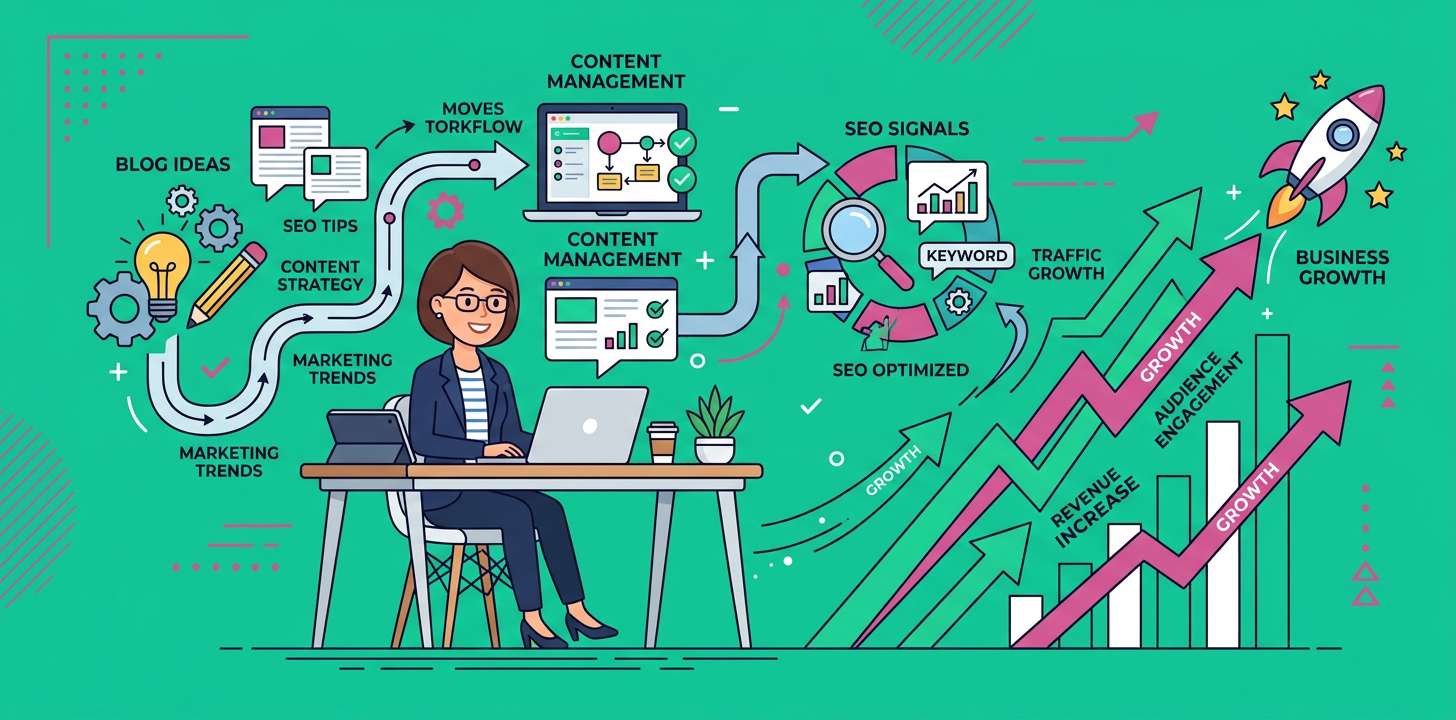
Small businesses do not need more content chaos. They need a system that helps them publish useful pages consistently, rank in search, and get mentioned in AI tools without burning out their team.
An automated seo content strategy for small business does exactly that. It turns blogging from a random, manual task into a repeatable growth engine, so you can create the right content faster, improve Google visibility, and keep costs under control.
What an Automated SEO Content Strategy Actually Does
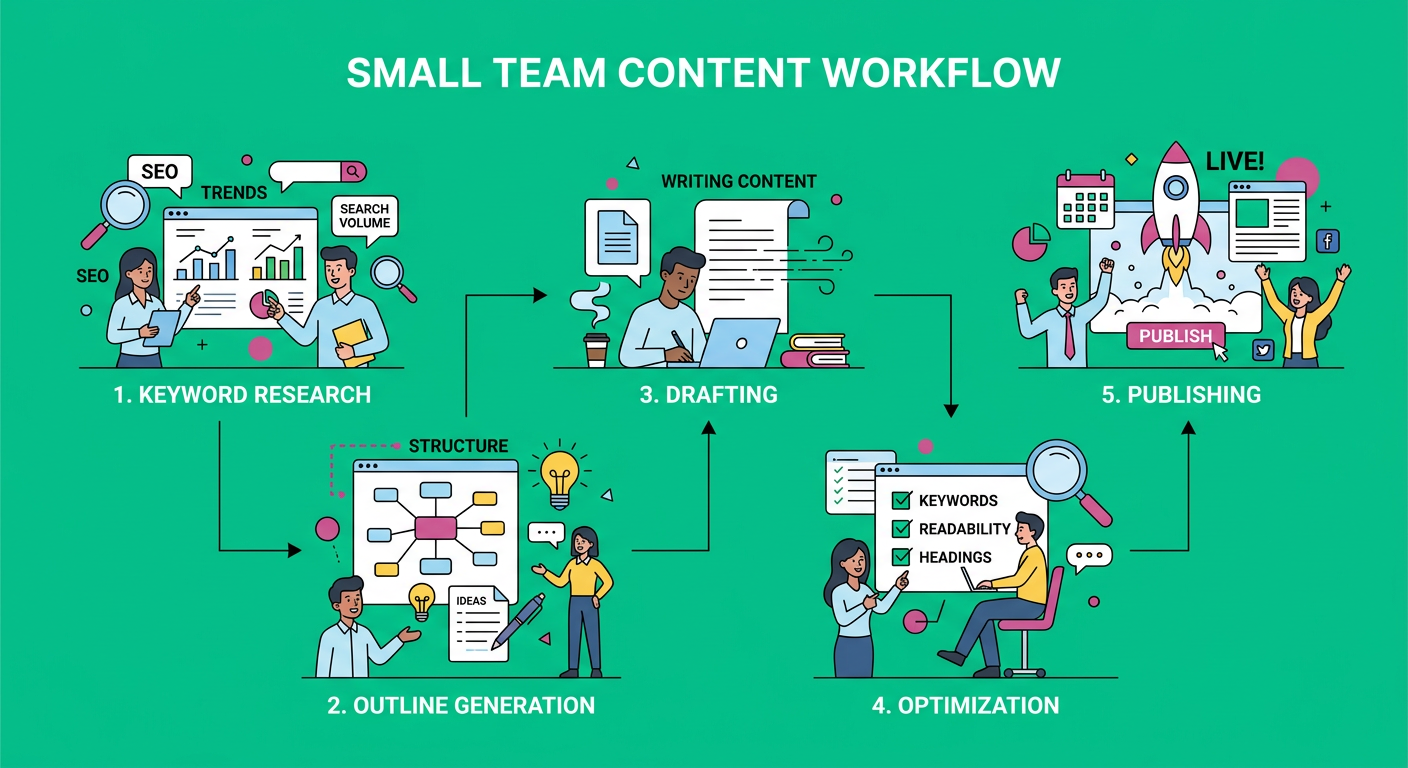
At its core, this strategy combines keyword research, content planning, writing workflows, publishing, internal linking, and performance tracking into one streamlined process.
Instead of starting from scratch every week, you use automation to surface topics, prioritize search intent, and keep your content calendar moving. That means less guesswork, fewer skipped publishing weeks, and a much better chance of creating content that actually ranks.
Why small businesses benefit the most
Large companies can throw money at content teams and paid media. Small businesses usually cannot. Automation helps close that gap by making a lean team more productive, more consistent, and more strategic.
If you are a SaaS founder, agency owner, e-commerce marketer, or local business owner, this approach helps you focus on growth instead of content firefighting.
Why Small Businesses Struggle With SEO Content
Most small businesses do not fail because they lack ambition. They fail because their content process is inconsistent.
Common problems include:
- No clear keyword strategy
- Too much time spent deciding what to write
- Posts that are published but never optimized
- Weak internal linking
- No system for refreshing old content
- Low confidence around SEO best practices
The result is familiar. You publish a few posts, traffic stays flat, and the blog slowly becomes another thing on the to-do list.
The real issue is not effort, it is process
When content creation depends on someone having free time, it becomes unpredictable. A strong automated workflow gives you repeatable steps, so the right work happens even when your team is busy.
Building Your Automated SEO Content Strategy for Small Business
A good system does not mean fully replacing human judgment. It means using automation where it saves time, then using people where quality matters most.
Here is the simplest framework.
1. Start with buyer intent, not random topics
Your best content should answer real questions your customers already ask. Think about the searches that happen before someone buys, compares, or signs up.
Examples include:
- what is the best way to ___
- how to choose ___
- difference between ___ and ___
- cost of ___
- best tools for ___
This is where long-tail keywords become valuable. They are often easier to rank for and more aligned with purchase intent.
2. Automate keyword discovery and clustering
Use tools to gather keyword ideas, group them by topic, and sort them by search intent. This saves hours and helps you build topic clusters instead of random posts.
A topic cluster gives you a main page plus supporting articles that all point to the same theme. That structure improves topical authority and makes internal linking much easier.
3. Use templates to speed up content production
Templates are one of the easiest wins in any automated seo content strategy for small business.
Create repeatable formats for:
- blog outlines
- FAQ sections
- product comparison posts
- how-to guides
- local SEO pages
- solution pages
When every article follows a proven structure, writers can move faster without sacrificing clarity.
4. Automate the first draft, then edit for quality
AI and automation tools are great for getting a draft on the page quickly. But the first draft should never be the final draft.
Your team should review for:
- accuracy
- brand voice
- helpful examples
- conversion opportunities
- original insight
- internal links
That balance is where speed and quality meet.
5. Build internal links into the workflow
Internal linking is often overlooked, but it is one of the easiest ways to help search engines understand your site.
A smart system can suggest related posts automatically so every new article supports older pages and vice versa. This is especially useful for businesses trying to grow without hiring a large SEO team.
What to Automate and What to Keep Human
Automation works best when it handles repeatable tasks. Humans should still guide strategy, messaging, and trust.
Great candidates for automation
- keyword collection
- content briefs
- outline generation
- metadata suggestions
- content calendars
- internal link suggestions
- content refresh reminders
- reporting dashboards
Best left to humans
- final editorial review
- customer insight
- original examples
- brand positioning
- conversion messaging
- expert commentary
Here is the thing. The goal is not to sound automated. The goal is to work smarter so your content feels sharper, more useful, and more consistent.
A Simple Workflow for Better Results
If you want a practical setup, use this flow:
- Find topics based on search intent.
- Group them into themes.
- Generate content briefs automatically.
- Draft articles from templates.
- Edit for accuracy and voice.
- Add internal links.
- Publish consistently.
- Track rankings, clicks, and conversions.
- Refresh older pages on a schedule.
This workflow is especially helpful for teams that need daily or weekly publishing without hiring a full content department.
How This Supports Google and AI Visibility
Search is changing. People still use Google, but they also ask AI tools for answers, summaries, and recommendations.
That means your content needs to be clear, structured, and easy to understand. Strong headings, direct answers, concise explanations, and topical depth all help your pages become more usable across search platforms.
Make your content easier to quote and summarize
Content that performs well in AI-driven discovery tends to be:
- specific
- well structured
- fact-based
- easy to scan
- written around common questions
That is why consistent blogging still matters. It gives search engines and AI systems more material to understand your expertise.
Common Mistakes to Avoid
Even with automation, some businesses stall out because they make the same mistakes.
Publishing too much low-value content
More content is not always better. If every post says the same thing in a different way, it will not help much.
Ignoring search intent
If someone wants a comparison and you give them a broad definition, the content will miss the mark.
Skipping updates
Old pages can lose relevance. Refreshing content is often easier than creating something new from scratch.
Relying on automation alone
Automation is a tool, not a strategy. You still need a clear point of view, quality review, and a business goal.
A Better Way to Scale for Small Teams
If your business has limited time, budget, or in-house support, the smartest move is to build a system that compounds.
That means producing content that can rank, support sales, answer real questions, and keep working long after you publish it. For many teams, that is the difference between blog content that drains resources and content that actually drives growth.
FAQ
What is an automated SEO content strategy for small business?
It is a repeatable system that uses automation to help you research, plan, draft, optimize, and track SEO content more efficiently.
Is automated content good for SEO?
Yes, when it is reviewed and improved by humans. Automation helps with speed, but quality, originality, and relevance still matter most.
How can small businesses use automation without losing quality?
Use automation for repetitive tasks like briefs, outlines, and scheduling, then have a person review the final content for accuracy and voice.
What kind of content should small businesses automate first?
Start with blog briefs, keyword clustering, metadata, internal link suggestions, and reporting. These areas usually save the most time.
How often should a small business publish SEO content?
Consistency matters more than volume. One strong post per week is often better than publishing several weak posts and stopping.
Can automated SEO help with AI search visibility too?
Yes. Clear structure, helpful answers, and topic depth make your content easier for search engines and AI tools to understand and surface.
What is the biggest advantage of automation for small teams?
It creates consistency. When your process is repeatable, content gets published more reliably and your SEO efforts compound over time.
Grow Faster With a Smarter Content System
If you want better rankings without the constant pressure of writing everything by hand, now is the time to build a smarter workflow. An automated system can help you publish more consistently, reduce content costs, and create a stronger path to organic growth.
If you are ready to simplify blogging and improve your search visibility, explore how contentbeast.com can help you turn SEO content into a reliable growth channel.
Conclusion
An automated seo content strategy for small business is not about removing the human side of marketing. It is about removing the bottlenecks that keep good content from getting published.
With the right mix of automation, strategy, and editorial review, you can create content that ranks, supports your audience, and helps your business grow without adding more stress to your team.