

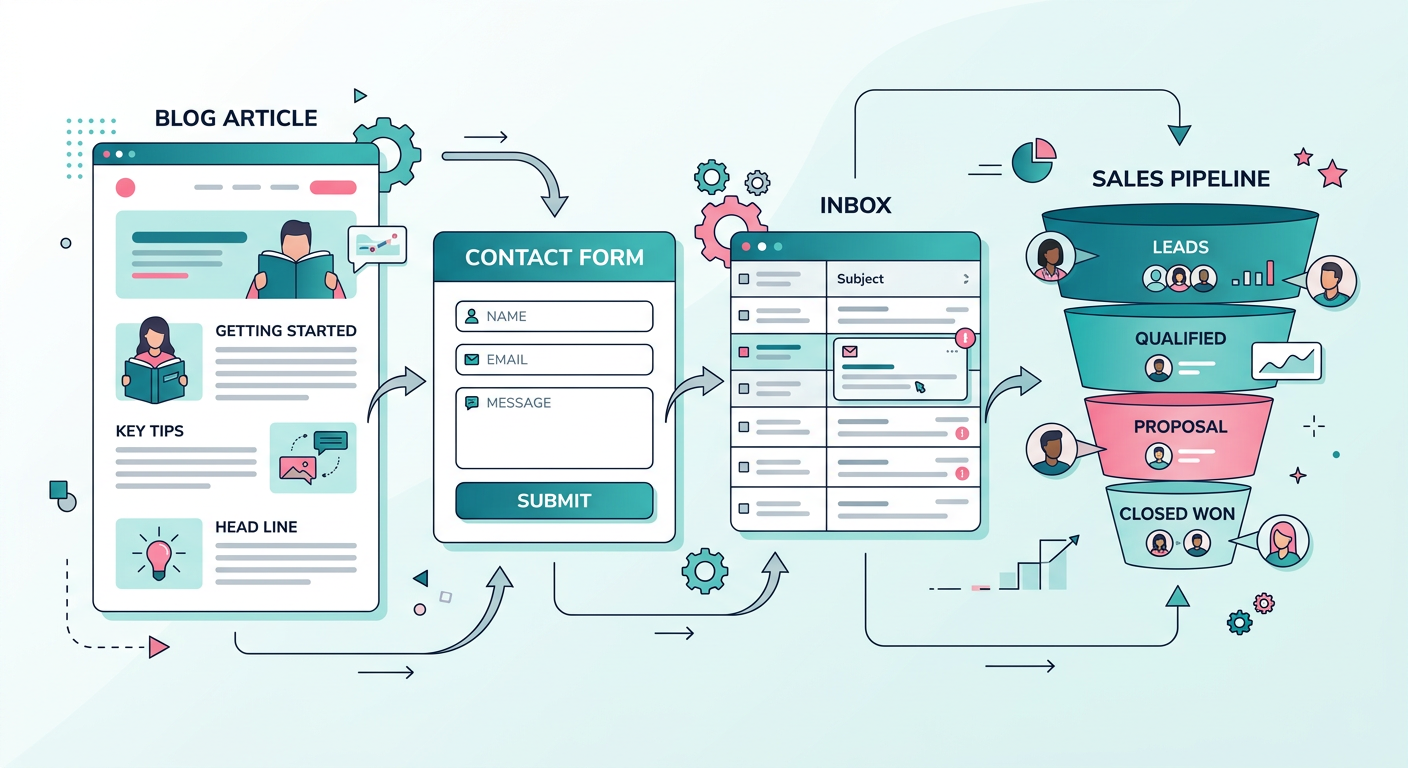
How does blogging for lead generation work? It works by attracting people who are already trying to solve a problem, helping them with genuinely useful content, then offering a logical next step like a template, checklist, trial, demo, calculator, or newsletter. Done well, blogging for lead generation feels less like a pitch and more like perfect timing.
Here’s the thing, most blog posts don’t fail because the writing is bad. They fail because there’s no conversion idea baked into the topic. A post can rank, get shared, and still produce zero leads if it doesn’t connect the reader’s problem to a useful offer.
HubSpot found that businesses that blog saw monthly leads rise by 126% more than businesses that don’t blog, based on a study of 2,300 customers shared in its article on blogging and lead growth. But traffic alone isn’t the win. The win is building posts that attract the right readers and give them a strong reason to raise their hand.
Blogging for Lead Generation Ideas at a Glance
| Idea | Best For | Lead Offer | Effort |
|---|---|---|---|
| Template post | Agencies, SaaS, services | Free file or trial | Medium |
| Deep how-to guide | B2B and experts | Checklist or course | High |
| Comparison post | Buyers near decision | Demo or consult | Medium |
| Calculator post | Pricing or ROI topics | Email result | Medium |
| Case study post | Proof-driven buyers | Call or audit | Medium |
1. Start With a Template Your Audience Can Use Today
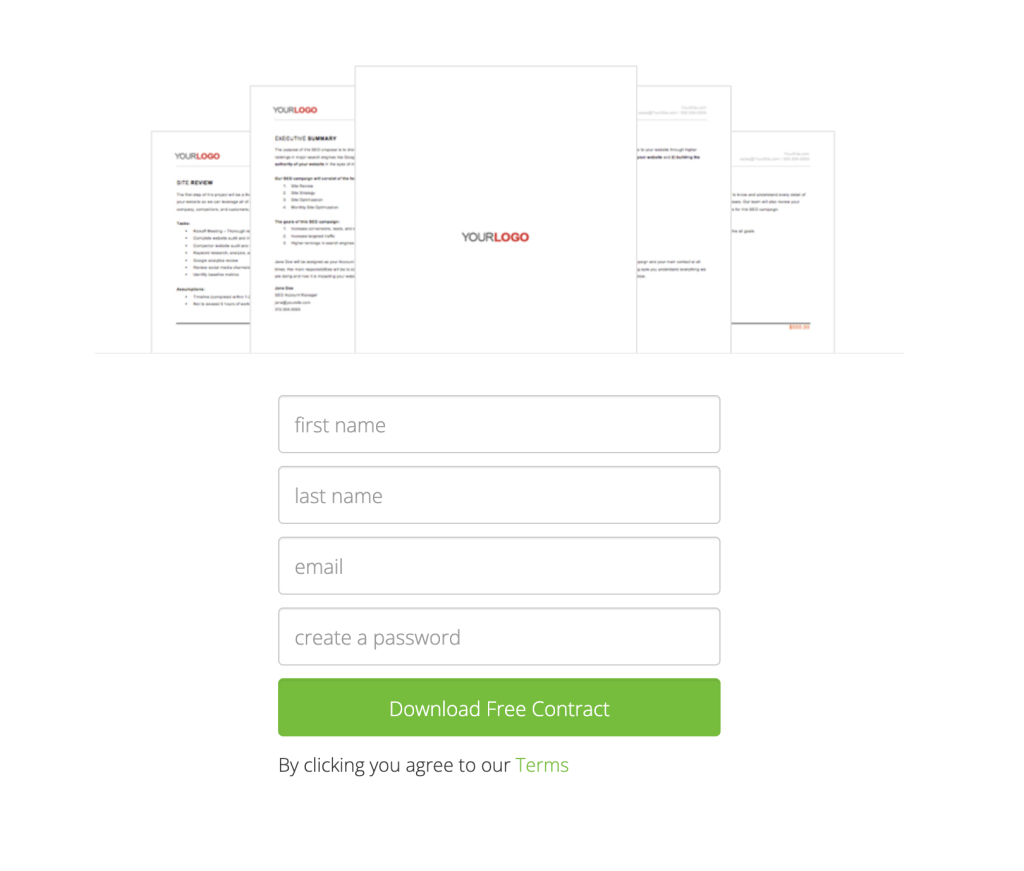
One of the strongest lead generation wins I’ve ever seen came from a short, simple blog article with a free SEO contract template for agencies. The article wasn’t fancy, but the template was valuable because it came from a contract that had supported $120,000 per month in digital marketing services.
The key wasn’t just giving away the download. The free template sat inside a free trial, so anyone who wanted the file had to start the trial first. That single article generated over 2,500 leads because the offer matched the reader’s exact need at the exact moment they needed it.
Below is a screenshot from the actual blog post. I called the article: The Killer SEO Contract — Free Download.
If you’re a consultant, agency, SaaS founder, or creator, ask yourself: What file, script, spreadsheet, swipe copy, or checklist do people ask you for all the time? That’s probably your next lead magnet.
2. Write the Painfully Detailed Guide Your Ideal Buyer Wishes Existed
Another strong example came from a detailed guide on how to start an SEO company. It took two to three weeks to write because it walked through the steps in depth, and it generated just over 700 leads.
Why did it work? The audience was specific. The article wasn’t for “business owners” in general. It was for people starting or growing SEO companies, which matched the exact target audience for the offer.
This is where many bloggers go too broad. A post called “How to Start a Business” has huge competition and vague intent. A post called “How to Start an SEO Company With Your First 5 Clients” speaks to a real person with a real goal.
3. Turn Customer Questions Into Buyer-Intent Posts
Your best topics are often hiding in sales calls, support tickets, DMs, onboarding calls, and client meetings. If someone asks the same question three times, it probably deserves a blog post.
For lead generation, focus on questions that signal action. “What is email marketing?” may bring beginners. “How much does email marketing software cost for a 10,000-person list?” brings someone closer to a decision.
A simple process helps: collect questions weekly, group them by buying stage, then write posts for the questions tied to urgency, budget, timing, or vendor comparison.
4. Build Comparison Posts That Help People Choose
Comparison posts convert because readers are already evaluating options. These articles can compare tools, approaches, pricing models, service types, or strategies.
For example, a WordPress blogger might write “Newsletter vs. Lead Magnet: Which Builds an Email List Faster?” A SaaS company might write “Self-Serve Trial vs. Demo: Which Works Better for Small Teams?”
The key is honesty. Don’t pretend your option wins every time. Explain who each choice fits, what the tradeoffs are, and when a reader should avoid a specific path.
5. Add a Lead Magnet That Matches the Exact Post
A generic newsletter box at the bottom of every article is easy to ignore. A highly specific offer inside the article is much harder to pass up.
If the post is about pricing, offer a calculator. If the post is a checklist, offer the editable version. If the post is a strategy guide, offer the planning template.
NetLine’s 2024 B2B content report found a 77% increase in demand for gated content since 2019, and it also noted that the company delivered 6.2 million fully-permissioned first-party leads in 2023 through content registrations, according to the NetLine B2B Content Consumption Report. People still exchange contact details when the resource feels worth it.
6. Use Product-Led Posts Without Sounding Salesy
Product-led content teaches first, then shows how your product fits the workflow. It’s not a disguised brochure. It’s a helpful article where your product naturally appears because it solves part of the problem.
For example, if you sell scheduling software, write about how to reduce no-shows, then show where reminders, calendar syncing, and follow-up emails fit. If you sell a blogging tool, write about how to plan and publish consistently, then show how automation supports the process.
If your team struggles to keep publishing, this guide to consistent blogging for B2B websites gives a useful framework for building a repeatable rhythm.
7. Create a Calculator or Scorecard Post
Calculators and scorecards work because they make the reader participate. Instead of passively reading, they plug in numbers, answer questions, or evaluate their situation.
Good examples include:
- ROI calculator for content marketing
- Website traffic goal calculator
- Blog readiness scorecard
- Lead magnet idea grader
- Agency pricing calculator
To capture leads, let readers view a basic result on the page, then ask for an email to send the full breakdown, spreadsheet, or action plan.
8. Publish Case Studies With a Clear Next Step
Case studies are powerful because they prove the outcome is possible. But many case studies waste the moment by ending with a vague “contact us” line.
A better structure is problem, strategy, execution, measurable result, lessons learned, then a specific offer. For example, “Want us to identify the three highest-impact lead magnet ideas for your blog? Book an audit.”
The best case studies also explain what didn’t work. That honesty builds trust because readers can tell you’re not polishing everything into a perfect success story.

9. Build Topic Clusters Around One Conversion Goal
One post can generate leads, but a cluster builds authority. Pick one conversion goal, then create several supporting articles around it.
For example, if your goal is demo requests for a content platform, the cluster might include:
- How to plan a blog calendar
- How often to publish blog posts
- Blog post templates for small teams
- How to repurpose blog content
- How to measure blog ROI
Link the posts together with descriptive anchor text. If you’re scaling this across clients or multiple sites, this playbook on scaling content output for agencies is useful for building a repeatable workflow.
10. Update Old Posts With Better Offers
You may already have lead generation opportunities hiding in older articles. Look for posts that get traffic but have weak conversion points.
Update them with stronger titles, clearer answers, fresher examples, better internal links, and a more relevant offer. Sometimes the fastest lead gains come from improving what already exists instead of writing something new.
Prioritize posts with buyer intent. A post about “how to choose an SEO agency” probably deserves a stronger offer than a broad post about “what is SEO.”
11. Write for AI Answer Engines and Human Buyers
Readers now discover brands through Google, social feeds, newsletters, communities, and AI assistants. That means your blog needs to be clear enough for machines to understand and useful enough for humans to trust.
Use short answer blocks, clean headings, examples, FAQs, and original experience. Don’t just repeat what everyone else says. Add stories, numbers, lessons, opinions, and specifics.
For more on this shift, read this practical guide on getting mentioned in AI results. The big idea is simple: clear, structured, helpful content has a better shot at being discovered across more channels.
How to Build a Blog Post That Converts
Match the Topic to a Business Goal
Before writing, decide what the article should do. Should it drive trial signups, email subscribers, audit requests, demos, affiliate clicks, or consultation calls?
That decision changes the whole article. A post built for newsletter subscribers can be broad and educational. A post built for sales calls should target a sharper pain point.
Put the Offer Where Intent Is Highest
Don’t wait until the very end to mention the next step. Add the offer after the first major value section, again near the middle, and once near the end.
Keep it contextual. A reader should feel like the offer is the natural continuation of the article, not an interruption.
Measure Leads, Not Just Traffic
Page views are useful, but they don’t pay the bills. Track email signups, trial starts, demo requests, form fills, assisted conversions, and lead quality.
Also track which topics produce the best leads. A smaller post that brings 30 qualified prospects may be more valuable than a huge traffic post that brings casual readers.
Get a Simpler Blogging System Working for You
If you want to publish more consistently without spending your whole week planning, writing, formatting, and optimizing, ContentBeast can help you build a steadier content engine. It’s built for teams that want more organic traffic, stronger topical authority, and content that supports Google visibility and AI answer visibility.
Start with one focused lead magnet, one high-intent topic cluster, and one clear conversion goal. Then scale what works.
FAQ
What is blogging for lead generation?
It’s the process of using blog content to attract potential customers and convert them into leads through offers like templates, guides, trials, audits, demos, calculators, or email courses.
How long does it take for blog posts to generate leads?
Some posts can convert quickly if you already have traffic or an email list. For organic growth, expect many posts to need several weeks or months before they gain momentum.
What type of blog post converts best?
Templates, detailed how-to guides, comparison posts, calculators, and case studies often convert well because they attract readers with clear intent and specific problems.
Should I gate my lead magnet or give it away freely?
Gate assets when the value is strong and specific, like templates, calculators, reports, or editable files. Keep the article itself open so it can attract traffic and build trust.
How many lead magnets does a blog need?
Start with one strong offer for your highest-intent topic cluster. As you learn what converts, create more offers for different buyer problems and stages.
Can small blogs generate leads?
Yes. A small blog can generate leads if it targets specific buyer questions and offers something valuable. Relevance often matters more than raw traffic volume.
How do I improve leads from existing posts?
Find posts with traffic but low conversions, then add a more specific offer, improve the opening answer, strengthen internal links, and place calls to action where reader intent is highest.
Conclusion
Blogging can absolutely generate leads, but only when the post is built with conversion in mind from the start. The winning formula is simple: choose a specific audience, answer a real problem, add proof or experience, then offer the next useful step.
The template story worked because the download was immediately useful. The detailed SEO company guide worked because it served a specific audience with depth. Your version might be a checklist, calculator, guide, or trial, but the principle stays the same: make the blog post useful enough to earn attention, then make the offer relevant enough to earn the lead.
