

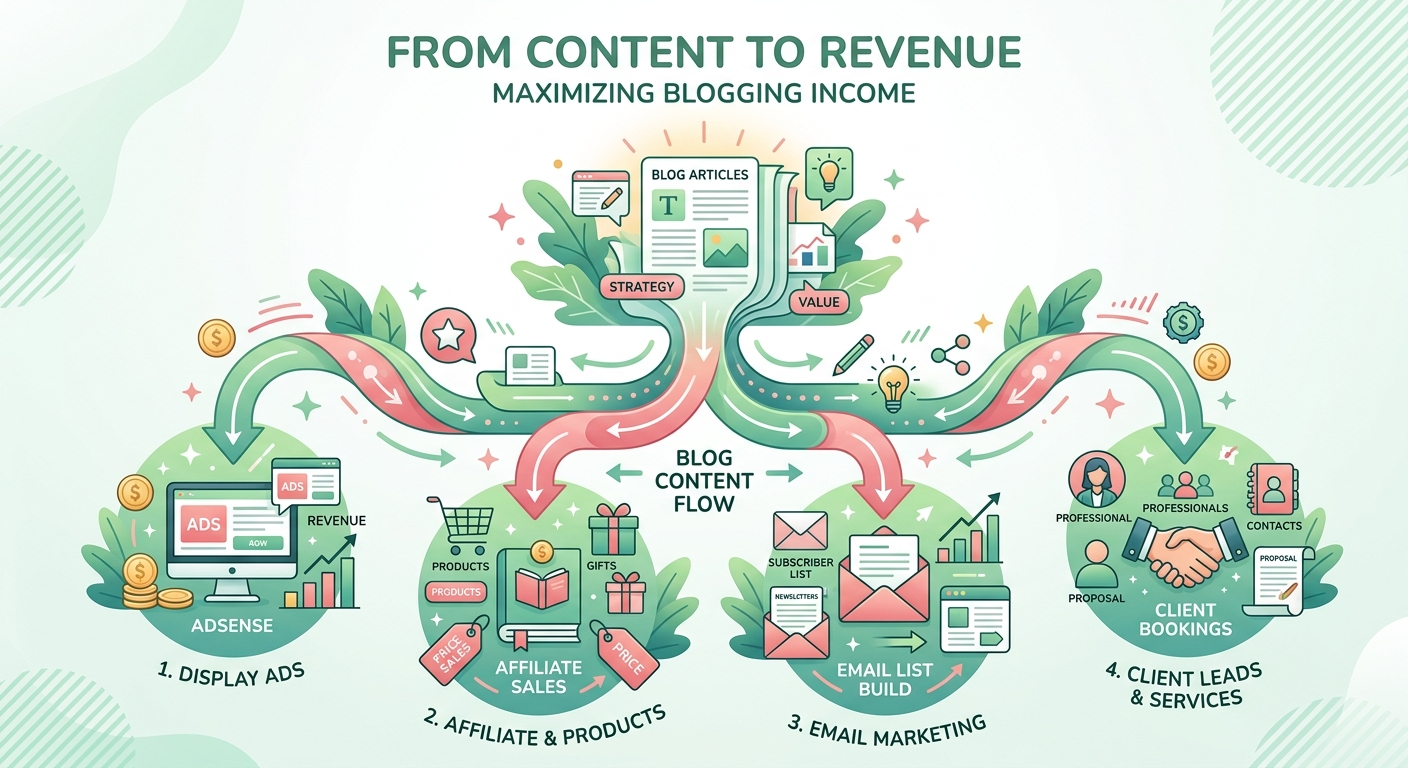
Wondering, how does blogging generate income? A blog makes money by attracting the right audience, building trust with helpful content, then connecting readers to offers such as ads, affiliate products, sponsored posts, services, digital products, memberships, and leads for a business.
The part people often miss is that the article itself usually isn’t the product. The blog is the attention engine. It brings in readers with useful answers, then earns money when those readers take a valuable next step.
That’s why blogging income can look wildly different from one site to another. A recipe blog may lean on display ads. A SaaS company may use articles to bring in demos. A consultant may publish fewer posts but earn more from each client inquiry.
Blog Income At A Glance
| Income Path | Best For | Typical Trigger | Needs Traffic? |
|---|---|---|---|
| Display ads | High-volume blogs | Pageviews | Yes |
| Affiliate links | Review and tutorial sites | Clicks and sales | Some |
| Sponsored posts | Niche authority blogs | Brand deals | Some |
| Digital products | Expert creators | Downloads and sales | Moderate |
| Services or leads | Businesses | Calls and forms | Less |
How Does Blogging Generate Income In Simple Terms?
Blogging creates income by matching reader intent with monetized outcomes. Someone has a question, problem, or goal. Your article helps them, earns their attention, and guides them toward a useful next action.
That next action might be clicking an affiliate link, joining your email list, buying a template, booking a consultation, or reading enough pages for ad revenue to add up. The bigger the audience and the stronger the reader intent, the more earning potential your blog has.
HubSpot found that businesses that blog saw monthly leads grow 126% more than businesses that don’t blog, based on a study of 2,300 customers. That’s a strong reminder that blog income isn’t only about ads. For many companies, the real money comes from qualified leads and sales conversations generated by helpful articles from HubSpot.
The Core Formula Behind Blog Revenue
Most blog monetization can be simplified into one formula:
Relevant audience plus useful content plus a clear offer equals income potential.
If one part is missing, the income gets shaky. Traffic without intent doesn’t convert well. Great products without readers stay invisible. Helpful articles without offers create goodwill, but not much revenue.
Here’s the thing, you don’t need millions of readers to make blogging worth it. A small blog that attracts buyers can outperform a large blog that attracts casual browsers. For example, 2,000 monthly readers looking for “best CRM for accountants” may be more valuable than 50,000 readers browsing general productivity tips.
1. Display Ads Pay You For Attention
Display ads are one of the most familiar ways blogs earn money. Networks place ads on your pages, and you earn based on impressions, clicks, or both.
This model works best when your blog can attract a large volume of pageviews. Food, travel, parenting, lifestyle, and entertainment sites often use ads because readers may consume several pages per visit.
The downside is simple. Ads usually need scale. If your blog has 1,000 visits per month, ad income may be tiny. If it has 100,000 visits per month in a strong niche, ads can become a meaningful revenue layer.
2. Affiliate Marketing Pays You For Recommendations
Affiliate marketing means you recommend another company’s product and earn a commission when someone buys through your link. It works especially well for tutorials, comparisons, reviews, and “best tools” articles.
A WordPress blogger might recommend hosting, themes, plugins, email tools, or design software. A finance blogger might recommend budgeting apps. A fitness blogger might recommend equipment or training programs.
The key is trust. If every recommendation feels like a cash grab, readers notice. Good affiliate content explains who a product is for, who should skip it, what it costs, and what tradeoffs matter.
3. Sponsored Content Pays You For Access To Your Audience
Sponsored posts happen when a brand pays you to publish content featuring its product, service, campaign, or point of view. This can be a flat-fee article, a newsletter feature, a social bundle, or a full content package.
Sponsors usually care about niche fit more than raw traffic. A small blog with loyal readers in a valuable niche can be attractive if the audience aligns with the sponsor’s buyer.
Be transparent with sponsored content. Clear disclosures protect reader trust and help your site feel credible. Long-term income depends on readers believing you, not just seeing your pages.
4. Digital Products Create Higher Margins
Digital products are downloadable or online assets you sell directly. Think templates, ebooks, courses, presets, swipe files, calculators, workshops, or paid guides.
This model can be powerful because you create the asset once, then sell it repeatedly. A blog post explains the problem, builds trust, and points readers to the product as the next step.
For example, an article about meal planning could sell a weekly recipe planner. A post about content calendars could sell a planning template. A guide on freelance pricing could sell a proposal kit.
5. Services And Consulting Can Monetize Smaller Audiences
If you sell services, your blog can generate income by bringing in qualified leads. This is often the fastest path for freelancers, agencies, coaches, consultants, SaaS founders, local companies, and B2B teams.
A service blog doesn’t need massive traffic. It needs the right people reading the right pages. One client from a blog post could be worth more than months of ad revenue.
Good service content answers buyer questions before a sales call. Pricing guides, comparison posts, case studies, how-to articles, and mistake-based posts all help readers decide whether they trust you.
6. Email Lists Help You Earn After The First Visit
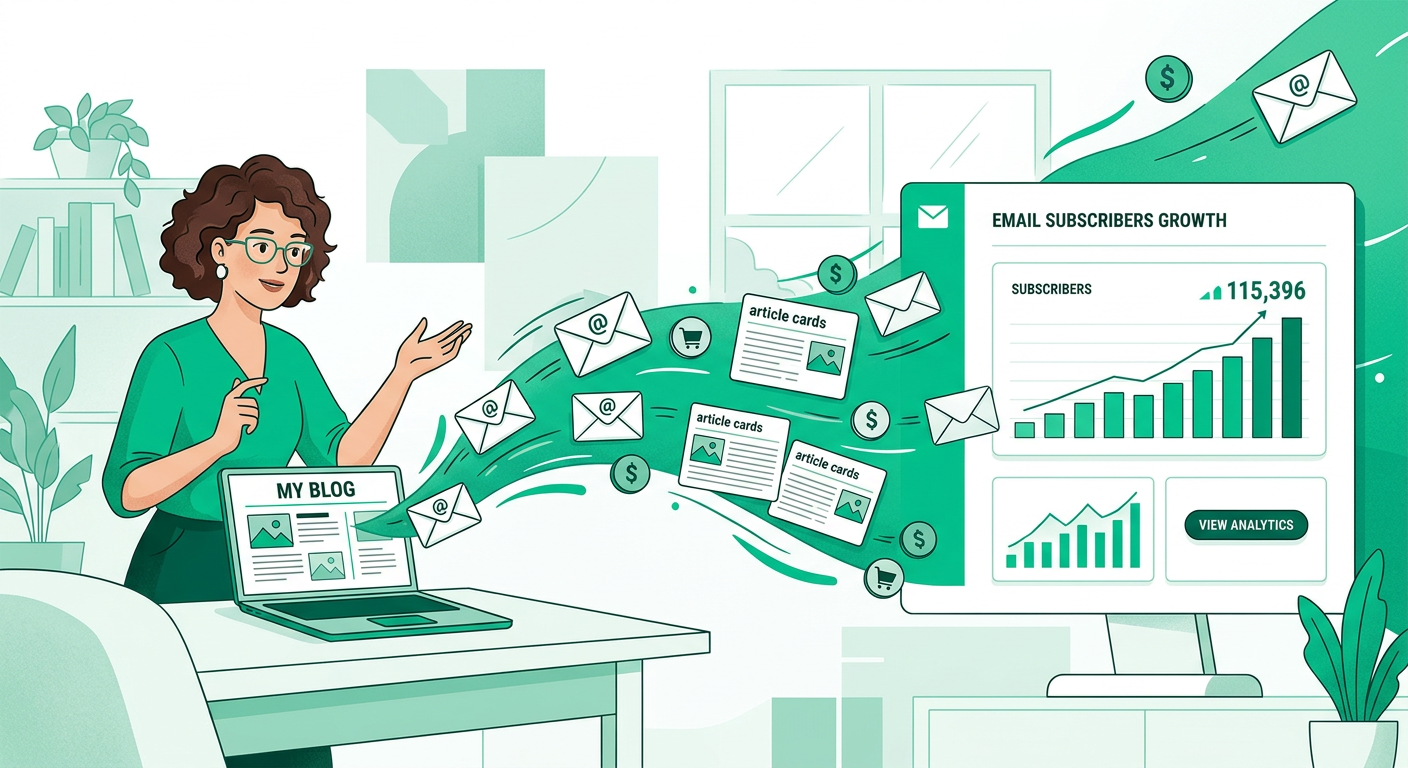
Most readers won’t buy the first time they land on your blog. An email list gives you a way to keep the relationship going.
You can offer a lead magnet such as a checklist, calculator, mini-course, template, or private guide. Once readers subscribe, you can send useful emails that promote your products, affiliate offers, events, or services over time.
This matters because blog traffic can fluctuate. An email list gives you an owned audience you can reach without relying only on Google, social feeds, or paid ads.
7. Memberships And Subscriptions Create Recurring Revenue
Memberships work when readers want ongoing value from you. That could mean premium articles, private communities, office hours, templates, courses, industry analysis, or exclusive tutorials.
This model is attractive because recurring revenue is more predictable than one-off sales. It also works well for experts who publish consistently and have a clear niche.
The challenge is retention. People need a reason to keep paying. A membership should solve an ongoing problem, not just lock basic blog posts behind a paywall.
8. Your Own Products Can Make Blogging A Sales Channel
For businesses, blogging often generates income indirectly. A blog may not collect money on the page, but it can drive product trials, demo requests, ecommerce sales, bookings, or quote requests.
This is common for SaaS companies, agencies, ecommerce brands, local businesses, and B2B service providers. The blog educates potential customers before they ever contact sales.
If you sell your own product, write articles around the problems your product solves. Not every post should be promotional, but every topic should connect to a real customer need.
9. Licensing, Syndication, And Partnerships Add Extra Upside
Some established blogs earn through licensing content, republishing agreements, paid partnerships, speaking opportunities, book deals, or newsletter sponsorship bundles. These usually come later, after you’ve built authority.
This income path is less predictable for beginners, but it shows why a blog can become a business asset. A strong content library can create visibility, reputation, and partnership opportunities beyond the original article.
Orbit Media’s long-running blogger survey has collected input from 12,971 bloggers over 12 years, showing that serious bloggers keep adapting their article length, promotion, visuals, and workflows as the market changes from Orbit Media. In other words, income rarely comes from publishing randomly. It comes from improving the system.
How Does Blogging Generate Income For Beginners?
Beginners usually start with one of three paths: affiliate links, lead generation, or simple digital products. Ads can work too, but they often need more traffic before the revenue feels meaningful.
If you’re starting from zero, focus first on a niche with clear problems and commercial intent. “Travel tips” is broad. “Best carry-on setup for remote workers” is more specific. Specific topics attract readers who are closer to taking action.
A good beginner plan looks like this:
- Pick one niche and one audience
- Publish helpful articles around real problems
- Add one monetization method early
- Build an email list from day one
- Track which posts bring clicks, leads, or sales
- Improve winners instead of constantly chasing new ideas
For topic planning and publishing consistency, you can study this guide on building topical authority with a new blog and this practical breakdown of how to use AI to write a blog post.
Common Mistakes That Limit Blog Income
The first mistake is writing only about what interests you. That sounds harsh, but profitable blogging starts with reader demand. Your interests matter most when they overlap with problems people actively want solved.
The second mistake is waiting too long to monetize. You don’t need to plaster ads everywhere on day one, but you should know which revenue path each article supports.
The third mistake is chasing every monetization method at once. Ads, affiliates, courses, sponsors, services, and memberships all require different strategies. Start with one or two, then layer more once you have traction.
The fourth mistake is publishing inconsistently. Blogging income compounds when your content library grows with purpose. A random post every few months makes it harder to build momentum.
If consistency is the hard part, ContentBeast can help plan, write, format, link, and publish blog posts so your site keeps building organic visibility while you focus on your business.
How Much Money Can A Blog Make?
A blog can make nothing, a few dollars per month, a side income, or a full business income. The range is wide because earnings depend on niche, traffic quality, monetization model, content depth, and offer strength.
A high-traffic recipe blog might earn mostly from ads. A small B2B blog might earn from a handful of qualified leads. A creator blog might earn from courses and paid templates.
Instead of asking only “how much can I make,” ask these questions:
- What problem does my blog solve?
- Who is the reader?
- What are they willing to pay for?
- Which articles attract buyers, not just browsers?
- What offer naturally fits the article?
Those answers matter more than generic income averages.
Build A Blog That Earns With ContentBeast
If you’re tired of inconsistent publishing, blank-page stress, and complicated content workflows, ContentBeast helps you build a simpler blog growth system. It can create structured articles, add relevant links, generate images, and publish consistently to platforms like WordPress, Ghost, Shopify, and more.
You bring the business knowledge. ContentBeast helps package that knowledge into useful content that can attract readers, leads, and long-term revenue.
FAQ
How does blogging generate income without selling products?
A blog can earn without your own products through display ads, affiliate links, sponsored content, and paid partnerships. In those models, your audience attention is the asset, and other companies pay for exposure, clicks, or sales.
How long does it take for a blog to make money?
Some blogs earn within a few months, but many take longer. The timeline depends on your niche, publishing pace, article quality, promotion, and monetization model. Service-based blogs can often see value earlier than ad-based blogs because one lead may be worth a lot.
Do bloggers need a lot of traffic to earn income?
Not always. Ads usually need high pageviews, but affiliate marketing, services, consulting, and digital products can work with smaller audiences if the readers have strong buying intent.
What is the easiest way to monetize a new blog?
Affiliate marketing and lead generation are often the simplest starting points. You can add relevant affiliate links to helpful tutorials or use your blog to attract inquiries for services you already offer.
Can a business blog make money directly?
Yes, but business blogs often make money indirectly through leads, demos, trials, quote requests, and customer education. The article may not collect payment, but it can influence a sale.
Are ads or affiliate links better for blog income?
Ads are better for high-volume informational sites. Affiliate links are often better for comparison, review, tutorial, and buyer-intent content. Many mature blogs use both, but one should usually be the primary model.
Is blogging still worth it for small businesses?
Yes, if the blog supports a clear business goal. A small business blog should answer customer questions, build trust, support Google rankings, feed email growth, and guide readers toward offers that create revenue.
Conclusion
So, how does blogging generate income? It does it by attracting the right readers, helping them solve a problem, and guiding them toward a monetized next step.
The smartest bloggers don’t treat posts as random writing assignments. They build a content system around audience intent, useful answers, consistent publishing, and offers that fit naturally. Do that well, and your blog becomes more than a content library. It becomes a revenue engine.
