
How do you optimize content for AI search? You make your content easy for AI systems and humans to understand by answering the main question clearly, building topical depth, proving expertise, using clean structure, and keeping your pages technically accessible.
That’s the short answer. The longer answer is that how to optimize content for AI search is less about tricking ChatGPT, Google AI Overviews, Perplexity, or Copilot, and more about becoming the clearest, most trustworthy source on a specific topic.
Here’s the thing, traditional SEO still matters. But AI discovery adds a new layer: your content now needs to be quotable, explainable, well-structured, and connected to a broader body of credible content. According to Pew Research Center, 34% of U.S. adults had used ChatGPT by mid-2025, roughly double the share in 2023. That’s a real behavior shift, not a tiny side channel.
Quick Comparison: Traditional SEO vs AI Search Optimization
| Area | Traditional SEO | AI Search Optimization | What To Do Now |
|---|---|---|---|
| Goal | Rank in results | Be referenced in answers | Build clear, trusted pages |
| Content style | Keyword-focused | Answer-focused | Lead with direct answers |
| Authority | Links and rankings | Entities and trust signals | Add expert proof |
| Structure | Headings and metadata | Modular summaries | Use definitions, FAQs, lists |
| Measurement | Clicks and rankings | Mentions and AI visibility | Track both together |
How to Optimize Content for AI Search Without Chasing Hacks
The best AI search strategy starts with a boring truth: AI tools need reliable source material. If your content is vague, thin, outdated, or indistinguishable from a hundred other posts, it gives AI systems very little reason to use it.
Google’s own guidance for generative AI features says website owners should focus on helpful, reliable, people-first content rather than special tricks or shortcut tactics. You can read the official guidance from Google Search Central, but the practical takeaway is simple: do the fundamentals better than your competitors.
That means your content should:
- Answer the query directly near the top
- Explain the concept in plain language
- Include original examples, opinions, or experience
- Support claims with reputable sources
- Use a clean heading structure
- Connect related pages through internal links
- Stay updated as platforms change
AI search doesn’t reward fluff. It rewards useful, extractable clarity.
Start With The Answer, Then Build The Argument
If someone asks, “What is topical authority?” or “How do I optimize a blog post for AI answers?” they don’t want a long warm-up. They want the answer first, then the details.
A strong AI-friendly opening usually follows this pattern:
- Restate the question naturally.
- Give a direct 2 to 3 sentence answer.
- Expand with examples, steps, and supporting context.
For example, instead of starting a post with a broad paragraph about how marketing has changed, open with the exact problem your reader is trying to solve. Then use the rest of the article to prove, clarify, and deepen that answer.
This helps readers immediately. It also gives AI systems a clean answer block they can understand.
Write Answer Blocks That Can Stand Alone
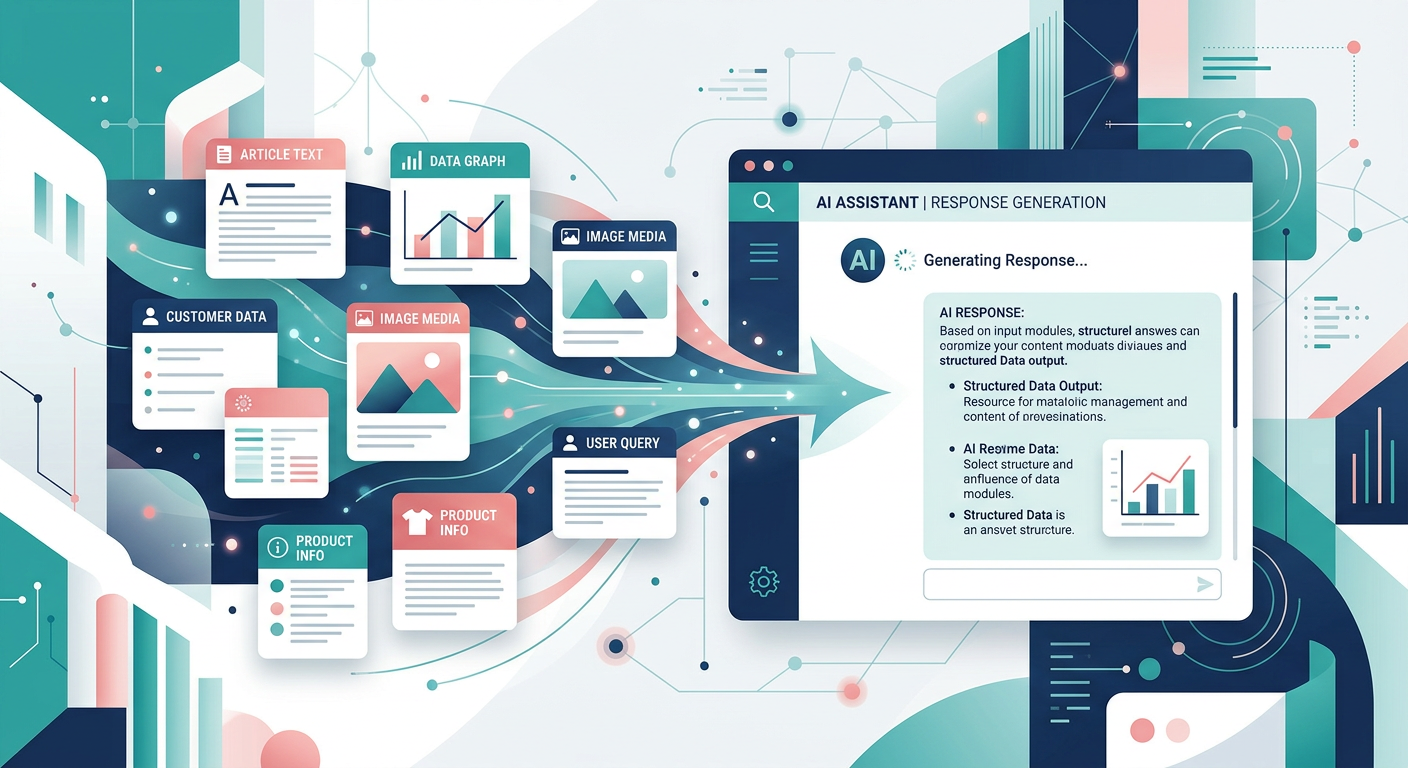
An answer block is a short paragraph that fully answers one specific question. Think 40 to 80 words, not a full essay.
Good answer blocks work well for:
- Definitions
- Comparisons
- Step summaries
- Pros and cons
- Troubleshooting questions
- Buying criteria
If you run a WordPress blog, SaaS website, Shopify store, or agency site, these blocks can turn ordinary posts into reusable knowledge assets.
Build Topic Clusters, Not One-Off Posts
One article rarely creates AI visibility on its own. AI systems look for patterns across the web, and your site needs to show that it covers a topic with consistency and depth.
For bloggers and small businesses, that means creating clusters around real audience questions. Instead of publishing one broad post on “blogging,” create a connected set of articles around a specific theme, such as:
- What is AI search optimization?
- How to get AI visibility for a blog
- Best blog structure for AI answers
- How to write FAQs for AI search
- How to refresh old blog posts for AI visibility
- AI search vs traditional SEO
If you’re building this foundation now, this quick-win AI visibility guide is a useful companion piece because it focuses on practical improvements you can make without rebuilding your whole site.
Use Internal Links To Show Relationships
Internal links help readers move through your content, but they also help search engines and AI systems understand how your ideas connect.
Use descriptive anchor text like:
- “AI visibility guide for bloggers”
- “content refresh checklist”
- “WordPress publishing workflow”
- “low-competition keyword strategy”
Avoid vague anchors like “read more” or “this page.” Specific anchors create context, and context matters more in AI-driven discovery.
Add First-Hand Experience And Original Insight
AI-generated summaries tend to favor content that feels useful, specific, and credible. If your post only repeats common advice, it becomes replaceable.
To make your article harder to ignore, add details only you can provide:
- Screenshots from your own workflow
- Mini case studies from your business
- Pricing lessons from real campaigns
- Before-and-after content refresh examples
- Expert quotes from your team
- Mistakes you made and fixed
- Original templates or checklists
This is especially important for competitive marketing topics. Everyone can say, “Write helpful content.” Fewer people can show exactly how they improved an article, what changed, and what happened next.
Turn Generic Advice Into Proof
Generic: “Add FAQs to improve visibility.”
Better: “We added six question-based subheadings to an underperforming WordPress article, rewrote the opening answer, and linked it to two related posts. The page became easier to scan and started attracting more long-tail impressions.”
The second version gives readers a process. It also gives AI systems more precise information to work with.
Structure Pages For Humans First, Machines Second
Good structure is not about gaming algorithms. It’s about reducing friction.
Use a predictable hierarchy:
- One clear H1 title
- H2 sections for major ideas
- H3 sections for supporting points
- Short paragraphs
- Bulleted lists where they improve scanning
- Tables for comparisons
- FAQs for common questions
Bing’s Webmaster Guidelines now discuss generative engine optimization in the context of helping systems discover, understand, and evaluate content. That’s a useful way to think about structure: every section should make your page easier to understand.
Make Entities Obvious
Entities are the people, brands, tools, places, concepts, and products your content discusses. AI systems use entities to understand meaning.
For example, an article about AI search optimization might mention:
- Google AI Overviews
- ChatGPT
- Perplexity
- Microsoft Copilot
- Bing Webmaster Tools
- Google Search Console
- WordPress
- Structured data
- Topical authority
Don’t just name-drop them. Explain how they relate to the reader’s problem.
Optimize Existing Content Before Publishing More
Most site owners don’t need 100 brand-new posts before they can improve AI visibility. They need to fix the pages they already have.
Start by reviewing posts that already get impressions, clicks, backlinks, or conversions. These pages have a head start.
How to Optimize Content for AI Search On Old Blog Posts
For each old article, update the following:
- Opening answer: Add a direct answer to the target question in the first few paragraphs.
- Headings: Rewrite vague headings into question-based or benefit-driven headings.
- Examples: Add current examples, screenshots, or process notes.
- Sources: Replace outdated links with current authoritative sources.
- FAQs: Add 5 to 7 concise questions that match real reader intent.
- Internal links: Link to related cluster pages with descriptive anchors.
- Metadata: Improve the title tag and meta description for clarity and click intent.
Semrush analyzed more than 10 million keywords for its AI Overviews study and found that AI-generated results became a major visibility factor in 2025. Even if your exact niche behaves differently, the direction is clear: pages need to be ready for both classic rankings and AI summaries.
Use FAQs To Capture Long-Tail Questions
FAQs are one of the easiest ways to make your content more AI-friendly because they mirror how people ask questions in conversational tools.
A strong FAQ answer is short, specific, and useful. It should answer the question directly, then add one practical note if needed.
Weak FAQ answer:
“AI search is important because it is changing SEO.”
Better FAQ answer:
“AI search matters because tools like Google AI Overviews, ChatGPT, Perplexity, and Copilot can summarize answers before users click. Clear, structured, expert-backed content gives your site a better chance of being understood and referenced.”
That answer stands on its own.
Make Technical Access Easy
AI visibility won’t happen if crawlers can’t access or understand your pages. Before you obsess over advanced strategy, check the basics.
Review:
- Robots.txt settings
- Noindex tags
- Canonical tags
- Page speed
- Mobile usability
- Sitemap status
- Broken internal links
- Thin duplicate pages
- Paywalls or scripts that hide key content
OpenAI’s publisher FAQ explains that publishers who allow OAI-SearchBot access can track referral traffic from ChatGPT in analytics tools. Whether you want that access or not, the bigger point is that crawler access and measurement are now part of AI content strategy.

Measure AI Visibility Alongside SEO Performance
You can’t improve what you never check. AI visibility measurement is still evolving, but you can start with practical signals.
Track:
- Organic impressions in Google Search Console
- Bing performance data
- Referral traffic from AI tools when available
- Brand mentions in AI answers
- Pages referenced by AI assistants
- Query growth around conversational keywords
- Click-through rate changes on pages with AI-heavy results
Google has also introduced generative AI performance reporting in Search Console, according to Google Search Central, giving site owners more visibility into impressions from AI Overviews, AI Mode, and generative features in Discover.
This doesn’t replace classic SEO reporting. It expands it.
Create A Progressive Content Strategy For AI Search
If you’re a blogger, creator, entrepreneur, or small marketing team, don’t try to optimize everything at once. Use a progressive strategy that compounds over time.
Phase 1: Fix Your Foundation
Pick your 10 most important posts and improve the answer quality, headings, internal links, and FAQs. These are your fastest wins.
Phase 2: Build Topic Clusters
Choose one core theme per month. Publish supporting posts that answer narrow, long-tail questions around that theme.
For example, if your theme is “WordPress blogging for lead generation,” your supporting posts might cover keyword research, blog CTAs, content calendars, internal linking, AI visibility, and conversion tracking.
Phase 3: Add Authority Signals
Add author bios, expert review notes, original examples, better sources, and clear update dates. Trust is not a design element. It’s built through proof.
Phase 4: Scale Publishing Carefully
Once the system works, publish more consistently. If your team is short on time, look at tools and workflows that support research, writing, formatting, images, internal links, and publishing across platforms like WordPress, Ghost, Shopify, Medium, or Webflow. You can review available publishing integrations to see what a connected workflow can look like.
Grow Your Blog With A Smarter Publishing System
If you want consistent content without turning every week into a writing marathon, ContentBeast helps automate blog research, article creation, SEO structure, AI visibility optimization, images, links, and publishing.
It’s built for website owners, bloggers, founders, and marketing teams that want to publish more helpful content, build topical authority, and earn more visibility across Google and AI-driven discovery.
Frequently Asked Questions
What does AI search optimization mean?
AI search optimization means improving your content so AI-powered tools can find, understand, summarize, and reference it. It combines traditional SEO, clear answers, topical authority, structured formatting, expert insight, and technical accessibility.
Is AI search optimization different from SEO?
Yes and no. The fundamentals overlap with SEO, including helpful content, crawlability, authority, and relevance. The difference is that AI search often summarizes answers, so your content needs to be easier to extract, verify, and connect to related concepts.
How long does it take to see AI search visibility?
It depends on your site authority, niche, crawl frequency, and content quality. Small improvements like clearer answers and better internal links can help within weeks, while broader topical authority usually takes months of consistent publishing.
Do I need structured data for AI search?
Structured data can help search engines understand your content, but it is not a magic ranking button. Use valid Article, FAQ, Product, HowTo, or Organization markup when appropriate, and focus first on making the visible page genuinely useful.
Should I rewrite every blog post for AI search?
No. Start with pages that already get impressions, clicks, backlinks, or leads. Updating existing winners is usually faster than rewriting your whole blog or publishing random new posts.
Can AI-written content rank or appear in AI answers?
Yes, if it is accurate, original, useful, and edited with real expertise. Low-effort automated content is risky because it often lacks depth, examples, and trust signals. Use AI to speed up production, not to remove judgment.
What is the best first step for beginners?
Pick one important article and rewrite the opening to answer the main question clearly in 2 to 3 sentences. Then improve the headings, add examples, add FAQs, and link it to related posts.
Final Thoughts
Learning how to optimize content for AI search is really about becoming easier to trust. Clear answers, expert context, strong structure, and connected topic clusters help both people and AI systems understand why your page deserves attention.
Start small. Refresh one page, build one cluster, measure what changes, then repeat. The sites that win won’t be the ones chasing every new AI hack. They’ll be the ones publishing useful, specific, well-organized content again and again.
