
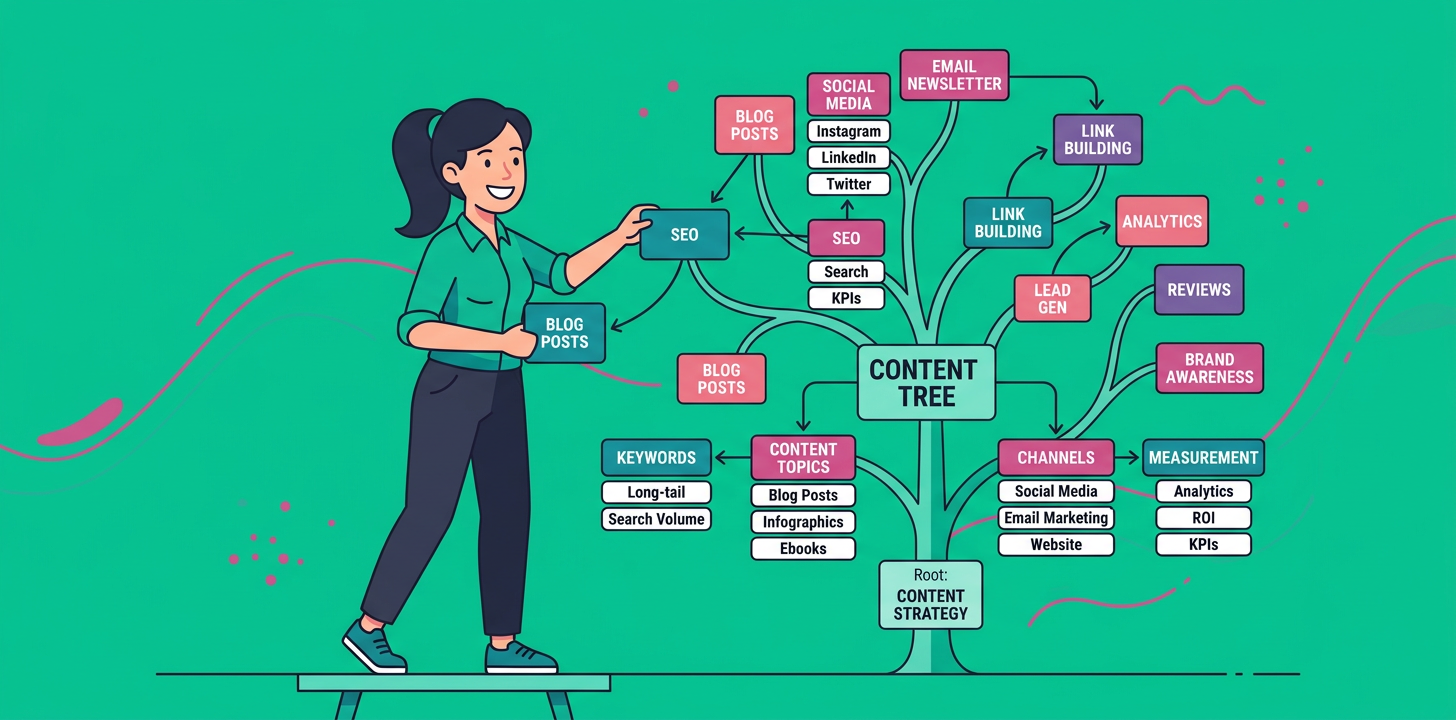
How do you build topical authority? You build it by choosing one clear niche, mapping the questions your audience asks, publishing connected articles, and linking them into a useful knowledge hub. If you want to know how to build topical authority without wasting months on random posts, think progressive content strategy: define the core topic, cover the subtopics in order, then keep improving the cluster with proof, examples, and internal links.
Here’s the thing: topical authority isn’t about publishing fifty articles as fast as possible. It’s about becoming the most useful answer in your lane, one connected page at a time.
For bloggers, WordPress site owners, SaaS founders, ecommerce teams, and agencies, that shift matters. According to Orbit Media, the average blog post took 3 hours and 48 minutes to write in 2025, so random content gets expensive fast. A focused authority plan helps each article support the next one instead of floating alone.
Topical Authority at a Glance
| Building Block | What It Means | Best First Move | Why It Matters |
|---|---|---|---|
| Core topic | Your main expertise area | Pick one niche | Creates focus |
| Topic cluster | Related article group | Map questions | Builds depth |
| Pillar page | Main guide or hub | Write the broad guide | Organizes learning |
| Supporting posts | Specific answers | Cover long-tail needs | Wins easier queries |
| Internal links | Connections between posts | Link related pages | Shares context |
What Topical Authority Really Means
Topical authority is the trust your website earns by covering a subject deeply, clearly, and consistently. A one-off post can rank, but a well-built topic cluster gives readers and ranking systems more confidence that your site understands the subject.
Think of it like opening a bakery. One great sourdough recipe is helpful, but a full collection covering starters, flour types, shaping, proofing, baking temperatures, storage, and troubleshooting makes you look like the real expert.
The same logic applies to blogging. If your site teaches small businesses how to blog, you don’t just need one post about blog ideas. You need connected guides on content planning, keyword discovery, article structure, writing speed, internal linking, updating old posts, lead generation, and AI visibility.
That’s topical depth.
How to Build Topical Authority in a Progressive Way
A progressive content strategy means you don’t try to cover everything at once. You publish in a logical order, moving from foundational articles to narrower supporting pieces, then to comparison posts, tutorials, FAQs, and updates.
This is especially useful on Day 1 of a new blog because it gives you a plan before momentum fades.
Step One: Pick a Narrow Authority Lane
Most new bloggers choose a topic that’s too broad. “Marketing,” “fitness,” “finance,” and “productivity” are categories, not authority lanes.
A stronger lane sounds more like:
- Blogging for small business lead generation
- WordPress content planning for solo founders
- SEO content workflows for SaaS teams
- Ecommerce blogging for product education
- AI-assisted content production for agencies
The narrower lane gives you a better chance to create useful depth. You can always expand later, but starting focused makes every article easier to connect.
Step Two: Define the Audience Problem
Authority doesn’t come from talking about your favorite topic. It comes from solving real problems for a specific audience.
Ask yourself:
- What does my reader want to achieve?
- What are they confused about?
- What do they keep delaying?
- What mistakes cost them time or money?
- What would they need to understand before buying from us?
If you serve WordPress bloggers, their problem might be inconsistency. If you serve SaaS founders, it might be lack of time. If you serve agencies, it might be scaling quality across clients.
That audience lens keeps your content practical instead of generic.
Build a Topic Map Before You Write
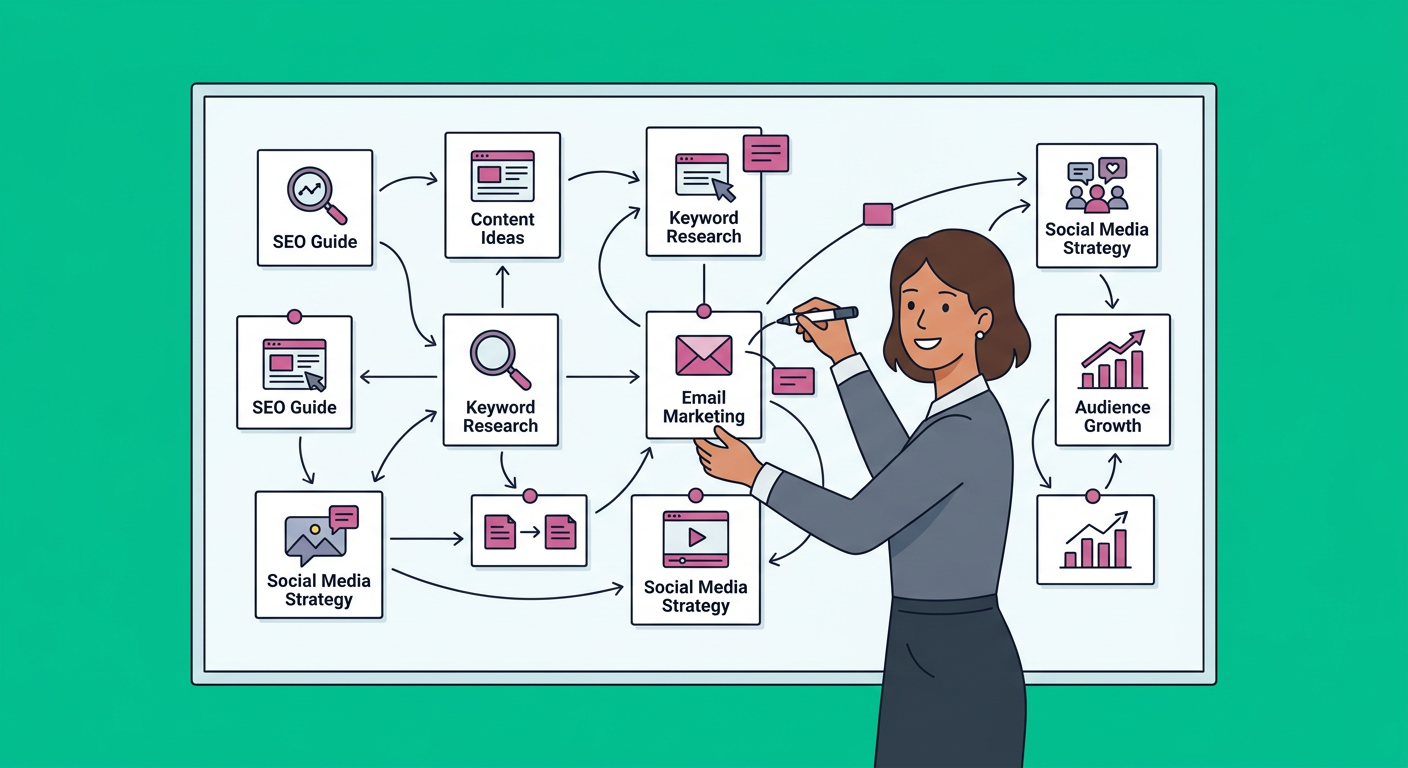
A topic map is the blueprint for your authority cluster. It shows the main subject, subtopics, questions, and article ideas you’ll publish over time.
Start with one pillar topic, then break it into supporting questions.
For example, if your pillar topic is “blogging for lead generation,” supporting articles might include:
- What is blogging for lead generation?
- How often should a small business publish blog posts?
- Best blog post types for capturing leads
- How to add calls to action in blog posts
- How to measure blog leads without overcomplicating analytics
- Blog content ideas for service businesses
- How to update old posts to improve conversions
Notice what’s happening. The pillar gives the cluster a home, and each supporting article answers a smaller question that your audience might actually ask.
If you use AI to speed this up, don’t ask for generic ideas. Ask it to create topic clusters based on your niche, audience pains, buying journey, and existing pages. This is also where a workflow like AI blog writing workflow can help you organize topics before drafting.
Publish in the Right Order
A common mistake is starting with advanced topics before the foundation exists. That can make your blog feel scattered, even if each post is decent.
A better progressive sequence looks like this:
Foundation Content
These are definition and explanation posts. They help new readers understand the basics and give your cluster a clear base.
Examples include “what is topical authority,” “what is a topic cluster,” and “what is an internal linking strategy.” These posts are often simple, but they’re powerful because they capture early-stage questions.
Practical How-To Content
Once the basics are covered, write action-focused posts. These articles show readers how to do the work.
Examples include “how to create a topic cluster,” “how to plan blog posts for a month,” and “how to write a pillar page.” This is where your experience matters most. Add screenshots, mini case examples, templates, and personal lessons whenever possible.
Comparison and Decision Content
After readers understand the problem and process, they often compare options. This is where comparison posts, tool lists, and workflow breakdowns help.
Examples include “topic clusters vs categories,” “manual blogging vs AI-assisted blogging,” or “content calendar vs content strategy.” If you discuss tools, include tradeoffs honestly. Readers trust balanced advice more than perfect praise.
Update and Expansion Content
Authority isn’t static. As your niche changes, update important posts, add new examples, and fill gaps.
This is one reason consistency matters. HubSpot reported that 56% of blog teams expected their investment in blogging to expand, which means the bar for useful content keeps rising.
How to Build Topical Authority When You’re Starting From Zero
If your blog is brand new, don’t worry about covering your whole niche immediately. Your goal is to create one strong cluster that proves your direction.
Start with a 10-post authority sprint:
- One pillar guide
- Three beginner explainers
- Three how-to tutorials
- One comparison article
- One mistakes article
- One FAQ or glossary article
This gives your site enough depth to feel intentional. It also gives you internal linking opportunities from the beginning.
Here’s a simple example for a WordPress blogger teaching content planning:
- Pillar: Content planning for WordPress bloggers
- Explainer: What is a blog content calendar?
- Explainer: What is a topic cluster?
- Explainer: What are long-tail keywords?
- Tutorial: How to plan 30 days of blog posts
- Tutorial: How to write a blog post outline
- Tutorial: How to update old blog posts
- Comparison: Content calendar vs editorial strategy
- Mistakes: Blog planning mistakes beginners make
- FAQ: Blog planning questions for small business owners
That’s a real authority base. It’s not huge, but it’s coherent.
Strengthen Every Article With Original Signals
Generic content doesn’t build authority. It fills space.
To make each post stronger, add signals that only your brand can provide:
- A short story from your own work
- A client or customer pattern you’ve noticed
- A screenshot from your process
- A simple template or checklist
- A strong opinion with reasoning
- A real example from your industry
- A clear limitation or warning
For example, don’t just say “publish consistently.” Say, “When a founder publishes only when inspired, the blog usually becomes a graveyard of disconnected ideas. A weekly system works better because planning, drafting, editing, and publishing become repeatable.”
That feels more useful because it has a point of view.
Use Internal Links Like a Teacher
Internal links are not just SEO decoration. They help readers move through your topic in the right order.
A good internal link should answer one of these questions:
- What should the reader learn next?
- What concept needs more detail?
- What related problem can we help them solve?
- What page supports this claim or workflow?
For instance, if you’re explaining how to scale content production, link to a deeper guide on automating SEO with AI. If you’re helping readers improve output speed, link to advice on writing faster without lowering quality.
Keep anchor text descriptive. Avoid vague phrases like “read more” when a specific phrase can tell readers exactly what they’ll get.
Measure Progress Without Obsessing Over Rankings
Topical authority takes time, so don’t judge the whole plan after two weeks. Look for leading indicators first.
Track:
- Articles published inside one cluster
- Internal links added between related posts
- Impressions across long-tail queries
- Pages getting engagement from readers
- Email signups, demo clicks, or lead form fills
- AI answer engine mentions when available
- Old posts that improve after updates
Rankings matter, of course, but they’re not the only signal. A new cluster often starts by earning impressions, then clicks, then conversions. If the topic map is strong, those gains can compound.
Common Mistakes That Slow Authority Growth
Publishing Random Articles
Random posts create random outcomes. If five posts target five unrelated topics, your site doesn’t build depth anywhere.
Choose one cluster and finish the first version before jumping to another theme.
Writing Only Beginner Content
Beginner articles are useful, but a full authority cluster needs depth. Add tutorials, examples, comparisons, templates, and expert-level explanations.
Your goal is to help readers move from “what is this?” to “how do I use this well?”
Ignoring Updates
Old posts can become assets or liabilities. Review your best pages every few months and improve them with fresher examples, clearer formatting, stronger links, and better calls to action.
Overusing AI Without Adding Expertise
AI can speed up outlines, drafting, formatting, and topic discovery. But your authority comes from judgment, experience, and specificity.
If an article could appear on any competitor’s site with only the brand name changed, it needs more human input.
Build Your Authority Engine Faster
If you want a simpler way to publish connected, optimized blog content without getting stuck in spreadsheets, ContentBeast helps automate planning, writing, images, internal links, and publishing. It’s built for business owners, creators, agencies, and marketers who want consistent blogging without doing every step manually.
Bring your expertise, choose your publishing rhythm, and let the system handle more of the repetitive work.
FAQ
How long does it take to build topical authority?
Most websites need several months of consistent publishing before the pattern becomes clear. The timeline depends on your niche, content quality, competition, site history, and how well your pages are connected.
How many articles do I need for one topic cluster?
A practical first cluster usually needs 8 to 15 articles. Start with one pillar guide and enough supporting posts to answer the most common beginner, how-to, and comparison questions.
Can a new blog build topical authority?
Yes, but it needs focus. A new blog should avoid broad categories and start with one narrow subject where it can publish useful, connected content quickly.
Do internal links really help topical authority?
Yes. Internal links help readers find related answers and help organize your content into a clear structure. They’re especially important when you’re building topic clusters.
Should I update old posts or only publish new ones?
Do both. New posts expand your coverage, while updates keep your strongest assets accurate, useful, and competitive.
Can AI help with topical authority?
Yes, when used carefully. AI can help with topic mapping, briefs, outlines, formatting, and first drafts, but you should add real examples, opinions, proof, and brand knowledge.
What’s the fastest first step?
Pick one narrow audience problem and build a 10-post cluster around it. That gives your blog a clear foundation instead of a scattered archive.
The Takeaway for Day 1
Topical authority is built through focus, depth, and consistency. You don’t need to publish everything at once, but you do need a clear lane, a connected topic map, and articles that genuinely help your audience move forward.
Start small. Build one strong cluster. Link it well, improve it often, and let each article make the next one more valuable.
