
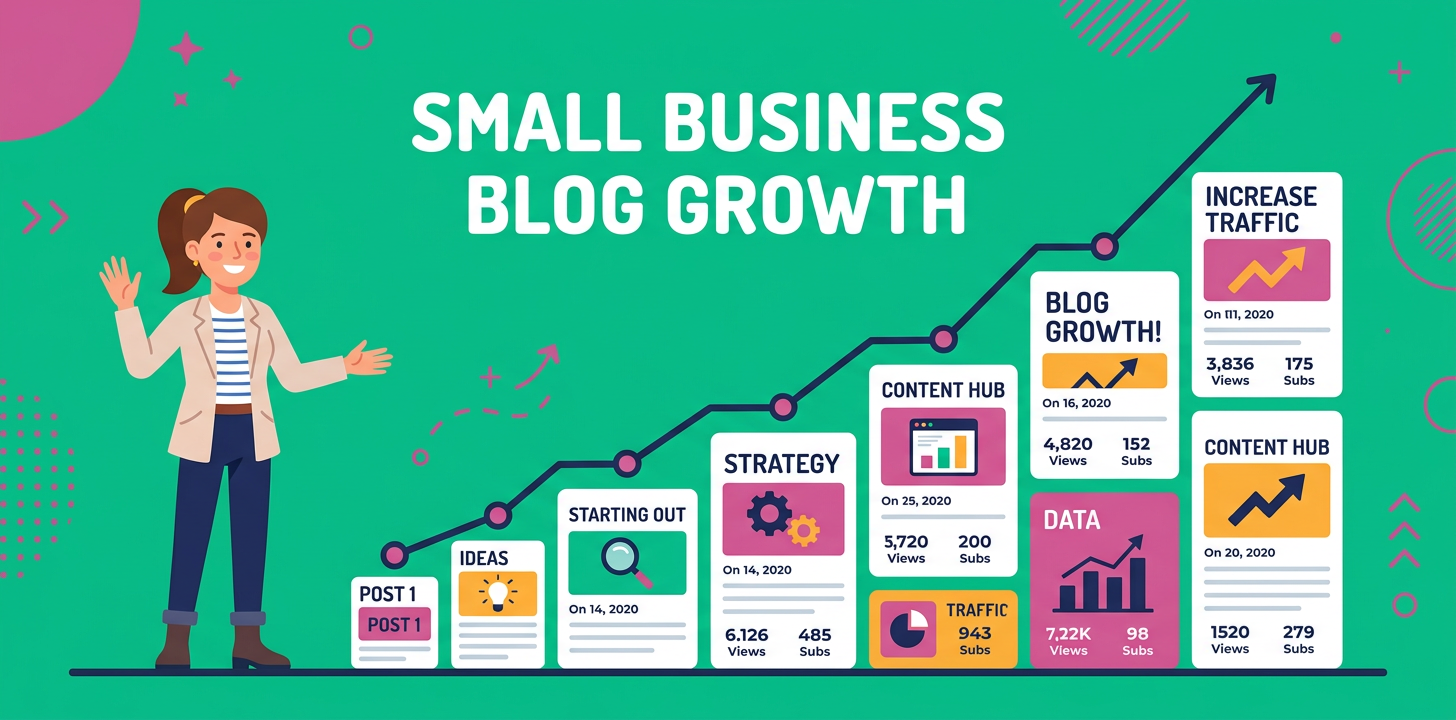
What are the best SEO optimization tips for small business blog growth? Start with helpful topics your customers already care about, build each article around one clear keyword, make your pages easy to read, and connect related posts with smart internal links. The best seo optimization tips for small business blog growth are simple enough to repeat every week, not so complex that publishing becomes another full-time job.
Here’s the thing: a small business blog doesn’t need to beat every giant site on the internet. It needs to answer the right questions better than local rivals, niche competitors, and outdated posts already sitting in Google. That’s where a progressive content strategy helps, especially on Day 11 of an early-stage growth plan, when you’re moving from random publishing into a repeatable system.
Organic visibility still matters because buyers keep using Google, Bing, maps, marketplaces, and AI answer tools to compare options before they contact a business. BrightEdge found that organic discovery made up 53% of trackable website traffic, which is a strong reminder that your blog can become a long-term traffic asset instead of a weekly chore. BrightEdge
Quick Plan for Small Business Blog SEO
| Priority | What To Improve | Why It Matters | Best First Action |
|---|---|---|---|
| Audience intent | Customer questions | Better relevance | List sales questions |
| Keywords | One main topic | Clear page focus | Pick one phrase |
| Content depth | Complete answers | More trust | Add examples |
| Internal links | Related pages | Stronger site flow | Link 2 to 3 posts |
| Updates | Fresh accuracy | Longer lifespan | Refresh quarterly |
SEO Optimization Tips for Small Business Blog Owners
Small business SEO works best when it starts with real customer problems. Before you open a keyword tool, write down the questions buyers ask before they purchase, book a call, request a quote, or compare you with another provider.
For example, a local accountant might write about tax deadlines, bookkeeping mistakes, LLC setup questions, and pricing expectations. A SaaS founder might cover integrations, onboarding, use cases, comparisons, and ROI. The goal is to build a blog that mirrors your customer journey.
Build Around One Main Keyword Per Post
Each article should have one primary keyword, one clear reader problem, and one logical next step. If a post tries to rank for five unrelated ideas, it usually feels scattered to readers and confusing to Google.
Use the main phrase in the title, opening, one heading, meta description, and URL slug when it sounds natural. Then use close variations throughout the article so the writing feels human, not robotic.
Match The Format To The Reader’s Intent
Not every topic deserves the same format. Some readers need a definition, some need a step-by-step guide, and others need a comparison before they buy.
A good rule of thumb is simple: if the query starts with “what is,” explain. If it starts with “how to,” teach. If it includes “best,” “vs,” or “cost,” compare options clearly.
Write For People First, Then Polish For Google
The best blog posts feel useful before they feel optimized. They answer the question quickly, explain the nuance, and give the reader confidence to act.
HubSpot’s 2025 State of Blogging Report found that 45% of marketers at businesses with blogs planned to increase blogging budget compared with the prior year. That’s not because blogging is easy. It’s because helpful content still supports traffic, trust, leads, and brand authority when it’s done with a system. HubSpot
Create A Progressive Day 11 Blog Workflow
By Day 11, you shouldn’t still be guessing what to publish. You should have a lightweight workflow that helps you choose topics, outline faster, write consistently, and improve older content over time.
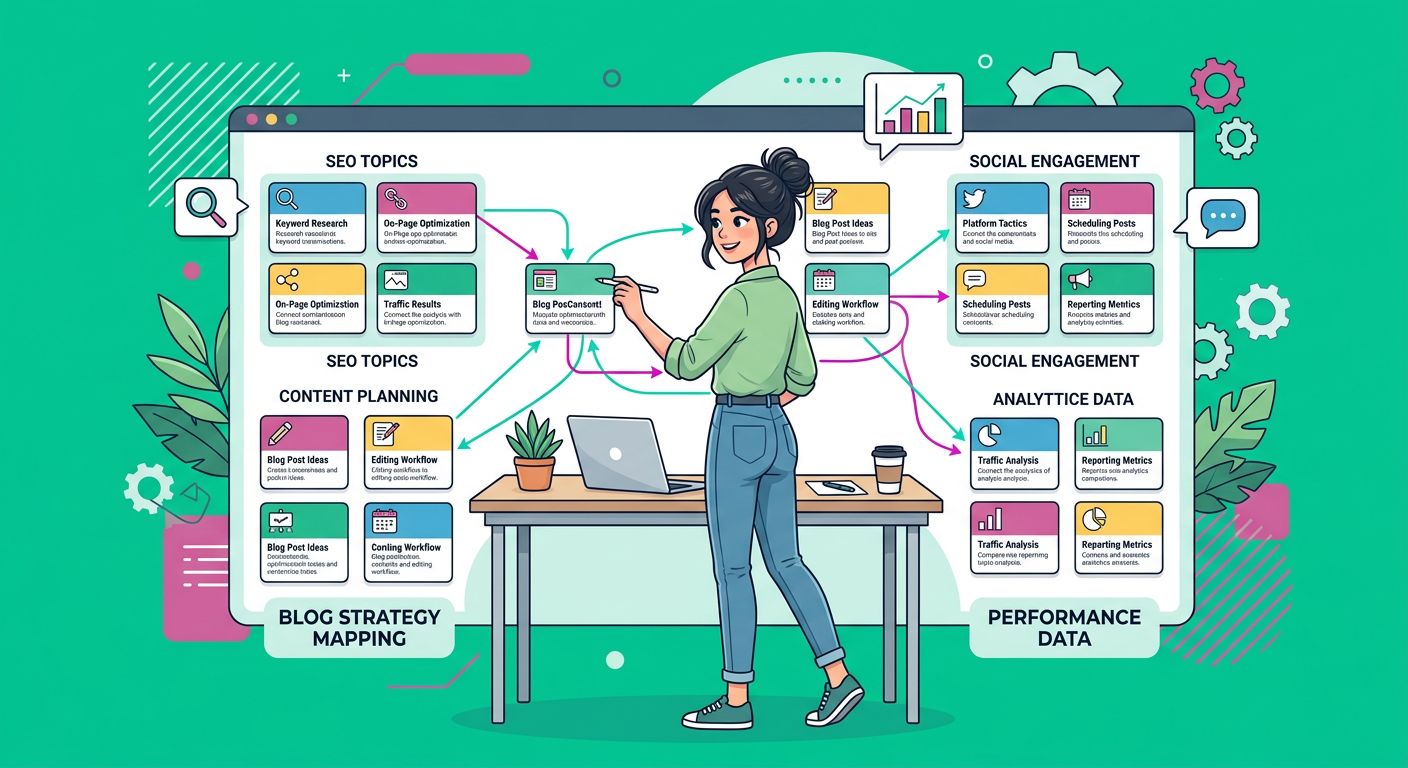
Think of this stage as moving from “I need a blog post” to “I’m building a topic cluster.” That shift matters because Google and AI answer tools need context. One isolated post can help, but a connected library is stronger.
Choose A Core Topic Cluster
Pick one topic your business wants to be known for. Then plan one pillar article and several supporting posts around it.
For example, a WordPress consultant could build a cluster around “small business website maintenance.” Supporting posts might cover plugin updates, backups, page speed, security basics, hosting, and monthly maintenance pricing. Each post answers a narrower question while strengthening the whole cluster.
Publish Supporting Posts Before You Chase Huge Terms
Early-stage blogs often fail because they target broad, competitive phrases too soon. Instead, publish long-tail articles with clearer intent and lower competition.
A post like “how much does website maintenance cost for a small business” is usually more practical than “website maintenance.” The first phrase tells you what the reader wants, where they are in the buying journey, and what kind of answer will help.
Use Internal Links Like A Guided Tour
Internal links help readers move from one useful page to another. They also help Google understand which pages are related and which ones matter most.
If you’re building a better publishing system, read this guide on how to automate SEO with AI. If speed is your bottleneck, this article on writing a blog post faster without sacrificing SEO quality pairs well with the workflow in this guide.
On-Page Fixes That Move The Needle
On-page SEO is where small businesses can win quickly because many competitors still publish thin, messy, hard-to-read content. You don’t need perfection. You need clarity, depth, and consistency.
Start with the basics: a useful title, a strong opening answer, scannable headings, descriptive image alt text, and a clear next step. These details make your content easier for readers and algorithms to understand.
Improve Titles Without Making Them Clickbait
Your title should tell readers exactly what they’ll get. Include the primary keyword near the front, then add a benefit or angle.
For example, “Bookkeeping Tips for Small Business Owners” is okay. “Bookkeeping Tips for Small Business Owners Who Hate Spreadsheets” is more specific and more clickable because it speaks to a real pain point.
Add A Clear Answer In The First Few Lines
Don’t make readers dig through five paragraphs before you help them. Give a short answer first, then expand with examples, steps, and context.
This also helps AI answer tools understand your page. Clear answers, concise definitions, and well-labeled sections make your content easier to extract and summarize.
Make Every Section Easy To Skim
Most readers scan before they commit. Use short paragraphs, helpful subheadings, bullets, tables, and examples to reduce friction.
A strong blog post should feel like a friendly expert walking the reader through a problem. If your article looks like a wall of text, even great advice can get ignored.
Content Quality Signals Small Blogs Often Miss
Quality isn’t just grammar. It’s usefulness, accuracy, originality, and trust.
Small businesses have one huge advantage: real experience. You’ve talked to customers, solved problems, answered objections, and seen what actually works. Bring that into your posts.
Add Real Examples From Your Business
A generic article says, “Create helpful content.” A better article says, “If you run a local roofing company, write separate posts for emergency repairs, roof replacement costs, storm damage claims, and metal roofing pros and cons.”
Specific examples build trust because they prove you understand the reader’s situation. They also help your content stand apart from generic AI-written articles.
Include Expert Notes And Practical Proof
Add short expert tips, mini case studies, checklists, screenshots, or before-and-after examples when you can. These details make your content feel lived-in.
If you’re stuck on ideas, this guide on what to write about when you have writer’s block can help you find practical angles without staring at a blank page for an hour.
Update Posts Before They Decay
A blog post is not finished forever after you publish it. Plan quarterly updates for your most important articles.
Refresh outdated details, add missing questions, improve examples, tighten titles, and add internal links to newer posts. This keeps your best content alive longer and helps you build authority without always starting from scratch.
Technical Basics For Small Business Blogs
Technical SEO sounds intimidating, but the essentials are manageable. Your site should load quickly, work on mobile, use clean URLs, and avoid broken pages.
If you use WordPress, make sure your theme is lightweight, your plugins are necessary, and your images are compressed. You can also simplify publishing through a dedicated WordPress blog automation setup if consistency is your biggest blocker.
Use Simple URLs
A clean URL should be short, readable, and aligned with the topic. Avoid dates, random numbers, and vague slugs.
Good example: /small-business-blog-seo-tips/
Weak example: /post-11-final-version-new/
Optimize Images For Speed And Context
Images make articles more engaging, but oversized files slow pages down. Use compressed images, descriptive file names, and clear alt text that explains what the image shows.
For a blog about email marketing, an image named email-campaign-calendar.png is more useful than image-final-3.png. Small details add up.
Fix Broken Links And Thin Pages
Broken links frustrate readers and create a poor site experience. Thin pages can also weaken your overall content library if they don’t answer anything well.
Review older posts monthly. Merge overlapping articles, expand weak ones, and delete pages that no longer serve a clear purpose.
Build Consistency Without Burning Out
Most small business blogs don’t fail because the owner lacks ideas. They fail because the publishing process is too heavy.
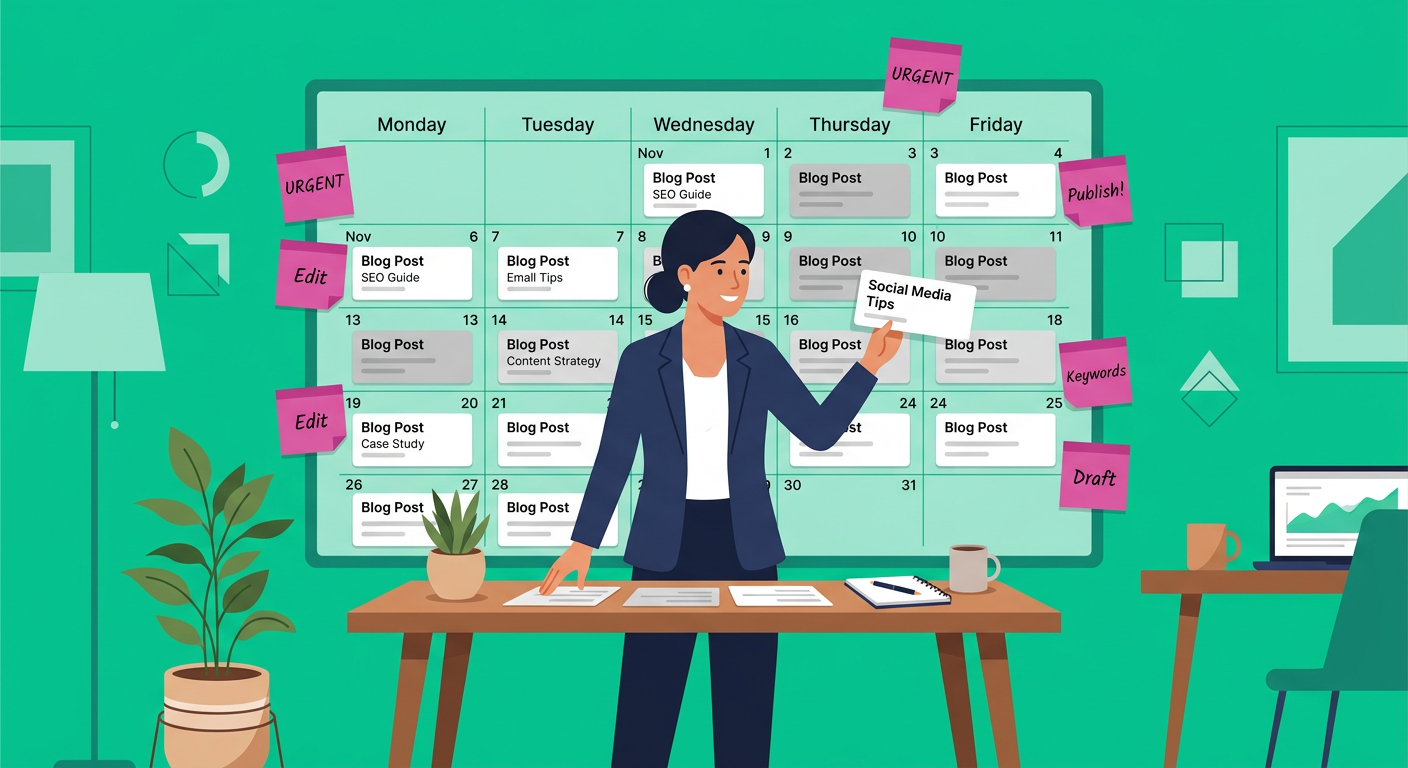
Create a repeatable rhythm: one topic discovery session, one outline, one draft, one edit, one publish date, and one update cycle. When the process is predictable, consistency gets much easier.
Batch Your Content Tasks
Don’t try to plan, write, edit, optimize, design images, and publish in one sitting. That’s how blog work becomes exhausting.
Batch similar tasks instead. Plan five topics at once, outline two posts at once, and review internal links after drafting. You’ll move faster because your brain isn’t switching jobs every ten minutes.
Track The Right Metrics
Early on, don’t obsess over every tiny movement. Track impressions, clicks, rankings, email signups, form fills, and assisted conversions.
A post can be valuable even if it doesn’t bring thousands of visitors. If it attracts the right buyer and supports a sale, it’s doing its job.
Which seo optimization tips for small business blog posts matter first?
The most important tips are keyword focus, reader intent, strong titles, clear answers, internal links, and consistent publishing. Start there before you worry about advanced tactics.
Once those basics are in place, improve page speed, update older posts, add FAQs, and build topic clusters. Advanced work only helps when the foundation is solid.
Grow Your Blog With A Simpler Publishing System
If you’re tired of guessing topics, writing inconsistently, and trying to manage SEO alone, ContentBeast can help you plan, write, optimize, and publish blog posts built for Google and AI answer visibility. It’s designed for business owners, creators, SaaS teams, agencies, and WordPress bloggers who want consistent content without building a full in-house team.
Use it when you want a practical system for topical authority, internal links, FAQs, images, and ongoing publishing, without spending every week stuck in content production.
FAQs
How often should a small business publish blog posts?
Most small businesses should start with one high-quality post per week or every other week. Consistency matters more than volume, especially if each article targets a clear customer question and links to related pages.
How long should a small business blog post be?
A post should be as long as needed to answer the topic well. For many small business topics, 1,000 to 2,000 words works well, but depth, clarity, and usefulness matter more than word count.
Do small business blogs still need keywords?
Yes, but keywords should guide the topic, not dominate the writing. Pick one main phrase, then write naturally with related terms, examples, and answers that match the reader’s intent.
What is the fastest way to improve an old blog post?
Start by rewriting the title, improving the opening answer, adding missing FAQs, updating outdated details, and linking to newer related posts. These upgrades often take less time than writing a brand-new article.
Should every blog post have a call to action?
Yes, but it should fit the reader’s stage. A beginner guide might invite readers to download a checklist, while a buyer-intent article might invite them to book a demo, request pricing, or compare plans.
Can AI help small businesses blog better?
Yes, AI can help with topic discovery, outlines, drafts, editing, and repurposing. The best results still need real experience, accurate examples, and a clear editorial process.
Final Thoughts
Small business blog growth comes from doing the basics well, over and over. Choose topics your buyers care about, write clear answers, connect related posts, update your best content, and keep publishing even when results feel slow at first.
The real win isn’t one perfect article. It’s a growing library of useful content that helps customers trust you before they ever fill out a form, book a call, or buy.
